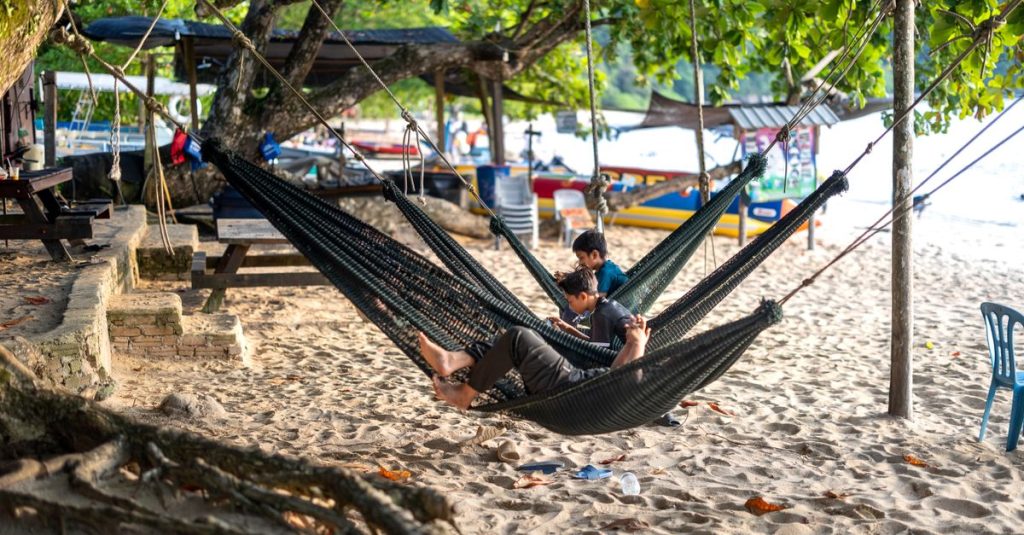
Pangkor Island: Beaches, Access and Things to Do
Discover Pangkor Island, from its beaches and fishing villages to ferry access, activities and practical tips for planning your stay.
Published on
Malaysia’s population is diverse: Malays and other Indigenous peoples live alongside communities of Chinese and Indian origin. People from Malaysia are Malaysian; the word “Malay” refers to an ethnolinguistic group, not to all citizens. Islam plays a central role in the country, where Buddhism, Christianity, Hinduism and Chinese traditions are also present.
As for the number of inhabitants, the projection of 34.5 million for 2026, attributed to the Department of Statistics Malaysia (DOSM), still needs to be confirmed with that organisation. It should not be confused with a census or a real-time population counter. Understanding the country also means distinguishing citizens from foreign residents, Peninsular Malaysia from Borneo, and ethnic identity from religious practice.
In brief
A demographic total only has meaning when accompanied by a precise date and scope. A recorded population, an annual estimate and a projection describe different things. A census records a situation on a given date, while an estimate or projection also uses assumptions and calculations.
This distinction explains why apparently contradictory figures may circulate at the same time. One publication may repeat an older observation, while another offers a more recent estimate. Continuously updated counters do not represent an instant record of every birth, death or arrival in the country.
Not everyone living in Malaysia is a Malaysian citizen. Depending on the statistical scope used, the total may include foreign workers, their relatives and other non-citizen residents. Conversely, a breakdown based solely on citizenship excludes these people from the calculation.
This is significant for ethnic statistics. A proportion calculated among citizens alone cannot be applied directly to all residents. Before converting a percentage into a number of people, check that the numerator and denominator describe the same population.
Migration also affects changes in population size. An increase does not necessarily result from more births: it may reflect the arrival of residents, a change in departures or a statistical revision. Population growth and fertility are not interchangeable indicators.
The age structure highlights issues that the national total alone does not reveal. An ageing population creates different needs in terms of healthcare, accessible housing and daily support. Families with children, meanwhile, affect the organisation of schools, transport and local facilities.
However, avoid turning a national trend into a uniform description of the whole country. A university neighbourhood, an industrial area and a rural town may have very different profiles. When settling, it is therefore more useful to observe the services actually available around your home than to apply a national average to your future neighbourhood.
The same caution applies to international comparisons. Comparing Malaysia with Singapore without recalling the differences in size and territorial organisation can give a misleading impression. The density of a city-state does not describe the same constraints as that of a country with large metropolitan areas and vast forested regions.
To consult an up-to-date official figure, contact DOSM and note the reference date, the status of the data and the population covered. A recently published value may concern an earlier period. The publication year alone is therefore not enough to date the phenomenon observed.
This method also helps when interpreting regional maps and tables. A high total does not necessarily mean high density, and rapid growth does not guarantee improved services. The right approach is to relate each indicator to the specific question it helps answer.
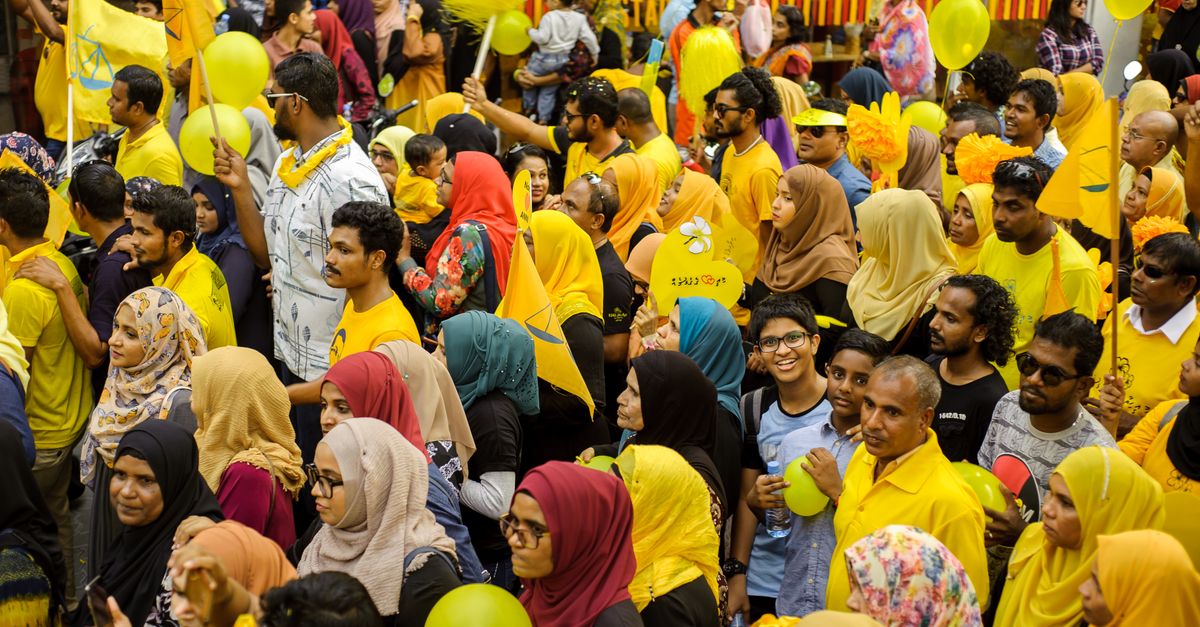
Malaysia’s ethnic groups are not homogeneous blocks. The main administrative categories provide reference points, but they encompass differences in language, region, family history and religious practice. They cannot be used to predict a person’s opinions, occupation or lifestyle.
Malays form the country’s main ethnolinguistic group. Their identity is closely linked to the Malay language, shared cultural traditions and Islam. This identity also exists beyond national borders: being Malay does not therefore automatically mean holding Malaysian nationality.
The term Bumiputera, often translated as “sons of the soil”, refers to a broader group. It includes Malays as well as other Indigenous populations, notably the Orang Asli of the peninsula and different peoples of Sabah and Sarawak. These communities do not all share the same language or religion.
In Borneo, the names Iban, Bidayuh and Kadazan-Dusun refer to identities that should not be reduced to a single culture. The term “Dayak” is itself used as a collective designation in some contexts. To understand a local tradition, it is better to identify the community concerned than to speak indiscriminately of “Indigenous customs”.
The Bumiputera category also features in certain public policies. However, it is not enough to determine the conditions for accessing education, housing or an economic scheme. Any practical decision requires checking the programme’s criteria with the relevant administration.
| Term | What it refers to | Essential distinction |
|---|---|---|
| Malaysian | Malaysian nationality | It encompasses several ethnic and religious identities. |
| Malay | An ethnolinguistic group | The term does not refer to all citizens of the country. |
| Bumiputera | Malays and other Indigenous peoples | This category includes different cultures and religions. |
| Malaysian Chinese | Malaysians of Chinese ancestry | This identity does not mean Chinese nationality. |
| Malaysian Indians | Malaysians of Indian ancestry | Their languages and religious practices are diverse. |
Malaysian Chinese are largely descended from families that settled in the country several generations ago. Their history includes different regional origins and linguistic traditions, including Hokkien, Cantonese, Hakka and Mandarin. Reducing this group to Mandarin alone overlooks some of its family and local diversity.
Malaysian Indians include a substantial Tamil component, but are not limited to it. Other linguistic and cultural heritages are also present. It would likewise be inaccurate to consider all of them Hindu: Muslim, Christian and Sikh affiliations also exist.
The history of maritime exchanges, labour migration and the colonial period helps explain this diversity. It does not, however, sum up contemporary identities. Citizens may identify with a family heritage while sharing a largely Malaysian school, professional and cultural life.
The language used often varies according to the context. Someone may speak one language at home, Malay for certain official matters and English at work. Asking which language is suitable for your conversation partner is more respectful than choosing one based on their appearance.
National and community identities therefore overlap rather than exclude one another. Our article on the Malaysian flag and its symbols offers further insight into collective identity. To understand society, the starting point is simple: nationality, ancestry and language are not synonyms.
Islam occupies a central institutional and social position in Malaysia. It is the religion of the Federation, while other faiths are practised throughout the country. This is reflected in the calendar, places of worship, eating habits and certain aspects of personal law.
The relationship between religion and ethnic identity is significant, but does not work in the same way everywhere. Malay identity has a particular connection with Islam within the constitutional framework. Other Indigenous populations, however, should not collectively be regarded as Muslim.
Among Malaysia’s religions, Buddhism and Chinese religious traditions are visible within the community of Chinese ancestry. Practices may combine several heritages, including Buddhist, Taoist and family traditions. Statistical classifications can therefore simplify more complex religious experiences.
Hinduism is particularly present in the cultural life of part of the population of Indian origin. Batu Caves, near Kuala Lumpur, is an emblematic site. It remains above all a place of devotion: its tourist appeal should not obscure its religious function.
Christianity is practised by different communities and has an important place in parts of Sabah and Sarawak. Local traditions and conversion histories vary between territories. Presenting Borneo as religiously uniform would prevent a proper understanding of this diversity.
Declared affiliations also say nothing about the intensity of a person’s practice. Two people in the same category may relate differently to ceremonies, dietary requirements or festivals. It is preferable to ask about individual preferences rather than infer supposed obligations.
In a mosque, temple or church, the instructions displayed and those given by the site’s representatives take priority. They may concern clothing, removing shoes, accessible areas or photography. Visiting conditions may change during services and celebrations: check them directly with the site.
Photographing a building is not the same as photographing someone at prayer. Ask permission before taking a close-up portrait and avoid disturbing worshippers to obtain a better image. This is particularly important where tourism and everyday religious practice coexist.
For meals, do not assume that a restaurant suits every dietary requirement. Halal certification, the presence of meat, alcohol and vegetarian options address different questions. Our guide to Malaysian cuisine helps identify dishes, but precise ingredients should be confirmed with the establishment.
Religious festivals may also affect transport, shops and visitor attractions. The impact depends on the destination and celebration; not all services close at the same time. Consult official calendars and check opening times directly with the relevant operators.
For couples, religious affiliation may have legal consequences beyond social customs. The guide to mixed marriage in Malaysia outlines the issues to examine, but does not replace confirmation with the relevant authorities. The coexistence of faiths does not mean that every family situation follows the same procedures.
Malaysia’s population is distributed very unevenly across the country. Peninsular Malaysia contains a large share of the population and several major urban centres. Sabah and Sarawak, on the island of Borneo, combine active cities with large forested, mountainous or less densely populated areas.
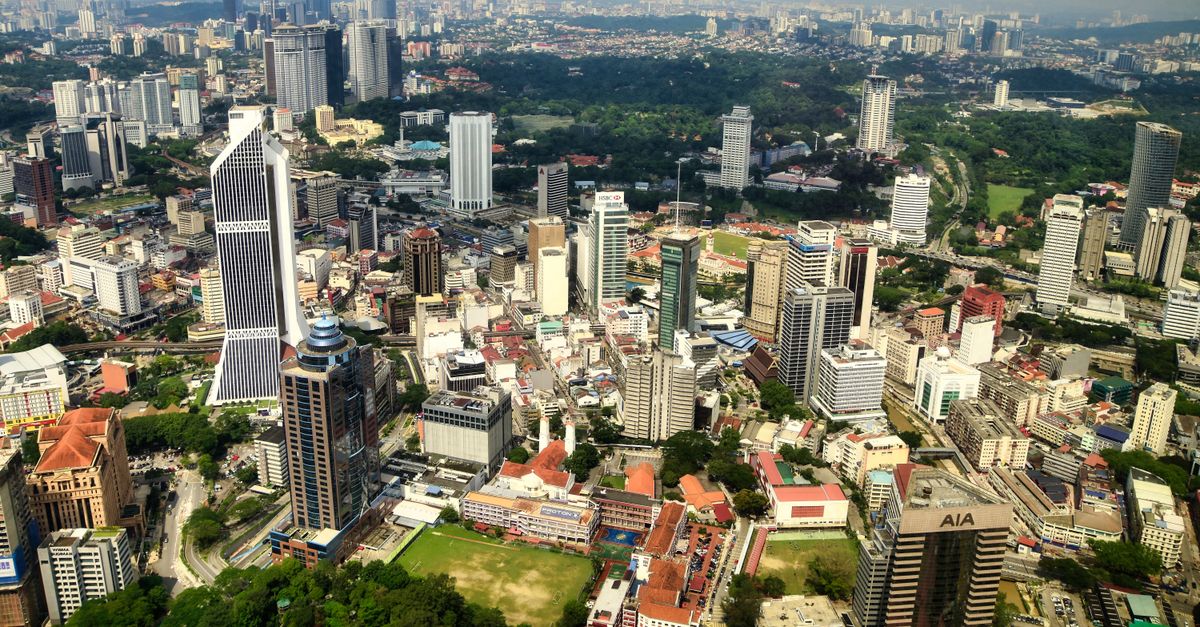
The name Kuala Lumpur may refer to the Federal Territory or, in everyday speech, to a much larger urban area. These boundaries do not cover the same population. Comparing the capital’s administrative population with that of the entire metropolitan area therefore produces a difference that is not unusual.
Continuous urban development extends well beyond administrative boundaries. Daily journeys connect homes, businesses, universities and shops located in different local authorities. To understand this organisation, flows between neighbourhoods and municipalities are often more informative than ranking cities by population.
This distinction directly affects accommodation choices. An address advertised as being in greater Kuala Lumpur may be far from the attractions you plan to visit or from your workplace. Consult our guide to discovering Kuala Lumpur and its neighbourhoods, then examine actual journey times rather than relying on the marketing label.
Penang is not limited to George Town’s historic centre. The island and the mainland have different residential, industrial and commercial functions. A heritage area popular with visitors does not by itself represent living conditions across the whole state.
In the south of the peninsula, Johor Bahru belongs to an economic area shaped by its proximity to Singapore. Cross-border travel influences activity and traffic. This shows how a territory can be shaped by daily flows that its resident population does not fully measure.
Ipoh, Malacca and other cities have their own balance between old neighbourhoods, residential extensions and commercial areas. Their appeal cannot be reduced to a contrast between an expensive capital and a cheap province. The exact location, transport links and type of housing remain decisive.
Kota Kinabalu, Kuching and Miri show that Malaysian Borneo includes well-developed urban centres. Conversely, some inland communities require specific logistical preparation. A state-wide average accurately describes neither a shopping street in its capital nor a remote village.
The distance to healthcare, road access and the availability of transport have a greater influence on organising a trip than abstract density. In some areas, weather conditions may also disrupt travel. An itinerary must then be planned around the transport actually available.
Low density guarantees neither low prices nor limited tourism. The cost of bringing in goods, accommodation options and the season can make a stay in an isolated destination more expensive. Conversely, a well-connected urban neighbourhood may reduce transport costs.
The guide to transport in Malaysia helps connect these geographical contrasts with itinerary choices. For each stage, check routes and timetables with operators. The geography of access to services is often more useful to travellers than average density.
Malaysia’s cultural diversity can be experienced in everyday practices as much as in its monuments. The languages heard, signs, markets and eating habits reflect different heritages. These elements should not, however, be used to automatically assign an identity to every person you meet.
Malay is the official language and an important shared reference point. English is used in many urban, tourist and professional settings, although proficiency varies. Keeping an address written down and using simple information makes communication easier when no language is fully shared.
Learning common expressions, such as “terima kasih” to say thank you, helps establish respectful contact. It does not remove the need to speak clearly or check understanding when making a booking or handling an administrative matter. Important documents require more precision than an informal conversation.
For a long-term move, learning Malay makes it easier to navigate situations beyond tourist circuits. It helps with announcements, community life and interactions with neighbours. The aim is not to erase other languages, but to increase your independence.
Food shows how traditions can meet without becoming identical. Markets and food outlets bring together dishes from different heritages, with local adaptations. Their proximity does not remove individual preferences or dietary requirements.
Laksa and its regional variations illustrate this culinary diversity. Depending on the preparation, the ingredients, broth and accompaniments differ. Ordering a dish based on its name alone is therefore not enough to know its contents, particularly in the event of an allergy.
Historic neighbourhoods also reveal commercial and family histories. However, a heritage street does not represent the whole of a community’s contemporary life. Combining cultural visits with markets, public spaces and present-day neighbourhoods avoids reducing residents to an old-fashioned backdrop.
When choosing where to live, start with practical constraints: workplace, possible schools, shopping, healthcare access and travel time. An address popular with expatriates is not necessarily suitable for every household. A neighbourhood’s presumed cultural make-up does not replace an examination of the property and its surroundings.
Rent and everyday expenses change; a national average is not a personal quotation. Our guide to the cost of living in Malaysia helps organise budget categories. For current amounts, request recent quotations from providers and check regulated rates with the relevant organisations.
The religious and family calendar may affect visitor numbers and transport availability. There is no single month that is systematically favourable throughout the country. Cross-check planned festivals with the specific features of Malaysia’s regional climate, then confirm booking conditions.
Finally, the presence of international communities says nothing about entry or residence conditions. Consult the guide to the Malaysian visa for French nationals and check the current requirements with Malaysian immigration and consular authorities. Understanding society makes integration easier; checking the formalities makes your plans more secure.
Citizens of Malaysia are Malaysians. The term Malay refers to an ethnolinguistic group and does not apply to all citizens. The resident population also includes foreign nationals.
Malays are part of the Bumiputera category. This broader category also includes other Indigenous peoples of the peninsula, Sabah and Sarawak, whose languages, traditions and religions are diverse.
No. Islam occupies a central position, but Buddhism, Christianity, Hinduism and other religious traditions are also practised. Malaysian nationality does not reveal a person’s religion.
Differences may result from the date, geographical scope, inclusion of foreign residents or method used. A census, annual estimate and projection do not describe exactly the same thing. Check these details with the Department of Statistics Malaysia.
Discover Pangkor Island, from its beaches and fishing villages to ferry access, activities and practical tips for planning your stay.
Discover Sepilok in Borneo and observe orangutans in the rainforest, while learning about rehabilitation and wildlife conservation.
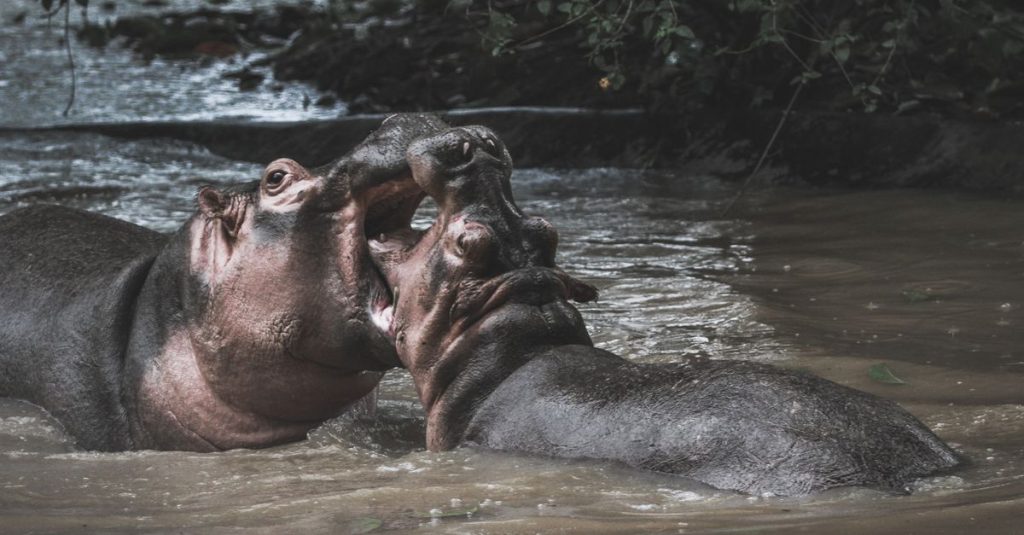
Explore the Kinabatangan River in Borneo with boat safaris, proboscis monkeys, orangutans, pygmy elephants and rainforest wildlife.
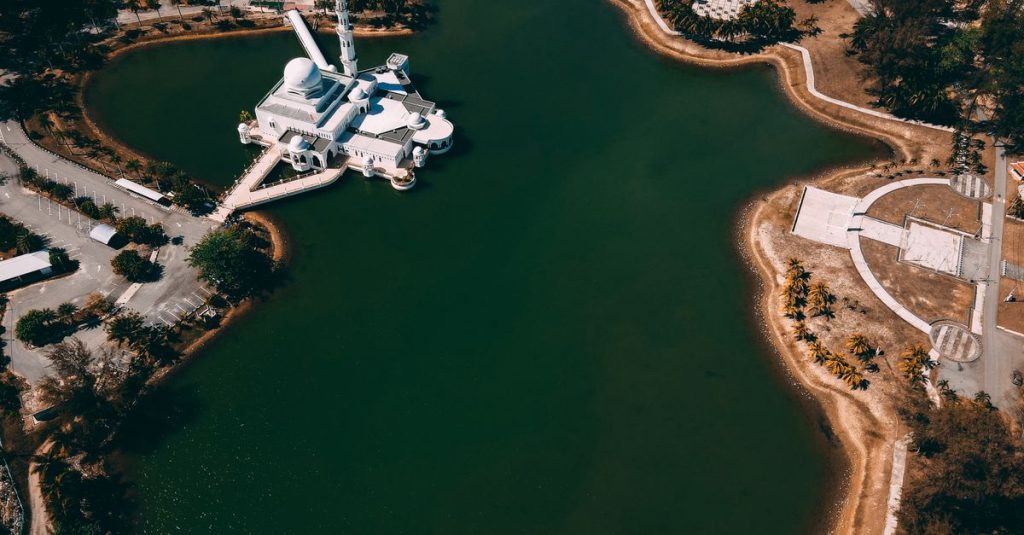
Discover Malaysia itineraries for 10 days, 2 or 3 weeks, with essential stops and practical advice for organising your trip.

Discover roti canai, Malaysia’s flaky, crisp breakfast flatbread, served with curry or dhal and enjoyed at mamak restaurants or home.
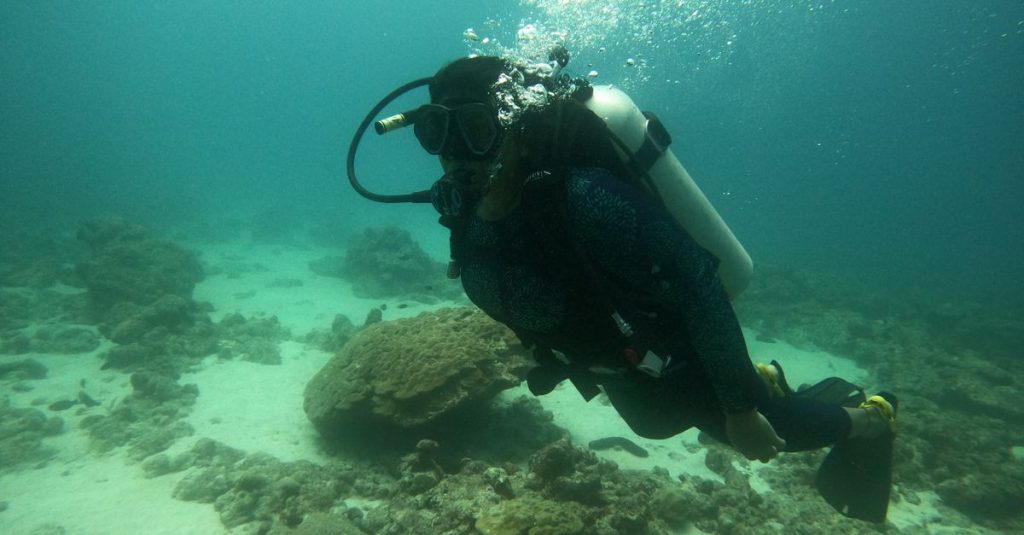
Discover Sipadan, Borneo’s legendary island: diving permits, the best season and practical advice for planning your underwater adventure.

Experience the Malaysia MotoGP Grand Prix at Sepang: practical advice on tickets, access, accommodation and making the most of race day.

Discover Malaysia’s rainy seasons, monsoon patterns on the east and west coasts and in Borneo, and practical tips for planning your trip.
Scroll to see more articles →