
Malaysia in July: Weather and Where to Go
Discover Malaysia’s July weather and the best places to visit for beaches, nature, city breaks and a flexible, enjoyable trip.
Published on
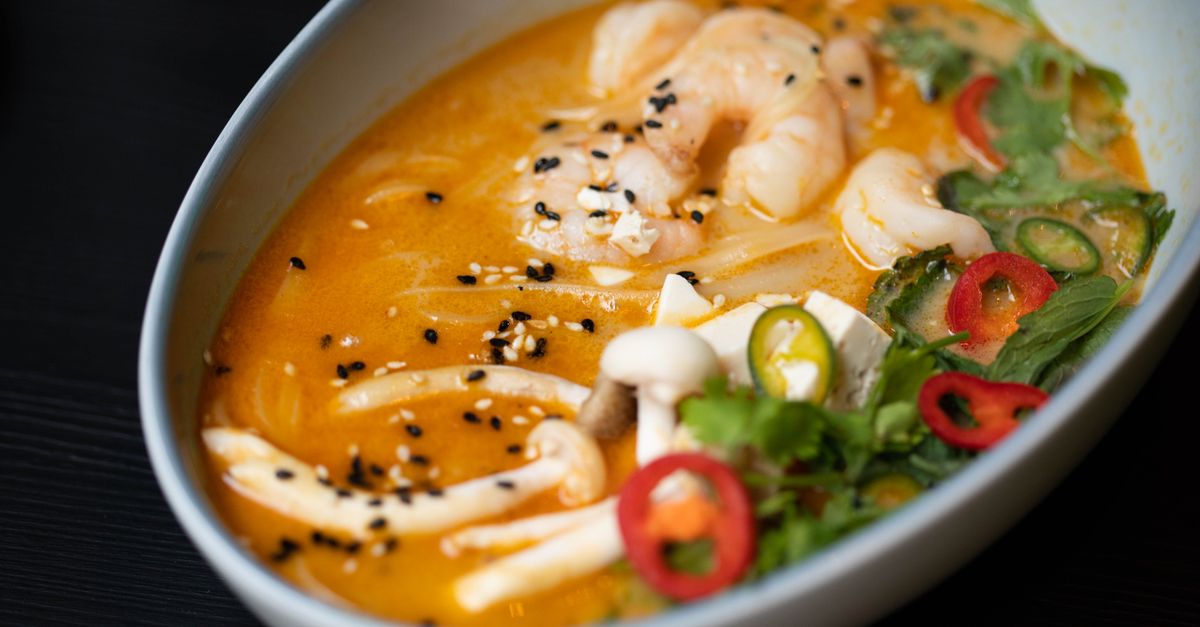
Laksa is a spicy noodle soup whose broth varies from region to region: creamy with coconut milk in some versions, tangy and fish-based in others. When choosing your bowl, remember this distinction: curry laksa focuses on the richness of the broth, while asam laksa, associated with Penang, highlights tamarind and fish.
Closely associated with Peranakan traditions, which developed through exchanges between Chinese communities and local populations, this speciality is firmly part of Malaysian cuisine. It is also found in Singapore and Indonesia, with recipes that are not simply the same soup served with different toppings.
The noodles, aromatic paste and accompaniments matter just as much as the liquid surrounding them. Understanding their role helps you order a version that suits your tastes, as well as prepare a balanced broth at home without confusing a regional recipe with a practical adaptation.
To get online as soon as you land, a Malaysia eSIM can be installed before you leave, with no need to look for a local SIM card.
In brief
The name refers to a family of preparations, not a single recipe. Describing this dish systematically as a coconut prawn soup overlooks much of its diversity.
Curry laksa combines a spice paste, broth and coconut milk. Depending on the establishment, the toppings may include chicken, prawns, fried tofu or shellfish, with rice noodles, wheat noodles or a mixture of both.
The term lemak suggests richness and creaminess, often provided by coconut. It is a useful taste indicator, but does not guarantee an identical composition from one place to another.
Asam laksa stands out for its fish broth and acidity, generally provided by tamarind. Penang laksa is particularly associated with this preparation, usually without coconut, and accompanied by fresh ingredients such as cucumber, onion, mint or pineapple.
Its character is tangy, not simply bitter. The fish gives the broth depth, while the fresh toppings add crunch and contrast with the noodles.
Singapore laksa is commonly associated with a spicy coconut broth and seafood toppings. Katong-style versions are recognisable in particular by their shortened noodles, which make them easier to eat with a spoon.
In Sarawak, the preparation has a specific aromatic paste and is commonly served with rice vermicelli, shredded chicken, prawns and strips of omelette. Reducing it to a simple curry would overlook its distinctive character.
| Variation | Characteristic base | Taste profile |
|---|---|---|
| Curry laksa | Spices and coconut milk | Rich and aromatic |
| Penang asam laksa | Fish and tamarind | Tangy, with a pronounced fish flavour |
| Singapore-style coconut laksa | Spicy broth and seafood toppings | Creamy and punchy |
| Sarawak laksa | Regional aromatic paste and coconut | Spicy, with varied toppings |
Start by choosing the broth profile: it determines the experience more than the presence of an egg or prawns.
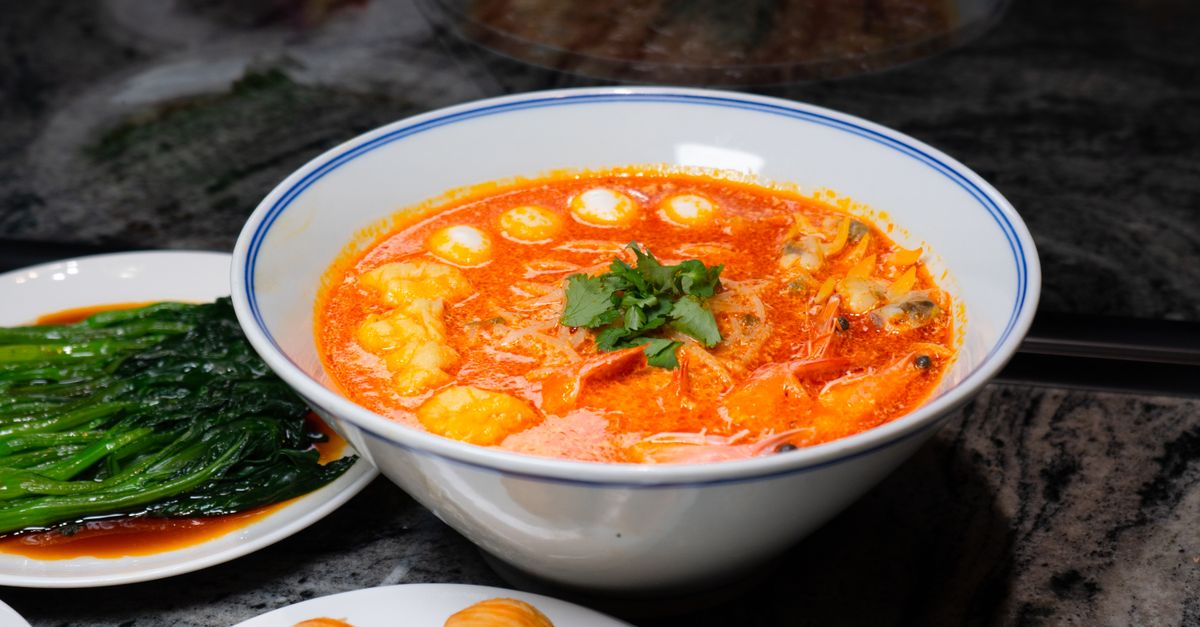
For a homemade preparation, the coconut version helps you understand the role of each ingredient. The paste provides the aromas, the broth the depth, and the toppings the textural contrasts.
Shallot, garlic, lemongrass, galangal and chilli can form the base, supplemented according to the recipe with turmeric and belacan, a fermented shrimp paste. The mixture should be fine enough to disperse through the liquid without leaving large fibrous pieces.
A generic curry paste will not necessarily reproduce this profile. If you use a ready-to-cook product, choose one intended for the variation you want and check whether it already contains salt, sugar or seafood ingredients.
Full-fat coconut milk gives a more enveloping texture than a light version. It softens the sensation of chilli, but cannot replace a flavoursome broth: a broth that is too diluted will remain bland despite its creamy appearance.
Rice noodles work well for a homemade adaptation, although they are not compulsory in every tradition. Their thickness affects the eating experience: fine vermicelli holds the liquid differently from thick, soft noodles.
Prawns provide a marine flavour, fried tofu absorbs the broth and egg adds a tender texture. Mung bean sprouts, often called bean sprouts, introduce a crunchier contrast.
Daun kesum has a distinctive fragrance: coriander or Thai basil can be used as substitutes, but will not produce the same result. Paying attention to the herbs also helps you understand other dishes from Malaysian cuisine.
A coherent selection of toppings is better than an accumulation of ingredients that hides the work put into the broth.
Success depends above all on the order of operations. Prepare the paste, noodles and accompaniments separately, then bring them together once the broth is ready: this gives you better control over the cooking.
Remove the tough parts of the lemongrass, then blend or pound the aromatics with the spices and shrimp paste. A little oil makes blending easier when the mixture is too dry.
Fry this mixture in a saucepan, stirring to prevent it from sticking. Its smell should become rounder and less raw, without taking on a burnt colour: adding the broth immediately would prevent the aromatic flavours from developing.
Add a prawn or chicken stock, then stir in the coconut milk and maintain a gentle simmer. Stir to combine everything and taste before adding salt, especially if you are using a commercial paste.
If the mixture seems too heavy, a little lime in the bowl can add freshness. A touch of sugar can round off an overly sharp seasoning, but it should not turn the soup into a sweet dish.
Ginger can replace galangal when the latter is unavailable, but the fragrance will be different. Similarly, fish sauce adds salt and depth without exactly reproducing the character of belacan.
Cook the prawns until their flesh is opaque in the centre, then avoid simmering them unnecessarily. Prepare the noodles according to the manufacturer’s instructions and drain them before placing them in the bowls.
Add the tofu and other cooked toppings, then pour over the hot liquid. Finish with the washed herbs and serve the lime and chilli condiment separately, allowing each person to adjust the flavour.
For sprouts, proper cooking is preferable to simply pouring hot broth over them, particularly for vulnerable people. Assembling the dish at the last moment preserves the textures, but does not remove the need to cook ingredients that require it.
In Kuala Lumpur, food markets, food courts and some traditional cafés offer the chance to discover different preparations. The name displayed at the stall is more useful than the bowl’s appearance alone: an orange colour is not enough to identify the recipe.
Ask whether the broth contains fish, shellfish or chicken, and whether the chilli condiment can be served separately. Removing the sambal does not remove the chilli already present in the paste.
If you enjoy rounded, creamy soups, look for a curry or coconut version. If you prefer a tangy flavour and a pronounced taste of fish, choose the Penang speciality.
In Penang, trying the tamarind-based preparation lets you discover a profile very different from the coconut recipes often offered in France. You can include this tasting in your itinerary with a guide to visiting Penang.
In Johor, Johor laksa is particularly known for using spaghetti and a thick fish sauce. This speciality is worth trying when visiting the region, alongside activities in Johor Bahru.
These differences are part of Malaysian gastronomy, with its varied regional traditions. To compare bowls, look at the aromatic base, type of noodles and accompaniments rather than searching for one single “authentic” recipe.
The local speciality is a better starting point than a general ranking. Check directly with the establishment for its opening hours and the dish’s availability before travelling there.
A successful adaptation preserves the logic of the dish: an aromatic base, noodles and complementary toppings. There is no need to claim that it exactly reproduces a regional preparation when essential ingredients have been replaced.
Use vegetable stock, tofu and mushrooms, but also check the composition of the paste. Removing visible prawns is not enough if the mixture contains belacan or the seasoning includes fish sauce.
Miso or tamari can provide depth, with a different result from the seafood-based preparation. Add them gradually to control the salt and leave room for the aromatics.
You can prepare the aromatic base and broth in advance, then store the toppings separately. Cool preparations intended for the refrigerator quickly, place them in clean containers and avoid leaving them at room temperature.
Noodles left in the liquid continue absorbing it and become softer. Keeping the elements separate also means you can reheat only the portion needed and add the fresh herbs when serving.
This Asian speciality may contain shellfish, fish, soya, eggs or wheat, sometimes hidden in a sauce or industrial paste. If you have an allergy, read the labels and ask the restaurant about the broth and the risk of cross-contact.
Changing the toppings does not automatically change the composition of the broth. That is why the broth should be the starting point for your checks.
No. Curry preparations generally contain it, while Penang asam laksa is based on a tangy fish broth with tamarind and generally no coconut.
Yes. Choose a paste corresponding to the variation you want and follow the manufacturer’s instructions. Taste before adding salt and check for any fish or shellfish.
Reduce the chilli in homemade paste and serve the sambal separately. At a restaurant, ask whether the base is already spicy: removing the condiment does not necessarily make the broth mild.
Rice noodles are a practical option for a coconut-based adaptation. Some variations use wheat noodles or a mixture; choose according to the recipe you want and cook them separately.

Discover Malaysia’s July weather and the best places to visit for beaches, nature, city breaks and a flexible, enjoyable trip.

Compare ways to travel from Kuala Lumpur to Langkawi: flights, trains, buses, ferries, journey times and practical planning advice.

Discover the best souvenirs from Malaysia and the customs rules to know before bringing textiles, food, crafts and gifts home to France.

Compare Malaysian airlines, key domestic routes and practical tips for booking flights and managing airports, baggage and connections.

Discover what to do in Kuala Lumpur during a layover: must-see sights, practical advice and itineraries for a few hours, one day or more.

Learn essential Malay words, including hello, thank you and useful phrases for travelling in Malaysia and communicating more easily every day.

Explore the Malaysia map, from its 13 states and federal territories to Borneo and major cities such as Kuala Lumpur and Kota Kinabalu.

Compare bus and flights from Kota Kinabalu to Sandakan, including journey times, fares and practical advice for choosing the right transport option.
Scroll to see more articles →