
Malaysia Student Visa
2026 Complete Guide
Requirements, official costs, and the EMGS process to study legally in the land of the Petronas Towers.
Key Takeaways
- ✔Student Pass mandatory for any study stay exceeding 30 days - applications go through EMGS only, no direct application to IMI.
- ✔Total cost for year 1: RM 2,650 to 3,850 (approx. 560-815 EUR, rate 4.72 EUR/MYR) depending on your institution and nationality.
- ✔Processing time: 4 to 8 weeks - the eVAL (electronic approval letter) must be obtained before entering Malaysia.
- ✔Mandatory medical examination within 7 days of arrival (RM 250). Minimum 12-month health insurance required.
- ✔Right to work 20 h/week for students at public universities (UA) or approved IPTS - regulated sectors only.
- ✔Flights from Paris to Kuala Lumpur: from 489 EUR return (Aviasales/Travelpayouts data, 30/06/2026, Saudi Airlines, September 2026 departure).
Official sources: IMI (imi.gov.my) · EMGS (educationmalaysia.gov.my) · Updated 30 June 2026.
What is the Malaysian Student Pass?
To study in Malaysia, foreign nationals must obtain a Student Pass, issued by the Department of Immigration of Malaysia (IMI). This permit is available to non-citizens from the age of 3, from pre-school through to higher education.
The distinctive feature of the Malaysian system: all applications for higher education must go through Education Malaysia Global Services (EMGS), a public body under the Ministry of Higher Education. EMGS acts as a single point of contact between the student, their university, and IMI.
Malaysia welcomes more than 150,000 international students per year, with an approval rate of around 90%. The country offers an affordable alternative to traditional destinations (Europe, Australia, Canada), with programmes taught in English at dozens of internationally recognised universities.
Who can obtain a Student Pass?
Any foreign national admitted to an institution recognised by the Malaysian authorities. The eligible types of institution are:
- →Public universities (UA) and Private Higher Education Institutions (IPTS) approved by the Ministry of Higher Education.
- →Language and training centres registered with the MOE or MOHR.
- →International and private schools approved by the Ministry of Education (from pre-school through to secondary level).
Requirements
- ✔Passport valid for at least 18 months from the planned entry date.
- ✔Acceptance letter from an institution accredited by the MQA (Malaysian Qualifications Agency).
- ✔Proof of English proficiency (IELTS, TOEFL or PTE) for English-taught programmes.
- ✔Health insurance covering a minimum of 12 months.
- ✔Personal bond taken out through EMGS or the institution.
- ✔The application must be submitted from outside Malaysia (for higher education).
A frequently overlooked detail: French, Belgian and Swiss nationals do not need a tourist visa to enter Malaysia (90-day exemption). However, if your stay has an academic purpose, the Student Pass is mandatory - even for a short programme. Consult our visa fee guide for costs by nationality.
Total cost: breakdown of official fees
The amount for the first year ranges between RM 2,650 and RM 3,850 (approx. 560 to 815 EUR, EUR/MYR rate: 4.72 - Wise, 30/06/2026). Breakdown of the components:
| Component | Fee (MYR) | Equiv. (EUR) |
|---|---|---|
| EMGS application fee | RM 1,000 | ~212 EUR |
| eVAL (IMI electronic approval letter) | RM 159 | ~34 EUR |
| Mandatory medical examination | RM 250 | ~53 EUR |
| Student Pass (IMI) | RM 60 / year | ~13 EUR |
| iKad (student ID card) | RM 50 | ~11 EUR |
| Health insurance (12 months min.) | RM 200-800 | 42-169 EUR |
| Personal bond | RM 500-1,000 | 106-212 EUR |
| Entry visa (depending on nationality) | RM 0-200 | 0-42 EUR |
| Estimated total for year 1 | RM 2,650-3,850 | 560-815 EUR |
Sources: IMI (imi.gov.my/student-pass) · EMGS (educationmalaysia.gov.my) · EUR/MYR rate 4.72 (Wise, 30/06/2026). Some fees vary depending on institution and nationality.
Note: These administrative fees are in addition to university tuition fees, which generally range from RM 20,000 to RM 80,000 per year depending on the institution and programme.
Step-by-step process
-
1
Choose an MQA-accredited institution
Select an approved university or IPTS. Verify accreditation at mqa.gov.my. Popular public universities include Universiti Malaya (UM), UPM, UTM, UKM - along with hundreds of private institutions (Taylor's, Sunway, HELP, UCSI).
-
2
Compile and submit your EMGS application
Create an account on the EMGS portal (educationmalaysia.gov.my) and upload all the required documents. Your university can also submit the application on your behalf through the STARS system.
-
3
Academic screening and IMI processing
EMGS verifies your academic file and forwards it to IMI for approval. Typical processing time: 4 to 6 weeks, up to 8 weeks during peak enrolment periods (July-September).
-
4
Receiving the eVAL
IMI issues the electronic approval letter (eVAL). If your nationality requires an entry visa, apply through the IMI eVISA portal using this letter - before booking your flight.
-
5
Travel and arrival in Malaysia
Present your eVAL to immigration on arrival at KLIA. Head to your accommodation and prepare for the medical examination within 7 days of arrival.
-
6
Medical examination and Student Pass endorsement
Complete the examination at an EMGS-approved centre (RM 250). Your university submits the results to IMI, which stamps the Student Pass in your passport. You also receive the iKad, your official foreign student identification card.
Documents to prepare
Core documents
- ✔Completed and signed IMM.14 form
- ✔EMGS support letter
- ✔Acceptance letter from the institution
- ✔Full copy of passport (all pages)
- ✔Passport photo (3.5 x 5 cm, white background)
Supporting documents
- ✔Proof of sufficient financial resources
- ✔Health insurance certificate (12 months min.)
- ✔Personal bond (stamped)
- ✔Academic transcripts (diplomas, grades)
- ✔IELTS/TOEFL results (English-taught programme)
Arriving in Malaysia: biometrics, medical check-up, and Student Pass endorsement
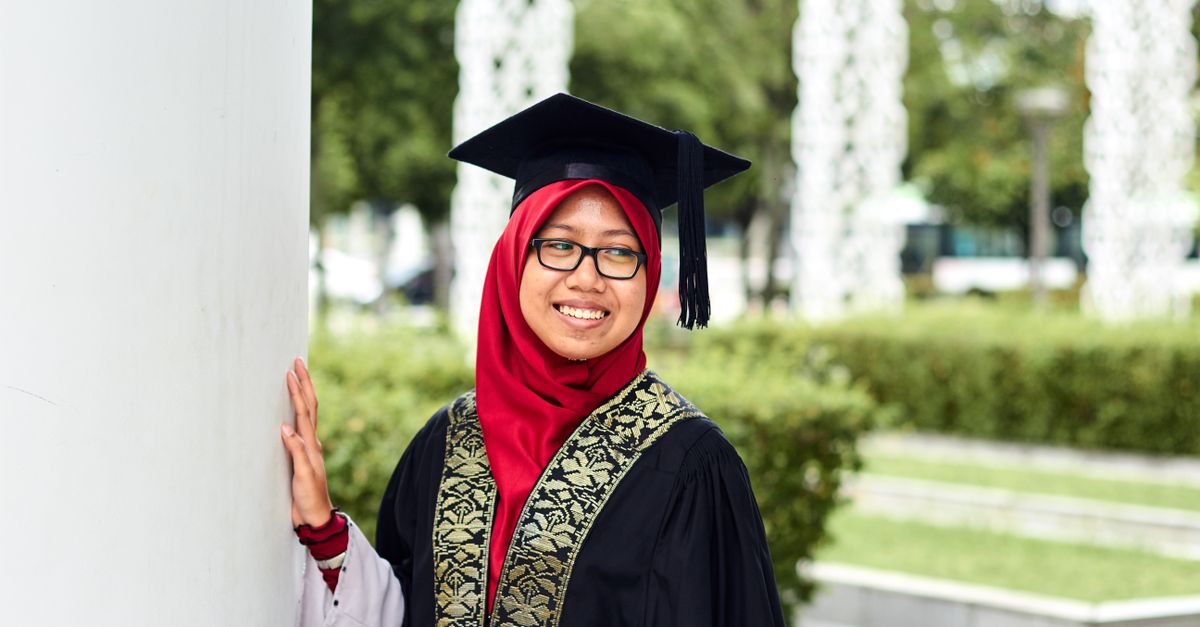
Arriving in Kuala Lumpur is not the end of the formalities: it is when the file takes its final shape. Holding the eVAL, the student presents themselves at KLIA immigration, then follows the instructions of their university and EMGS to finalise the Student Pass.
- ✔Compulsory medical check-up at an EMGS-approved centre, generally within 7 days of arrival (≈ RM 250).
- ✔Biometric data recorded as part of administrative identification.
- ✔Issuance of the iKad, the official ID card for foreign students, once the Student Pass is endorsed on the passport.
The most useful first step is to keep all documents in an easily accessible folder: passport, eVAL, offer letter, international office contact details, and proof of insurance. Once on campus, the university will explain the next steps (administrative appointment, screening, biometric data collection). Timelines are often short: it's best to arrive with your copies and scans already prepared.
For those who also want to open a bank account once there, the process is often easier as soon as student status is being validated and the first proof-of-address documents are in hand — see our guide to opening a bank account in Malaysia.
Interactive calendar: your student visa timeline
Click each step to see exactly what to do, from choosing your programme to arriving in Malaysia.
Malaysia student visa: practical calendar
Explore the key steps, deadlines, and points to watch so you can prepare your application without stress.
Your progress
Click a step to see the details.
Points to watch
- • Certified translations of documents may be required in some cases.
- • Health insurance is compulsory before arrival.
- • Proof of financial resources should be prepared carefully.
- • Confirmed housing is recommended before departure.
- • Processing can take longer during peak periods.
Useful reminder
Always plan for administrative delays and keep a digital copy of every document. Also check your passport's validity before any travel.
Can you work on a student visa in Malaysia?
Yes - but under strict conditions. Students enrolled at a public university (UA) or an approved IPTS may work up to 20 hours per week during their studies. This authorisation is limited to the following sectors:
- ✔Restaurants and food courts
- ✔Petrol stations
- ✔Mini-markets and convenience stores
- ✔Hotels - excluding front desk roles
- ✔University campus areas
⚠️ Key restrictions: The front desk receptionist role is explicitly prohibited. Students enrolled at language centres cannot work at all. Any breach results in immediate revocation of the Student Pass and deportation.
How to renew your Student Pass
The Student Pass is granted for the duration of the programme. At each annual renewal, IMI requires two cumulative conditions:
- ✔Minimum CGPA of 2.0 out of 4.0 - students below this threshold must provide a waiver signed by their university.
- ✔Attendance rate of at least 80% - excessive absenteeism automatically results in a renewal refusal.
The renewal process is managed by EMGS and your university. Plan ahead 2 to 3 months before the current permit expires to avoid any interruption of your legal status.
Students with a CGPA above 3.0 generally benefit from expedited processing. In the event of temporary academic difficulties, the university can submit an explanatory letter to IMI for a one-off waiver. Failing to renew on time results in irregular status, which is subject to fines and a re-entry ban.
Complete budget for studying in Malaysia
Beyond the administrative fees (see also our guide to the cost of living in Malaysia), here are the typical monthly living costs for students in Kuala Lumpur (Numbeo, June 2026 · rate 4.72 EUR/MYR):
| Item | MYR / month | EUR / month |
|---|---|---|
| Room in student residence or shared housing | RM 400-800 | 85-170 EUR |
| Studio apartment (outskirts, 1 bedroom) | RM 1,200-1,800 | 254-381 EUR |
| Food (hawker stalls + groceries) | RM 500-900 | 106-191 EUR |
| Transport (LRT metro + Grab) | RM 150-300 | 32-64 EUR |
| Mobile plan + internet | RM 80-150 | 17-32 EUR |
| Leisure and outings | RM 200-500 | 42-106 EUR |
| Total student living cost / month | RM 1,330-2,650 | 282-561 EUR |
Flights from Paris to Kuala Lumpur are currently available from 489 EUR return (Aviasales/Travelpayouts, 30/06/2026 - Saudi Airlines, September 2026 departure):
✈ Compare Paris to Kuala Lumpur flightsFlight prices vary by availability and travel period. Source: Travelpayouts/Aviasales Data API, recorded 30/06/2026.
Common mistakes in an EMGS student visa application
The biggest pitfall remains confusion between contacts: the Malaysian student process goes through the university, then EMGS — not through an embassy as with a standard visa. Filing an application through an unofficial intermediary is another common risk — only a channel recognised by the institution offers real security.
Missing documents are just as problematic: an almost-expired passport, an uncertified translation, an incomplete transcript, or a non-compliant photo can be enough to slow down the whole file. Required school subjects (maths, physics for science programmes) are sometimes overlooked too.
Finally, the calendar is often underestimated: some intakes fill up quickly at the most in-demand campuses. Working with a precise timeline, factoring in the intake date, the EMGS processing time, and the time needed for housing, avoids the scenario of a file started too late.
Anti-mistake checklist
- ✔Check the MQA accreditation of the institution before applying.
- ✔Check your passport's validity (18 months minimum) several months before intake.
- ✔Prepare certified translations as soon as you receive your grades and diplomas.
- ✔Plan ahead for English requirements (IELTS/TOEFL) with a test or proof of exemption.
- ✔Start the EMGS file 3 to 4 months before intake to keep a margin on the eVAL.
- ✔Budget for the full costs (EMGS, medical check-up, insurance, deposit), not just the administrative fee.
Frequently asked questions about the Malaysia student visa
How much does a student visa cost in Malaysia?
How long does it take to get the Student Pass?
Can I work on a student visa in Malaysia?
Which universities allow you to obtain the Student Pass?
Can I bring family members (spouse, children) with my Student Pass?
How do I renew my Student Pass in Malaysia?
Sources & Last Update
- • Immigration Malaysia (IMI) - Student Pass
- • EMGS - Education Malaysia Global Services
- • MQA (Malaysian Qualifications Agency) - mqa.gov.my
- • Numbeo - Cost of living in Kuala Lumpur (June 2026)
- • Travelpayouts/Aviasales Data API - Paris to KUL flight prices, recorded 30/06/2026
- • EUR/MYR rate: 4.72 (Wise, 30/06/2026)
This article is for informational purposes only and does not constitute legal or immigration advice: fees and rules change regularly, always verify on official websites before making any payment or travel plans.