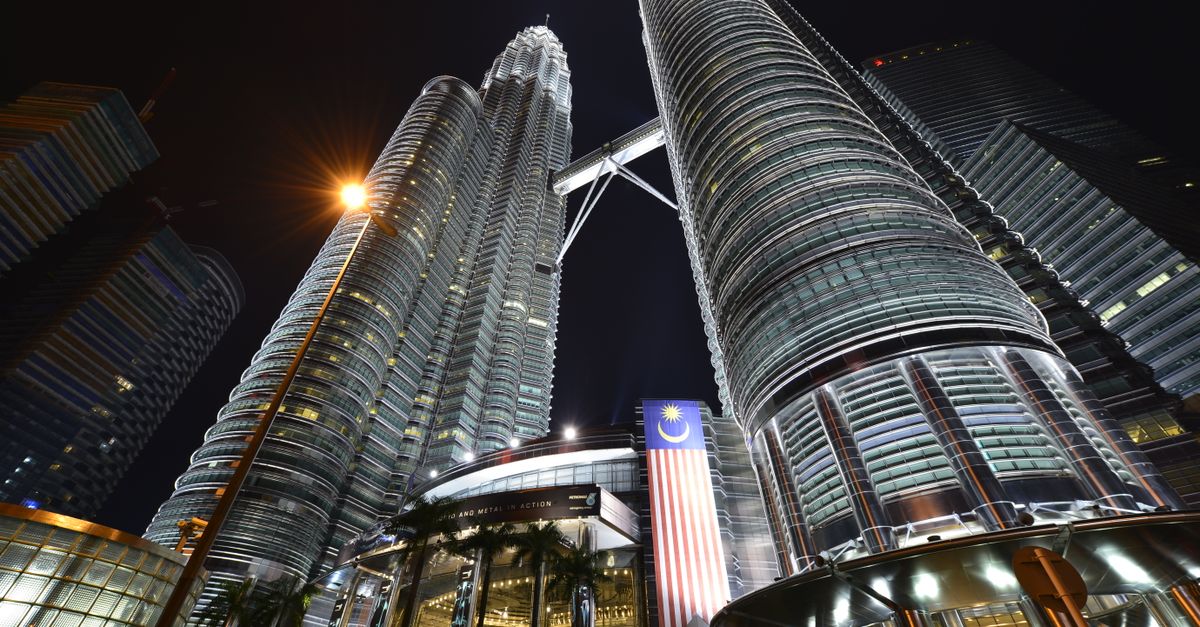
Malaysian Currency: Ringgit, Exchange Rates and Payment Methods
The currency of Malaysia is the ringgit, identified by the international code MYR and the local symbol RM. You will find this abbreviation on menus, labels, and ATMs: understanding displayed amounts is straightforward, but choosing how to pay requires some precautions.
Between the cash needed in some markets, the widely used cards in urban establishments, and QR code payments, habits vary depending on your destination. A stay in Kuala Lumpur isn’t prepared the same way as a stop on a small island or a move to a secondary city.
When converting euros, the challenge isn’t just knowing the daily rate—you must also compare the actual amount received after fees. An exchange bureau, ATM, or your bank may apply different conditions to the same transaction.
Let’s follow the case of Claire, a fictional traveller arriving for a holiday before considering an expatriation. Her approach relies on three useful habits: keeping multiple payment methods, selecting the local currency for transactions, and checking fees before confirming. These practices remain relevant in 2026, even as banking rates and app access conditions continue to evolve.
Malaysian Currency: Recognising Ringgit Notes and Coins
RM and MYR: Two Ways to Write the Same Malaysian Currency
RM stands for Ringgit Malaysia: this is the abbreviation used in everyday life. MYR is the ISO 4217 international code, the one you select in a converter, transfer, or banking app.
An amount displayed as « RM 20 » means twenty ringgit, not dollars. This distinction is especially useful if you visit multiple destinations, such as Singapore and Malaysia, where currencies are not interchangeable for everyday payments.
The term ‘ringgit’ refers to the serrated edges, inspired by the old silver coins used in the region. The current currency is issued by Bank Negara Malaysia, the central bank, which is the official source for identifying notes and their security features.
Which banknotes and coins should you use in Malaysia?
One ringgit is divided into 100 sen. Current banknotes cover everyday expenses and larger purchases, while coins are mainly used for small adjustments and change.
| Currency Type | Common values | Practical Tips |
|---|---|---|
| Polymer banknotes | RM 1 and RM 5 notes | Flexible, water-resistant pouch with a clear window |
| Other current series banknotes | RM 10, RM 20, RM 50 and RM 100 notes | Keep these in good condition and distinguish them by their printed value |
| Common Coins | 5, 10, 20 and 50 sen | Useful for small purchases and cash payments |
Colours make identification easier, but always check the printed number rather than relying solely on appearance. In a poorly lit wallet or when settling a fare quickly, this check avoids confusion.
Small denominations are particularly useful with vendors who have limited cash on hand. Claire keeps her higher-value notes for shops that can give change, rather than using them for small purchases right after a stall opens.
Prepare a cash reserve suited to your itinerary
You don’t need to carry your entire budget in cash, but leaving without any reserve would be inconvenient. Markets, some stalls, and less well-served areas may still require cash, even if digital payments are common elsewhere.
- Keep some small bills for daily expenses and spontaneous purchases.
- Divide your cash reserve between a daily-use wallet and secure storage.
- Check access to an ATM before an excursion or stay in a remote area.
- Do not rely on euros being accepted directly by local businesses.
For cash transactions, a national rounding mechanism applies to the total bill amount in multiples of five sen, not per item. A small discrepancy may simply be due to rounding rather than an error—just ask for the breakdown of the calculation.
Also keep clean banknotes and avoid stapling or damaging them. If a note seems unusual, compare its features with the central bank’s guidelines or seek advice at a bank branch rather than attempting to circulate it immediately.
For Claire, good organisation means making every purchase easy without keeping all her savings in her bag. Well-distributed cash and easily accessible funds are more useful than a large reserve that is difficult to spend.
Malaysian Ringgit to Euros: Understanding Exchange Rates and Choosing Where to Exchange
How many Malaysian ringgit do you get for one euro?
The ringgit-to-euro exchange rate fluctuates with the market. To check the indicative value of your budget when preparing a transaction, consult the euro-to-ringgit converter, then check the date and time of the displayed rate.
The official reference can be found on the page of exchange rates published by Bank Negara Malaysia. However, it is important to distinguish between a reference rate and the actual rate offered to an individual: the two do not guarantee the same conversion.
A search for ‘Malaysian currency in euros’ may also refer to the reverse conversion, when you want to understand a local price. In this case, the indicative exchange rate from ringgit to euro lets you read the value of one Malaysian unit directly in European currency.
The calculation method avoids errors: multiply your amount in euros by the number of MYR offered for one euro. Conversely, divide a local currency amount by the same rate to obtain its equivalent in euros, before any potential fees.
Comparing a displayed rate and the net amount received
The best indicator is the net amount received for the same initial sum. An advertisement claiming ‘no commission’ does not guarantee the most advantageous offer, as the provider’s fee may be included in the spread between their buying and selling rates.
Imagine Claire presents the same amount to two counters: she must ask how much she will receive exactly, including all deductions. Comparing only the most visible figure on the board is not enough, especially when columns distinguish between ‘buying’ and ‘selling’ rates.
When exchanging euros for local cash, the professional is buying your euros. If unsure about the applicable column, ask for the final result in writing or on the counter’s calculator before handing over your notes.
Also verify that the advertised terms match your transaction. Some offers may depend on the amount exchanged, the denominations presented, or specific availability: the key details are those confirmed at the counter.
Authorised exchange counters in shopping malls or airports?
Licensed exchange counters in shopping malls often provide an interesting option, as multiple nearby booths allow for easy comparison. However, their location does not replace verifying their licence and the terms offered.
At the airport, you pay mainly for the convenience of an immediately accessible service. Conditions are often less favourable than in the city, though this isn’t an absolute rule: exchanging just enough to reach your accommodation may be reasonable if you need cash upon arrival.
Present foreign banknotes in good condition and carry your passport, which may be requested for regulatory checks. Count the amount received in front of the staff, verify the receipt, and keep it until the end of your stay.
Exchanging a large sum on the first day also risks having to reconvert leftover funds on departure, with another exchange gap. Claire adjusts her transactions to her itinerary, avoiding unnecessary trips for a gain that would be offset by transport costs.
Compare the net amount, the provider’s security, and the cost of travel: a good exchange rate is judged on the overall operation.
ATM Withdrawals and Bank Cards: Paying in Malaysia Without Avoidable Fees
Withdrawing Ringgit: Identifying Different Fees
A withdrawal may include multiple charges: a fee from your bank, potential operator fees from the ATM, and a conversion cost. A card advertised as « no foreign fees » may waive some elements but does not guarantee the entire transaction is free.
Before travelling, review your bank’s fee schedule and separately check purchases and withdrawals outside the eurozone. Conditions may depend on your plan, a limit, the currency, or a billing period: there is no universal free allowance for all cards.
On-site, prefer ATMs linked to a bank and located in busy areas. If local fees are displayed before confirmation, you can cancel and compare with another network—do not assume a brand will always be free.
The approved limit depends on both your personal ceiling and the limit set by the device. A refusal does not necessarily mean a faulty card: check your banking app, available balance, and settings for international transactions.
Choosing MYR instead of EUR at the terminal
When paying in Malaysia, normally opt for billing in MYR. If a terminal or ATM offers an immediate conversion to euros, it is usually dynamic currency conversion (DCC).
This option gives the impression of better budget control, as the amount appears in a familiar currency. However, it may include a less favourable margin than the one applied by your card network and bank.
Declining the conversion offered by the machine does not necessarily cancel the payment or withdrawal. Read each screen: the goal is to proceed in the local currency, then let your service provider handle the conversion as per your agreement.
Claire asks the merchant to retain the local receipt when the terminal offers euros. She then checks the ticket, as a verbal preference does not replace verifying the currency actually recorded.
Card acceptance, deposits, and backup solutions
Visa and Mastercard are widely accepted in hotels, shopping centres, and many restaurants in major cities. Acceptance may vary among smaller vendors, while American Express depends more on the establishment: it’s best to ask before ordering.
Contactless payments make transactions easier, but keep your physical card and know your PIN. A terminal may require insertion, and a discharged phone or unavailable mobile wallet function should not disrupt your day.
For hotels or car rentals, distinguish between the payment for the stay and the pre-authorisation for the security deposit. The latter may temporarily block part of your spending capacity—check directly which card type is required and how the funds will be released.
Debit cards, prepaid cards, and credit cards are not always processed the same way. Check the provider’s official terms before booking, especially if you’re travelling with only one payment method.
For a long-term stay, our guide on hidden banking fees to check before signing helps compare the less obvious costs. Keep your bank’s customer support details accessible offline, stored separately from your wallet.
A second card stored separately and a reasonable cash reserve protect your stay better than relying on a single product marketed as ideal.
The central bank’s demonstrations complement visual checks: they help recognise security features without relying on a simple photograph found on social media.
E-wallets and DuitNow QR: understanding Malaysian digital payments
DuitNow QR: a payment standard, not a universal app
DuitNow QR allows participating apps to read a common payment format. The system operates within the PayNet ecosystem and can be offered in modern shops as well as at small stalls.
Its presence does not mean any foreign phone or bank account can process the payment. You need a compatible app, active access to the relevant functions, and a usable funding source for the transaction.
To understand participating services and available international connections, check the information from PayNet, the operator of Malaysian payment infrastructure. Cross-border agreements apply to specific services: a French account is not automatically compatible just because it allows transfers or mobile payments in Europe.
Why does this distinction matter? Claire might see a QR code at a stall but be unable to pay with her usual app, while a local customer can settle instantly from their bank account.
Touch ’n Go eWallet, GrabPay and Boost: Check Your Eligibility
These digital wallets are part of the solutions available in the country, but their access conditions are not identical. Nationality, ID document, phone number, and verification steps may determine which features are available.
Opening an account does not guarantee access to all its features. Before transferring a significant amount, check whether you can pay a merchant, top up with your card, retrieve unused funds, and complete the required identification steps.
Conditions may also vary depending on the origin of the funds. A top-up with a foreign card may incur fees or restrictions, and some balances may not be usable in the same way for peer-to-peer transfers.
Refer to official pages, such as the Touch ’n Go eWallet help centre, rather than outdated tutorials. Registering a short-term traveller should not be confused with setting up a resident who already has a local account.
For expatriation, access to a Malaysian bank can simplify recurring payments and the use of certain services. The guide for opening a digital bank account in Malaysia helps prepare eligibility checks, without assuming a visa or passport is sufficient for all institutions.
Touch ’n Go card and mobile wallet: distinguishing balances
The physical Touch ’n Go card and its associated app are not simply two interchangeable ways to access the same pool of funds. Depending on the service used, the payment may draw from the card balance or the e-wallet balance, each with specific conditions.
Phone-based top-ups require a compatible card and a device with the appropriate NFC function. Do not assume an older card bought during a previous trip has the same capabilities as a newer model.
Before a journey, confirm the accepted payment method for the transport network or road service. Solutions vary, and a feature available for one use should not be assumed for all tolls or public transport.
When scanning, verify the recipient’s name, the amount, and the final transaction status. If the connection drops, check your transaction history before retrying to avoid duplicates, then show the confirmed receipt to the seller.
Mobile payments are a practical addition when they work with your profile; they do not replace an independent backup solution that does not rely on your phone.
A demonstration by the operator helps distinguish between scanning, verifying the beneficiary, and the final confirmation. These steps remain necessary even when the payment seems almost instantaneous.
Tips, Scams and Practical Money Questions in Malaysia
Tipping in Malaysia: Check the bill before adding
Tipping is generally not mandatory in Malaysia. You can thank exceptional service, but there is no universal percentage to systematically add to every meal or journey.
Some restaurants and hotels charge service fees, sometimes alongside applicable taxes. These lines don’t always mean the same thing: check the breakdown and don’t assume an added amount is directly tipped to the staff member who served you.
The terms ‘net’ and ‘++’, found on some rates, also deserve your attention. The first usually indicates a net price, while the second signals additional elements; ask for the final amount and the provider’s conditions before ordering.
In our example, Claire reviews the bill before leaving a voluntary tip. If she wants to thank a specific person, she discreetly asks how to do so, without turning the gesture into a cultural obligation.
Currency scams, fake QR codes, and suspicious transactions
Avoid street money changers or strangers offering exchange services, even if their rates seem attractive. An apparent advantage does not justify the risk of missing notes, counterfeit bills, or no recourse after the transaction.
At ATMs, shield your PIN and inspect the card reader and keypad before use. If a note appears loose or a stranger insists on helping, cancel the transaction and choose another machine.
Never share an SMS validation code with a third party. Someone claiming to be a bank employee, delivery person, or technical assistant has no right to ask for this code to ‘secure’ your funds.
QR codes also require scrutiny: a fraudulent sticker may redirect your payment to another recipient. Compare the name displayed in the app with the one confirmed by the seller and refuse links that ask for your banking details outside the usual process.
Claire enables notifications to spot unexpected debits quickly. If she notices a suspicious transaction, she blocks her card via the official channel, contacts her bank immediately, and keeps receipts and relevant references.
If a withdrawal seems to fail but the amount is still debited, do not attempt multiple retries immediately. Note the ATM’s location, time, and displayed messages, then contact your bank to investigate the transaction.
Frequently Asked Questions About Malaysian Currency and Exchange Rates
The following answers distinguish the official currency, its local display, and its conversion. For any financial comparison, keep the same direction: an EUR/MYR rate does not express the same thing as a MYR/EUR rate.
What currency is RM?
RM is the local abbreviation for Ringgit Malaysia, the Malaysian ringgit. It appears on prices and receipts in Malaysia. One ringgit is divided into 100 sen; this abbreviation does not refer to the euro or Singapore dollar.
How much is 1 euro worth in Malaysian ringgit?
The value of one euro in ringgit fluctuates with the market. Check the EUR/MYR exchange rate for today on the converter linked in this article, then compare it to the net amount offered by your bank or exchange provider. Commissions and conversion margins may reduce the amount received.
What is Malaysia’s 3-letter currency code?
The international currency code for Malaysian money is MYR. This corresponds to the ringgit and is used in transfers, converters, and bank statements. Locally, you’ll more often see the symbol RM before the amount.
What is the exchange rate in Malaysia?
There is no single commercial rate for all payments and exchange bureaus. Bank Negara Malaysia publishes reference rates, while each provider applies their own terms. To compare accurately, ask for the final amount received for an identical sum, including fees.
A clearly identified currency, a verified beneficiary, and a confirmed final amount are the three checks to perform before validating a transaction.
Fee & Exchange Rate Calculator
Compare the actual cost of withdrawals or purchases in Malaysia based on your card type.
Indicative rate: 1 € = 4.90 RM. Fees include exchange and a fixed commission.