
DE Rantau:
Malaysia's digital nomad visa
Work remotely from Malaysia legally for up to 24 months: income requirements, fees, documents and taxes, based on official MDEC sources.
Key takeaways
- ✔ The DE Rantau Nomad Pass is a Professional Visit Pass valid 3 to 12 months, renewable once (24 months maximum), with multiple entries, family included.
- ✔ Minimum annual income: USD 24,000 for digital professionals, USD 60,000 for non-tech profiles (category opened in June 2024).
- ✔ Application fee: RM 1,080 per applicant (RM 540 per dependant), non-refundable, paid online to MDEC.
- ✔ Official processing time: 6 to 8 weeks; the application is 100% online via the MDEC portal.
Source: official MDEC DE Rantau FAQ (version 8, November 2025); links at the bottom of the page.
What is the DE Rantau Nomad Pass?
Launched in late 2022 by MDEC (Malaysia Digital Economy Corporation, the government agency for the digital economy), the DE Rantau Nomad Pass is Malaysia's answer to the nomad visas of Bali or Portugal: a residence pass dedicated to remote workers, freelancers and the self-employed who want to settle temporarily in Malaysia while working for foreign clients or employers.
Technically, it is a Professional Visit Pass (Pas Lawatan Ikhtisas): it allows you to live in the country and work remotely, but it is neither a standard local work permit nor a path to permanent residence. It covers Peninsular Malaysia and Labuan; you can travel to Sabah and Sarawak, but you enter them under tourist status.
The programme has found its audience: as of 14 October 2024 (the latest official figures published), MDEC had recorded 4,059 applications and 1,988 approved passes, with Russia, Pakistan, the United Kingdom, Japan and the United States leading the nationalities, and 40% of holders settling in with their families.
Who is eligible in 2026?
Two categories of applicants have coexisted since the June 2024 expansion. In both cases, you must be over 18, hold a passport valid for at least 14 months and, if you are an employee, work for an employer not registered in Malaysia. Freelancers, on the other hand, may invoice Malaysian clients.
| Category | Eligible profiles | Minimum annual income |
|---|---|---|
| Tech | Developers, cloud/cybersecurity engineers, data, AI, UX/UI, digital marketing, digital content creators… (freelancers, self-employed or remote employees) | USD 24,000 |
| Non-tech | Executives (CEO, COO, CFO), business development, marketing, finance/accounting, sales, HR, legal professionals, consultants, supply chain “or an equivalent role” | USD 60,000 |
The pass is open to all nationalities, with the exception of Israeli citizens. Source: MDEC FAQ V8 (November 2025).
Fees and timelines: how much and how long?
Since 1st May 2025, application fees are non-refundable, whatever the outcome of your application. Here is the full breakdown of the official costs:
| Item | Amount | Notes |
|---|---|---|
| Application fee (main applicant) | RM 1,080 | Inclusive of tax (8% SST included), paid online to MDEC, non-refundable |
| Application fee (dependant) | RM 540 | Per person |
| Immigration Pass Fee | RM 90 / 3 months RM 360 / year | At pass endorsement |
| Multiple-entry visa (MEV) | Varies | Depends on nationality, set by Immigration |
| Security deposit (if MDEC sponsors) | RM 1,500 (Europe) | From RM 200 (Singapore) to RM 2,000 depending on the country; refunded when the pass expires |
As for timelines: MDEC quotes 6 to 8 weeks of processing once your file is complete (feedback from applicants points to occasionally longer waits), then an e-Pass issued within a week of the endorsement request. The approval letter is valid for 6 months and cannot be extended: the endorsement must be completed within that window.
Which documents should you prepare?
All documents must be provided in English (or as certified translations), in PDF format. The file varies depending on your status:
Remote employee
- ✔ Signed employment contract mentioning remote work, ideally 6 months or longer, started at least 3 months before the application, with an employer outside Malaysia
- ✔ Payslips for the last 3 months
- ✔ Matching bank statements for the last 3 months
- ✔ Confirmation letter from your employer (recommended)
Freelancer / self-employed
- ✔ Signed client contracts (scope, duration, payment terms)
- ✔ Invoices for the last 3 months
- ✔ Proof of incoming payments (Wise, PayPal, Stripe, bank transfers)
- ✔ Bank statements showing regular income above the threshold
- ✔ Portfolio or website (optional but useful)
Bringing your family on the DE Rantau
The pass accepts the following dependants: your spouse (including common-law partners), children under 18 (adopted children and stepchildren included, with no age limit for a child with a disability) and the main holder's parents. Two important limits to be aware of:
- ✔ A dependent spouse is not allowed to work in Malaysia under this status.
- ✔ Enrolling a child in school requires a Student Pass, obtained through the school itself (not needed for homeschooling).
For choosing a school and family-friendly neighbourhoods, see our guide to moving abroad as a family.
Taxes: what does the official framework say?
The pivotal rule is the 182-day threshold: spending 182 days or more in Malaysia within a calendar year makes you a Malaysian tax resident (progressive rates and reliefs reserved for residents). The official MDEC FAQ outlines two situations:
- ✔ Remote employee (foreign-source income): exempt if your stay does not exceed 60 days; beyond that, taxation depends on your residence status and the applicable tax treaties.
- ✔ Freelancer invoicing Malaysian clients: a 10% withholding tax applies for the first 182 days (unless a more favourable treaty rate applies), then you are taxed as a resident with a tax credit for the withholding already paid.
International taxation depends heavily on your personal situation (home country, tax treaty, business structure): have your setup validated by a tax adviser and consult the LHDN (the Malaysian tax authority). Our guide to expat taxation covers the basics.
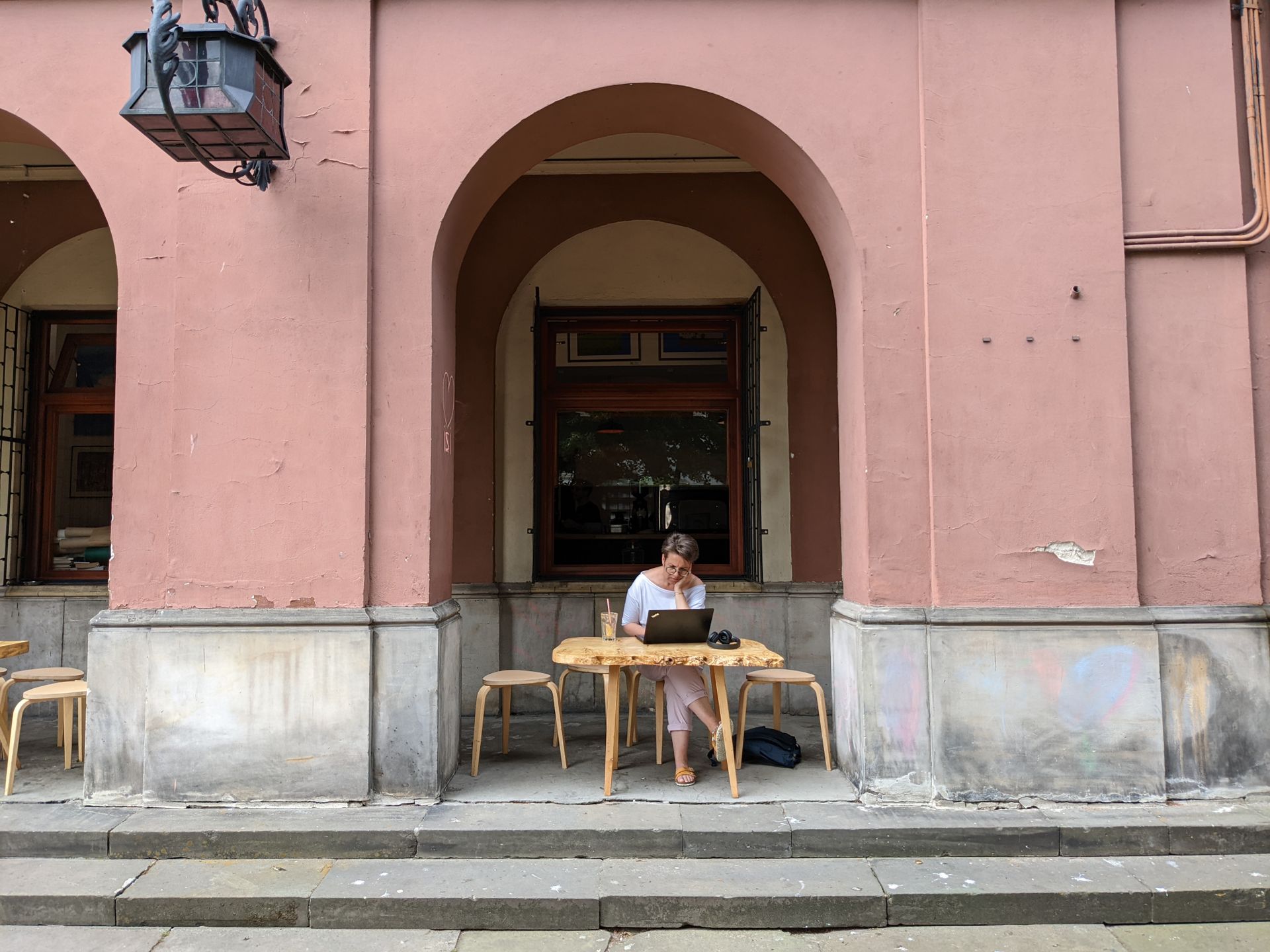
Life as a digital nomad in Malaysia
The programme is backed by a network of more than 2,000 “DE Rantau Hubs”: certified accommodation and workspaces (high-speed internet, work equipment, strategic locations) in Kuala Lumpur, Penang, Langkawi and Johor. Pass holders also enjoy autogate access at the KLIA terminals, provided they have completed the MDAC within the three days before arrival.
One point to watch: most Malaysian banks do not accept the Professional Visit Pass for opening a local account. Plan ahead with a multi-currency solution such as Wise or Revolut; our online bank account guide compares the options that actually work from Malaysia.
For everyday life: coworking spaces and laptop-friendly cafés, mobile plans and fibre broadband, and the must-have apps (Grab, Touch 'n Go).
The application, step by step
- 1Prepare your file: proof of income covering 3 months, a passport valid for 14 months or more, documents as PDFs in English.
- 2Submit your application online via the official portal mdec.my/derantau and pay the fees (RM 1,080 + RM 540 per dependant). Track progress on malaysiadigital.mdec.my.
- 3Wait for approval: officially 6 to 8 weeks. The approval letter is valid for 6 months.
- 4Enter with the right visa: an eVISA or Visa with Reference depending on your nationality. An ongoing tourist stay cannot be converted; if you are already in the country, you will have to leave and come back.
- 5Complete the endorsement of the pass (Immigration Pass Fee of RM 90/quarter or RM 360/year) and fill in the MDAC before arrival. Renewal can be requested up to 3 months before expiry.
Frequently asked questions
Can I convert my tourist visa into a DE Rantau pass while in Malaysia?
No. Converting a tourist pass is prohibited. If your approval arrives while you are in Malaysia as a tourist, you must leave the country and return with the appropriate visa (eVISA or Visa with Reference depending on your nationality).
Can my spouse work in Malaysia?
No. A spouse admitted as a dependant is not allowed to work in Malaysia under this status. They can, however, keep working remotely for a foreign employer by applying for their own DE Rantau pass if they meet the income requirements.
Does the pass cover Sabah and Sarawak (Borneo)?
No, the pass covers Peninsular Malaysia and Labuan. You can travel to Sabah and Sarawak, but you enter them as a tourist. A separate scheme, DE Rantau Sarawak, also exists under the Sarawak Digital Residency Programme.
How long does it really take to get the pass?
The official timeline is 6 to 8 weeks once your file is complete, extendable if additional checks are needed. Applicant feedback points to occasionally longer waits: submit your application well ahead of your planned departure date.
Can I open a Malaysian bank account with this pass?
With difficulty: most local banks do not accept the Professional Visit Pass. The practical solution is to use a multi-currency account (Wise, Revolut) together with the Touch 'n Go eWallet for everyday payments.
Does the DE Rantau lead to permanent residence?
No. It is a temporary visa capped at 24 months in total. For a long-term project, look at the MM2H (5-to-20-year residence) or the Employment Pass if you are hired locally.
Sources & updates
Data drawn from the official DE Rantau Nomad Pass FAQ V8 (MDEC, November 2025), the official programme page and, for tax residence, PwC Tax Summaries Malaysia (December 2025). Adoption statistics: MDEC press release of 16 October 2024 (the latest official figures published). As the conditions change regularly, always check the current rules on the MDEC website before submitting your application. Last updated: June 2026.