
Pangkor Island: Beaches, Access and Things to Do
Discover Pangkor Island, from its beaches and fishing villages to ferry access, activities and practical tips for planning your stay.

Published on
Malaysia’s flag is called the Jalur Gemilang, meaning “glorious stripes”. It features 14 alternating horizontal red and white stripes and a blue canton in the upper hoist corner, bearing a crescent and a yellow 14-point star. This combination makes it instantly recognisable, despite its resemblance to the American flag.
Its elements reflect the country’s federal structure, the place of Islam and that of the Malay rulers. Its history spans several stages that should be distinguished: the Federation of Malaya, independence and then the creation of Malaysia. In Kuala Lumpur, around Merdeka Square and on government buildings, this emblem is part of public life. Understanding its design also helps visitors interpret national ceremonies and distinguish federal symbols from the flags of individual states. For broader context, see our guide to Malaysian culture.
The Jalur Gemilang follows a precise design: the stripes are the same width and run from red at the top to white at the bottom. The blue rectangle occupies the upper section near the flagpole, with the yellow motifs standing out against it.
| Element | Description | Key point |
|---|---|---|
| Name | Jalur Gemilang | Commonly translated as “glorious stripes” |
| Stripes | 14 alternating horizontal red and white stripes | Express federal unity |
| Canton | Blue rectangle near the hoist | Evokes the unity of the people |
| Crescent | Yellow motif in the canton | Refers to Islam |
| Star | Yellow 14-point star | Reflects the federation’s composition |
| Colours | Red, white, blue and yellow | Combine civic values and royal symbolism |
The Malaysian Information Department, Jabatan Penerangan Malaysia, presents these features in its institutional documentation on the Jalur Gemilang. To identify the emblem correctly, focus on the canton: it contains a single radiant star accompanied by a crescent, not a group of small stars.
A small reproduction may make the points difficult to count. The yellow crescent is then the most practical visual reference.

The 14 stripes and 14 points now represent the union of the 13 states and the federal government. Explanations intended for the general public also refer to the federal territories, which are attached to the federal level. The design should therefore not be understood as representing fourteen current states.
The parallel between the stripes and the celestial symbol is deliberate: the two graphic elements express the same idea of shared belonging. There is no official correspondence assigning a particular red stripe to Johor or a particular point to Sabah.
The states have their own institutions and emblems, while the federal level represents the nation as a whole. The federal territories do not each receive an additional stripe: in this interpretation of the symbol, they belong to the federal component.
Why was this number retained after Singapore’s departure? Because the meaning evolved without changing the design. History therefore explains an apparent anomaly: the number of stripes does not simply correspond to the number of current states.
This distinction helps explain the rows of flags displayed in front of certain public buildings. The Jalur Gemilang represents the whole country; nearby emblems may identify a state or an institution.
Malaysian institutional explanations associate the colours with national values and the country’s political organisation. These meanings do not form an ethnic code: no colour is reserved for a particular community.
The crescent represents Islam, the religion of the federation. This wording describes its institutional position; it does not mean that all residents are Muslim. Malaysian society includes Buddhist, Christian and Hindu communities, among others. Our guide to religions in Malaysia provides further context.
The religious symbol and the blue background therefore convey complementary messages. One refers to the constitutional framework, while the other represents the unity of a diverse population living across Peninsular Malaysia, Sabah and Sarawak.
The yellow of the crescent and star recalls the monarchical tradition. Malaysia is a federal constitutional monarchy, and the royal colour incorporates this dimension into the shared emblem.
This political meaning should be distinguished from the shades used on screens or textiles. A variation in appearance does not change the meaning of the colours, but a reproduction intended for official use must follow the graphic requirements of the relevant administration.
The chronology presented by the Malaysian Information Department distinguishes the birth of the design from its later changes. The current flag did not appear all at once when Malaysia was created.
A competition was held in 1949 to choose the emblem of the Federation of Malaya. The design by Mohamed Hamzah, an architect working for the Johor Public Works Department, was selected and then adapted before being adopted.
The first official raising took place in 1950. This version had 11 stripes and an 11-point star, corresponding to the federation’s components at the time. It therefore predates independence: the birth of an emblem and that of an independent state do not necessarily coincide.
In 1963, the creation of Malaysia brought together the Federation of Malaya, Sabah, Sarawak and Singapore. The number of stripes and points increased to fourteen to reflect this new composition.
Singapore left the federation in 1965, but the design remained unchanged. Its interpretation shifted towards representing the states and the federal government: visual continuity therefore accompanied a political transformation.
The name Jalur Gemilang was officially given in 1997. It is therefore much more recent than the emblem itself: using this name when describing the design’s beginnings is convenient, but its attribution belongs to a later stage.
1950 refers to the first federal flag, 1963 to its current form and 1997 to its name. This distinction avoids apparent contradictions between the different adoption dates.
The resemblance to the United States flag comes from the red and white stripes and blue canton. From a distance, this shared arrangement can be confusing, particularly when the fabric is wrapped around the flagpole.
The contents of the canton clearly distinguish them. The American emblem has several white stars, while Malaysia’s bears a yellow crescent and a single many-pointed star. Yellow is therefore an immediate clue.
The meaning of the stripes also differs. In the American case, they refer to the founding colonies; in the Malaysian case, they express federal unity according to an interpretation adapted to the country’s development.
Can we conclude that the Malaysian design is simply a copy? Visual resemblance alone is not enough to establish this claim. Its documented history involves a local competition, the work of Mohamed Hamzah and institutional adaptations: a similar composition does not imply an identical meaning.
The Jalur Gemilang can be seen on public buildings, in schools and during official ceremonies. In Kuala Lumpur, Merdeka Square provides a particularly meaningful setting in which to observe the emblem’s place in the national landscape.
The national calendar published by the Malaysian authorities distinguishes two major celebrations: Hari Merdeka, on 31 August, commemorates the independence of the Federation of Malaya; Hari Malaysia, on 16 September, marks the formation of Malaysia. These holidays therefore celebrate different events.
As they approach, façades, shops and vehicles may be covered in national decorations. Our guide to festivals in Malaysia helps place these days within the cultural calendar; Malaysian news can be followed for announcements concerning the celebrations.
For visitors, the simplest approach is to treat the emblem with respect: do not let it trail on the ground, walk on it or handle an official installation. During a ceremony, follow the organisers’ instructions and remain discreet during the raising of the colours.
A souvenir photograph does not justify crossing a barrier or moving a flag. To combine this discovery with a historical walk, consult our guide to things to do in Kuala Lumpur. Watching the ceremony without disrupting it remains the best approach.
Each state has its own flag, distinct from the Jalur Gemilang. These local emblems may appear near government offices, official residences or at regional events.
Johor notably uses a blue field and a red canton bearing a white crescent and star. Penang’s flag is recognisable by its palm tree, while the Sabah flag features the outline of Mount Kinabalu.
These examples show that the visual vocabulary varies: monarchic symbols, religious motifs or geographical references. It would be misleading to automatically assign local colours the same meaning as those on the national flag.
A state flag expresses regional identity; the Jalur Gemilang represents the federation as a whole. Their presence side by side reflects these complementary forms of belonging.
It is called the Jalur Gemilang, generally translated as “glorious stripes”. This name refers to the national emblem, which should be distinguished from the flags of the Malaysian states.
The crescent represents Islam, the religion of the federation. It does not mean that the entire population is Muslim: several religions are practised in Malaysia.
No. Their current interpretation associates the states with the federal government. The federal territories belong to this federal component and do not each have an additional stripe.
Look at the blue canton: the Malaysian flag contains a yellow crescent and a single radiant yellow star. The American flag has several white stars and no crescent.
Discover Pangkor Island, from its beaches and fishing villages to ferry access, activities and practical tips for planning your stay.

Discover Sepilok in Borneo and observe orangutans in the rainforest, while learning about rehabilitation and wildlife conservation.

Explore the Kinabatangan River in Borneo with boat safaris, proboscis monkeys, orangutans, pygmy elephants and rainforest wildlife.
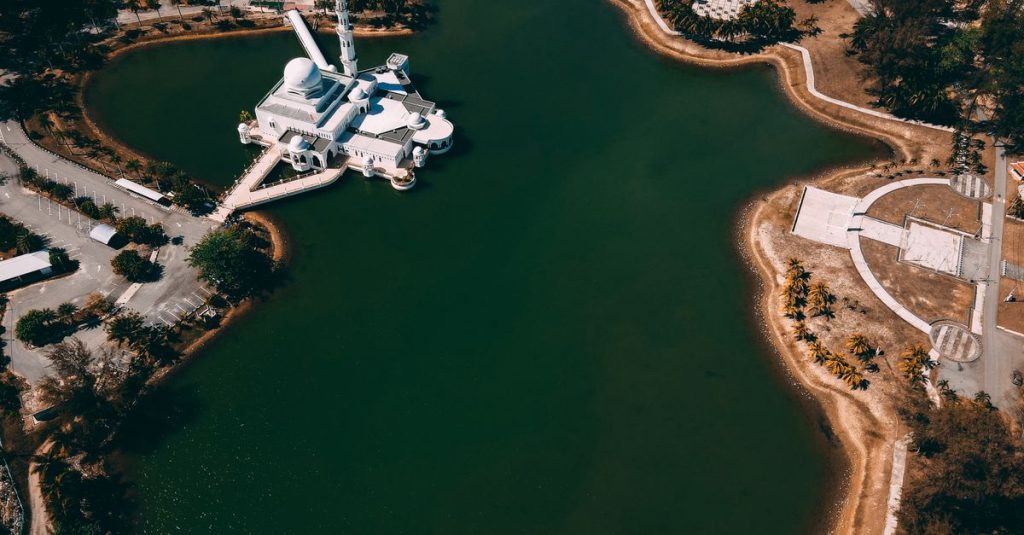
Discover Malaysia itineraries for 10 days, 2 or 3 weeks, with essential stops and practical advice for organising your trip.

Discover roti canai, Malaysia’s flaky, crisp breakfast flatbread, served with curry or dhal and enjoyed at mamak restaurants or home.

Discover Sipadan, Borneo’s legendary island: diving permits, the best season and practical advice for planning your underwater adventure.
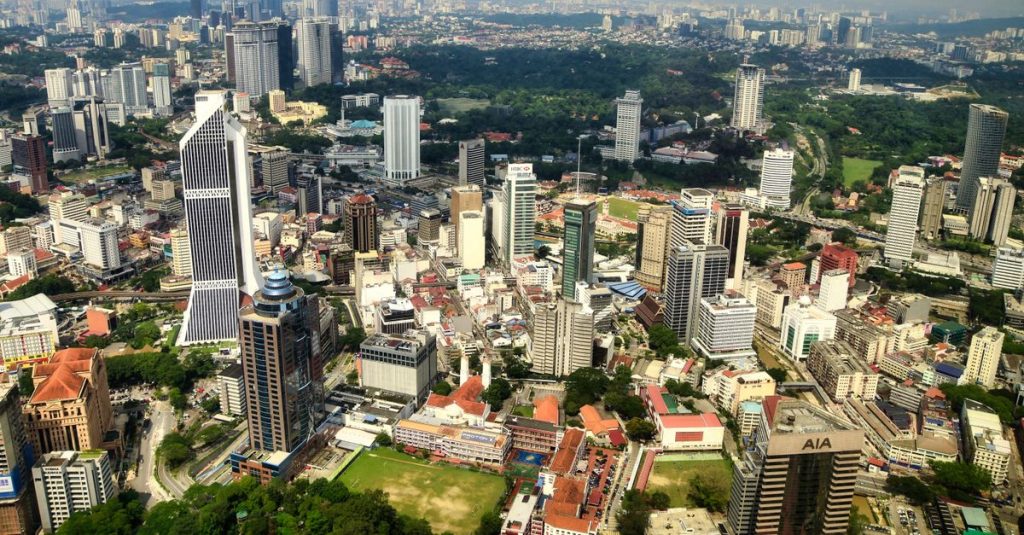
Discover Malaysia’s population, ethnic diversity and main religions, and understand the differences between citizens, residents and communities.

Experience the Malaysia MotoGP Grand Prix at Sepang: practical advice on tickets, access, accommodation and making the most of race day.
Scroll to see more articles →