Pangkor Island: Beaches, Access and Things to Do
Discover Pangkor Island, from its beaches and fishing villages to ferry access, activities and practical tips for planning your stay.
Published on
To see the Malayan sun bear in Borneo, head to the Bornean Sun Bear Conservation Centre in Sepilok, near Sandakan, in the Malaysian state of Sabah. The centre cares for rescued animals in a forest environment, allowing visitors to discover the world’s smallest bear without searching randomly through the jungle.
Also called the sun bear, this mammal remains a wild animal despite its compact build. A visit provides an insight into its behaviour, the threats facing its natural environment and the work required to rehabilitate individuals that have lived in captivity: an encounter to approach patiently, rather than as a guaranteed spectacle.
In brief
Sepilok is a practical place to observe bears in Borneo in a setting dedicated to their protection. The Bornean Sun Bear Conservation Centre, usually known by the acronym BSBCC, is close to the Sepilok orangutan rehabilitation centre.
This location makes it possible to combine complementary visits, but the establishments should not be confused. They care for different species and organise their activities according to their own requirements: check access arrangements and ticketing procedures with each one.
Sandakan is the practical reference point for locating Sepilok on your itinerary. Do not confuse this area with Kota Kinabalu: both destinations are in the same state, but they are not the same stop on your journey.
Borneo is not entirely Malaysian: the island is divided between Malaysia, Indonesia and Brunei. Our map of Malaysia and its neighbouring countries helps explain this geography before you book transport.
At the BSBCC, visitors see residents cared for by a conservation organisation. Seeing an animal in a forest enclosure is not the same as observing it in the wild, even when the vegetation and behaviour create a very natural impression.
Visibility depends in particular on where the animals are and what they are doing. A bear may remain behind a tree trunk or in a poorly visible area: plan a visit based on observation, without expecting constant proximity or a perfect photograph.
An accidental encounter in the forest cannot be arranged. For a trip centred on this species, the centre provides an identified place to learn about it, without turning the animal’s presence into a promise of entertainment.
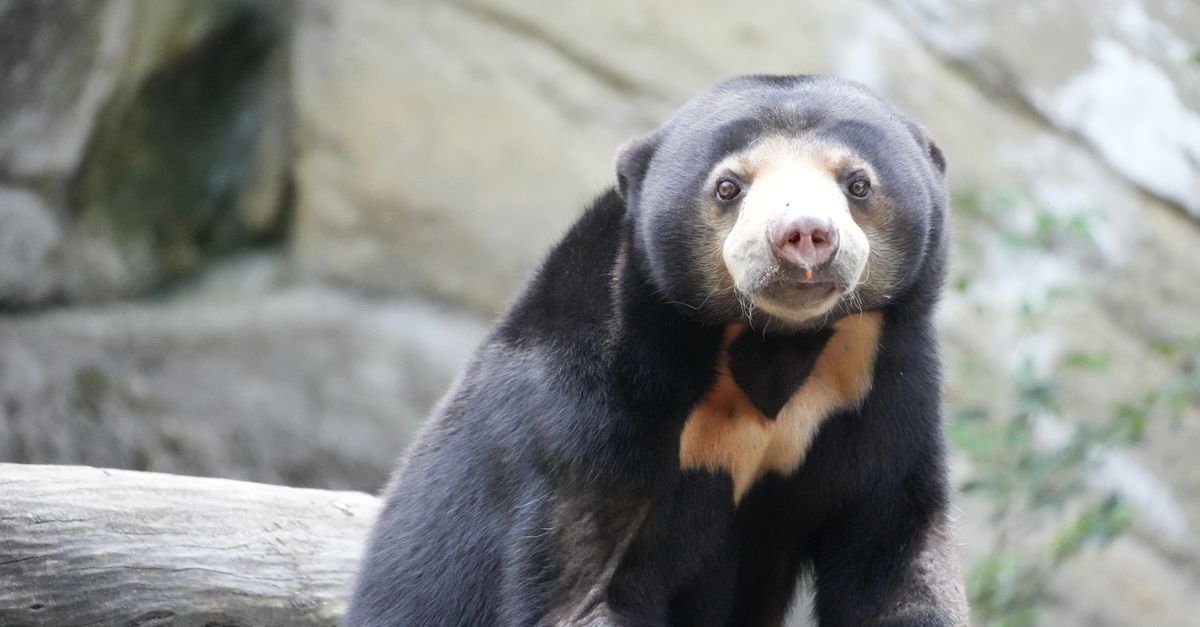
The Malayan sun bear belongs to the species Helarctos malayanus, considered the smallest of today’s bears. Its dark coat, rounded ears, relatively pale muzzle and chest marking help identify it.
The name “sun bear” refers to the light-coloured patch on its chest. Its shape and colour vary: do not expect a perfectly regular pattern, or use this feature alone to determine an individual’s geographical origin.
The island population is often referred to as Helarctos malayanus euryspilus. It has traditionally been distinguished as a subspecies specific to Borneo, particularly on the basis of morphological characteristics.
However, this distinction is not treated uniformly in all taxonomic classifications. For visitors, the essential point is simple: the animal at Sepilok does belong to the species known as the Malayan sun bear, whose range is not limited to this island.
Its curved claws help it climb and explore the resources of the tropical forest. Although classified among the carnivores, its diet includes fruit, insects and honey: the zoological term does not mean that it eats meat exclusively.
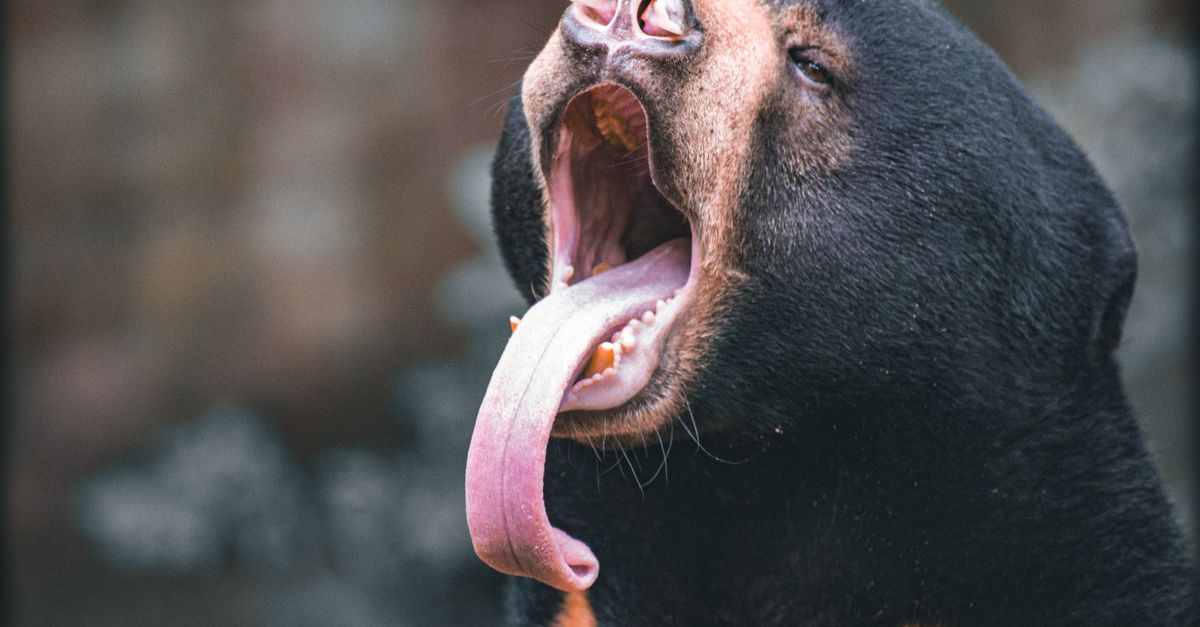
Its long tongue helps it reach resources that are difficult to access. Watching an individual inspect a cavity or work at a piece of wood is therefore more informative than looking only for a frontal portrait.
Its small size makes it neither domestic nor harmless. Understanding its behaviour means looking at its forest adaptations, not comparing it with a pet.
A bear rehabilitation centre does more than house animals visible to the public. The BSBCC cares for rescued individuals and works towards their rehabilitation, with a return to the forest when their circumstances allow it.
Previous captivity may have limited their opportunities to learn and explore. Providing a suitable environment encourages useful behaviours, but does not automatically make a resident capable of living independently.
Searching for food, climbing and using the opportunities provided by the environment are important activities for a forest animal. In a rehabilitation programme, facilities and stimulation have a precise purpose: encouraging independence rather than provoking a reaction for visitors.
An individual busy foraging may seem less spectacular than an animal close to the viewing platform. Yet this activity better illustrates the skills used in its natural environment.
Not every animal received can necessarily return to the wild. Health, behavioural abilities and the conditions in the release environment all play a part in this decision, which is made by qualified teams.
It would therefore be misleading to regard every admission as a future release. Long-term care for some individuals may also meet a need for protection and welfare.
Poaching and deforestation threaten the species. Malayan sun bear conservation therefore involves both caring for animals and protecting the environments where wild populations can survive.
The Malayan sun bear’s habitat is more than a collection of trees: it must provide resources, shelter and opportunities to move around. A visit is most meaningful when it helps explain the link between an individual’s fate and that of the forest. You can also explore Malaysia’s biodiversity and national parks to understand the wider conservation context.
Check practical information directly with the BSBCC before travelling. Opening hours, prices, possible access restrictions and booking conditions may change; an old tourist information sheet cannot confirm that they are still valid.
Also plan your return journey to your accommodation. To compare transport options without assuming that a vehicle will be immediately available, consult our guide to transport in Malaysia, then confirm your journey with the chosen provider.
| What to prepare | Useful check |
|---|---|
| Access to the centre | Confirm opening hours, prices and visiting arrangements with the BSBCC. |
| Transport | Plan both the outward and return journeys with your accommodation or transport provider. |
| Reduced mobility | Ask the centre about accessibility arrangements suited to your needs. |
| Nearby visits | Check the orangutan centre’s arrangements separately. |
Choose breathable clothing and shoes with good grip. Bring protection from showers and something to protect your photographic equipment, rather than relying on consistently clear skies.
The climate in Malaysia varies by region: conditions observed elsewhere in the country do not necessarily describe Sabah. Check the Malaysian Meteorological Department’s forecast as your visit approaches.
If this stop forms part of an international trip, check the requirements with Malaysian Immigration and the competent authorities for your situation. Our guide to travelling to Malaysia helps identify the procedures to examine, but does not replace official confirmation.
Above all, avoid cramming too many animal visits into a tight itinerary. A flexible schedule gives you time to observe and read the explanations, rather than reducing Sepilok to a photographic stop.
Stay in authorised areas and follow the team’s instructions. Do not try to make an animal raise its head by calling, hitting a railing or waving an object: a reaction obtained in this way is not spontaneous observation.
Do not offer any food. Food brought by a visitor may be unsuitable and undermine the keepers’ work, particularly if it encourages an association between human presence and reward.
Use your camera’s zoom instead of trying to reduce the distance. Follow the instructions concerning flash photography and keep walkways clear so that you do not inconvenience other visitors.
A photograph partly obscured by leaves is not a failure: vegetation is part of the animal’s living environment. If the individual disappears, wait calmly rather than trying to make it return.
Climbing, sniffing, foraging or resting provide information about the animal’s current activity. However, an isolated posture cannot diagnose an animal’s emotional state or health; the keepers have access to monitoring that visitors do not.
Ask them about the behaviours you observe and the rehabilitation objectives. This is more useful than a quick human interpretation, such as assuming that a resident wants to play with the public.
Discovering Borneo’s wildlife can continue in other environments and with other species, including proboscis monkeys and their habitats in Borneo. Each excursion nevertheless requires suitable planning: seeing one species at Sepilok does not guarantee seeing another on a different outing.
Avoid offers involving petting, carrying bear cubs or close-contact photographs. A respectful encounter allows the animal to move away, even when this limits what visitors can see.
The Bornean Sun Bear Conservation Centre is in Sepilok, near Sandakan, in the Malaysian state of Sabah. It cares for rescued animals in a setting dedicated to their protection and rehabilitation.
The individuals observed at the centre are cared for in facilities that include forest enclosures. The visit is not an encounter with a free-ranging wild population.
The establishments are close to one another, making complementary visits possible. Check their opening hours, access conditions and ticketing arrangements separately with each centre.
Do not seek contact and do not distribute food. This is a wild animal; respect authorised areas and all instructions given by the centre’s team.
Discover Pangkor Island, from its beaches and fishing villages to ferry access, activities and practical tips for planning your stay.
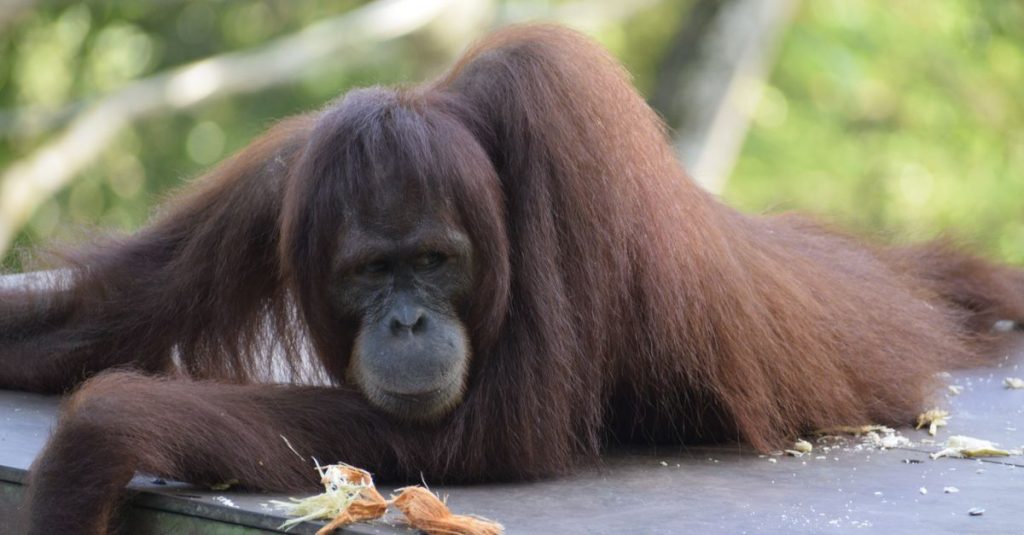
Discover Sepilok in Borneo and observe orangutans in the rainforest, while learning about rehabilitation and wildlife conservation.
Explore the Kinabatangan River in Borneo with boat safaris, proboscis monkeys, orangutans, pygmy elephants and rainforest wildlife.
Discover Malaysia itineraries for 10 days, 2 or 3 weeks, with essential stops and practical advice for organising your trip.

Discover roti canai, Malaysia’s flaky, crisp breakfast flatbread, served with curry or dhal and enjoyed at mamak restaurants or home.
Discover Sipadan, Borneo’s legendary island: diving permits, the best season and practical advice for planning your underwater adventure.
Discover Malaysia’s population, ethnic diversity and main religions, and understand the differences between citizens, residents and communities.

Experience the Malaysia MotoGP Grand Prix at Sepang: practical advice on tickets, access, accommodation and making the most of race day.
Scroll to see more articles →