Pangkor Island: Beaches, Access and Things to Do
Discover Pangkor Island, from its beaches and fishing villages to ferry access, activities and practical tips for planning your stay.
Published on
To see proboscis monkeys in their natural habitat in Borneo, head for the Kinabatangan River in Sabah or Bako National Park in Sarawak. The former is best explored by boat along its wooded banks; the latter allows you to look for these long-nosed monkeys from trails and accessible coastal areas. Near Sandakan, Labuk Bay offers a different experience: the animals live in fragmented mangrove and receive supplementary food, making this visit quite different from an observation without feeding.
Your choice therefore depends as much on your itinerary as on the kind of encounter you are looking for. Understanding the behaviour of this Borneo-endemic primate helps you choose the right habitat, look in the right places and maintain a respectful distance. No forest outing guarantees a sighting: vegetation, weather and the movements of the groups are all part of wildlife watching.
In brief
The proboscis monkey, or Nasalis larvatus, is endemic to Borneo: its natural range is limited to this island. It mainly inhabits mangroves, swamp forests and riverside woodland, rather than just any undifferentiated tropical forest.
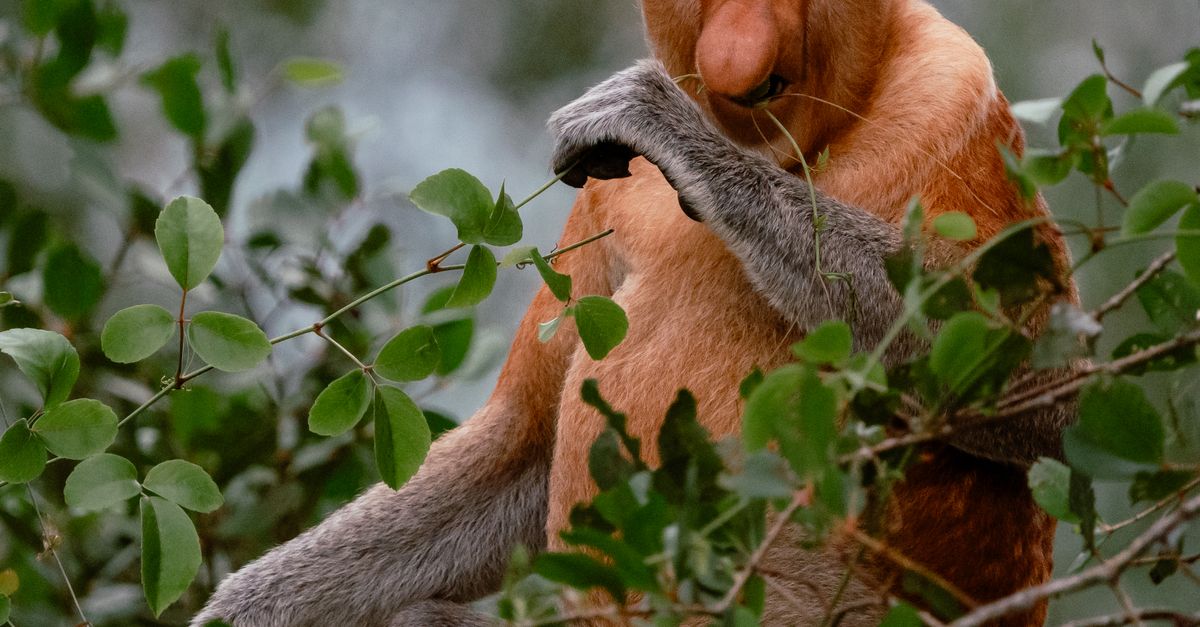
The adult male is recognisable by his prominent nose, brown-to-orange coat and pale, rounded belly. The female’s nasal appendage is less developed, so looking only for a large figure with a hanging nose may mean missing part of the group.
This anatomical feature is associated with vocal communication and sexual selection. It should not, however, define the animal: its long tail helps it balance while moving through the branches, while its diet includes leaves and fruit.
Its large belly is linked to a digestive system adapted to plant food rich in fibre. It is not a sign that visitors can use to assess the animal’s health, and certainly not a reason to offer it human food.
Contrary to a common misconception, this primate is not a great ape like the orangutan. The two animals belong to different groups and are not necessarily found in the same conditions.
An excellent swimmer, the proboscis monkey can cross a watercourse, but this ability never justifies provoking a movement to obtain a photograph. The most informative scenes are often more discreet: an individual selecting leaves, a youngster following an adult or several members of the group resting in the canopy.
Looking at the branches as a whole rather than at a single face gives you a better understanding of these interactions. To prepare for this kind of wildlife watching, our guide to biodiversity and parks in Malaysia places these encounters in context: the habitat matters as much as the species you are looking for.
Bako National Park is a sensible choice if your trip takes you to Kuching in Sarawak. Its appeal lies in the meeting point between forest, mangrove and coastline: looking for the animals becomes part of a walk through these different landscapes. If you are planning to base yourself in the city, see our guide to living in Malaysian Borneo for wider regional context.
Wooded areas near the shore and forest edges are worth examining carefully. A movement in the foliage or a motionless silhouette may reveal an animal, but no tree or beach should be treated as a guaranteed viewing point.
At Bako, it is better to move slowly and take regular breaks than to rush along the paths while looking only at the ground. Binoculars make it easier to scan the foliage and avoid approaching simply to distinguish a face or a youngster hidden behind an adult.
A guide familiar with the area can help interpret signs of animal presence and identify species. Their role is not to make animals appear, but to make the search more worthwhile while taking local conditions into account.
If a group crosses your field of vision, stay on the authorised route. Following it into the vegetation can disturb its movements and take you onto difficult terrain; ending an observation is better than pursuing the animals.
The visit involves a boat transfer, whose organisation depends in particular on navigation conditions. Check the entry arrangements, trail openings and accommodation options with Sarawak Forestry Corporation, then confirm crossing conditions with the transport operator.
Our guide to visiting Bako from Kuching can help you prepare this stage. To round off your stay, also look at activities to discover in Kuching: leaving some flexibility in your schedule avoids making the whole excursion depend on seeing an animal.
The Kinabatangan River in Sabah is particularly suitable for travellers who want to prioritise viewing from the water. The boat offers a view of the trees along the banks, where groups can be spotted without entering the forest on foot.
Early-morning and late-afternoon trips are often sought for viewing riverside gatherings. This is not a fixed appointment, however: weather conditions and the animals’ movements affect every outing.
The quality of the experience depends largely on the pilot’s conduct. A slow approach, without cutting across a route or lingering beneath an occupied tree, allows you to observe behaviour with less disturbance.
Before booking, ask how the operator manages distance from the animals and the presence of other boats. A promise of extreme proximity is less reassuring than a clear explanation of navigation practices.
The boat must not be used to provoke a reaction. Making an individual jump, encouraging it to cross or chasing a group turns observation into disturbance, even if the scene looks spectacular in a video.
Binoculars, rain protection and a bag to protect your equipment are useful in this humid environment. When taking photographs, choose a distant composition; a branch partly obscuring the animal is part of the natural setting.
When choosing accommodation, compare transfers, the trips actually included, the guide service and cancellation conditions. Consult our guide to transport in Malaysia when considering connections, then confirm the services directly with the accommodation provider.
If your route stays around Kota Kinabalu, the Klias River region is also worth considering. It is not a nearby stop to add automatically: choose a viewing area that fits your itinerary.
Near Sandakan, Labuk Bay is a private site developed around a pocket of mangrove, in a landscape occupied by oil-palm plantations. The animals live freely, but receive supplementary food on feeding platforms.
This distinction matters when choosing where to see proboscis monkeys. The presence of visitors and the distribution of food influence the gatherings you observe, so the experience differs from watching a group search for resources along a river.
Individuals accustomed to visitors may come closer than they do elsewhere. This does not make them tame or available for contact: do not touch them, offer them anything or block their route.
Feeding makes certain observations easier, but does not by itself provide an understanding of natural feeding behaviour. For a trip focused on the species’ ecology, this visit should be clearly distinguished from an outing without supplementary food.
The word “sanctuary” alone is not enough to establish a facility’s conservation benefits either. Information about habitat management, visitor supervision and animal monitoring is more useful when assessing its practices.
| Location | How to explore it | Point to consider |
|---|---|---|
| Bako, Sarawak | Walking in a coastal park | Presence varies according to the groups’ movements |
| Kinabatangan, Sabah | River trips | Quality of the approach and boat handling |
| Labuk Bay, Sabah | Platforms with supplementary feeding | Behaviour influenced by feeding |
Prices, feeding times and transport options may change. Check them with the official management of Labuk Bay before booking, without basing your journey on the assumed existence of a shuttle.
The right comparison is not simply between a close encounter and a distant one: it concerns the conditions in which the animal is observed.
Deforestation, plantation expansion and the destruction of mangroves threaten the proboscis monkey’s habitat. Fragmentation can isolate groups in separate patches of woodland, even though their survival depends on a combination of resources and opportunities to move.
For travellers, supporting conservation starts with a practical choice: favour services that explain their practices rather than offers promising a spectacular encounter. Employing local guides is worthwhile, but does not replace respectful behaviour in the field.
Speak quietly, put food away and follow the instructions of the site staff. If an animal approaches, do not reduce the distance further; leave it an escape route and avoid positioning yourself between it and its group.
Avoid calling, gestures intended to attract its attention and flash photography. A successful photograph does not justify changing its behaviour, particularly when several visitors are simultaneously seeking the same shot.
Rain can reduce visibility and change walking or navigation conditions. Our guide to the climate in Malaysia helps you prepare your equipment, but only local information can determine how an outing should proceed.
Bring footwear suited to the terrain, waterproof protection and something to keep essential belongings dry. For travel documents, consult the relevant Malaysian authorities before departure; entry formalities must be checked independently of excursion bookings.
Accepting a brief, distant or unsuccessful encounter is part of responsible wildlife watching. This attitude avoids putting pressure on a guide to pursue animals and leaves room for observing the wider habitat.
Bako suits a stay around Kuching with observations on foot. The Kinabatangan is better suited to boat trips in Sabah. In both cases, sightings are not guaranteed.
Yes. Bako National Park in Sarawak is an option for looking for this species from Kuching. You should organise access and check visiting conditions with the park manager.
They move freely in a fragmented habitat, but receive supplementary food and are accustomed to visitors. This situation differs from an observation without feeding along the Kinabatangan.
Early morning and late afternoon are often good times to look for groups near the riverbanks. The programme must nevertheless be adapted to local conditions and the guide’s recommendations, with no guarantee of a sighting.
Discover Pangkor Island, from its beaches and fishing villages to ferry access, activities and practical tips for planning your stay.
Discover Sepilok in Borneo and observe orangutans in the rainforest, while learning about rehabilitation and wildlife conservation.
Explore the Kinabatangan River in Borneo with boat safaris, proboscis monkeys, orangutans, pygmy elephants and rainforest wildlife.
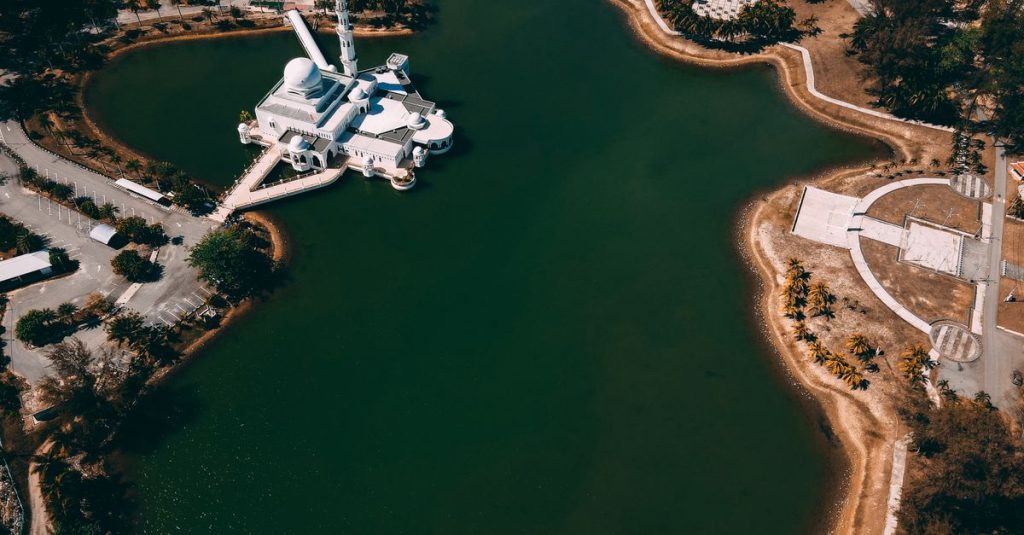
Discover Malaysia itineraries for 10 days, 2 or 3 weeks, with essential stops and practical advice for organising your trip.

Discover roti canai, Malaysia’s flaky, crisp breakfast flatbread, served with curry or dhal and enjoyed at mamak restaurants or home.
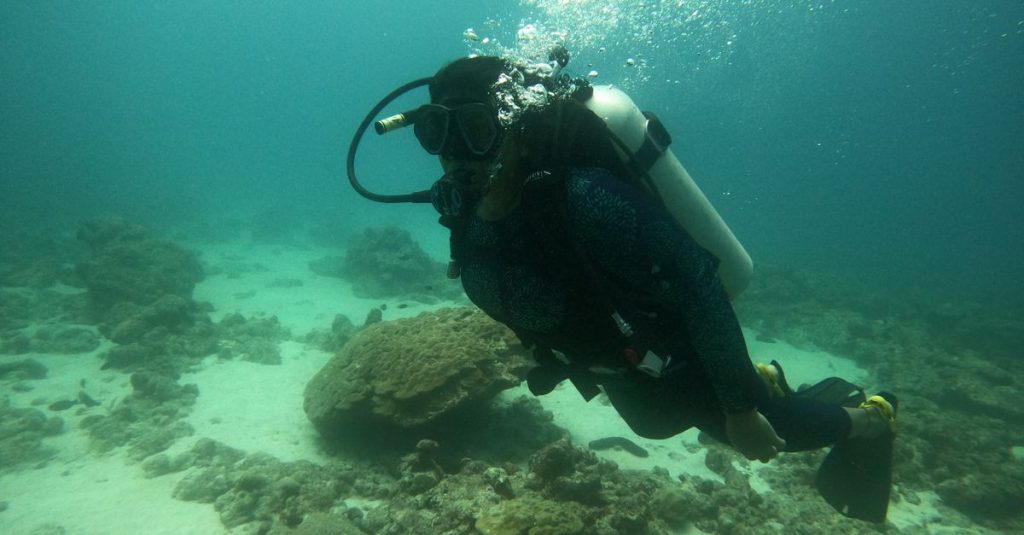
Discover Sipadan, Borneo’s legendary island: diving permits, the best season and practical advice for planning your underwater adventure.
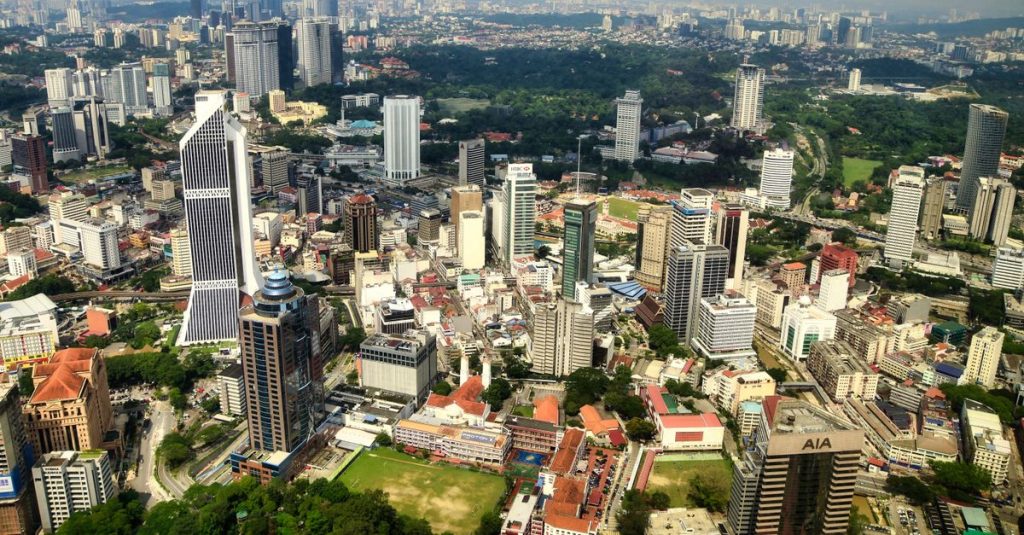
Discover Malaysia’s population, ethnic diversity and main religions, and understand the differences between citizens, residents and communities.

Experience the Malaysia MotoGP Grand Prix at Sepang: practical advice on tickets, access, accommodation and making the most of race day.
Scroll to see more articles →