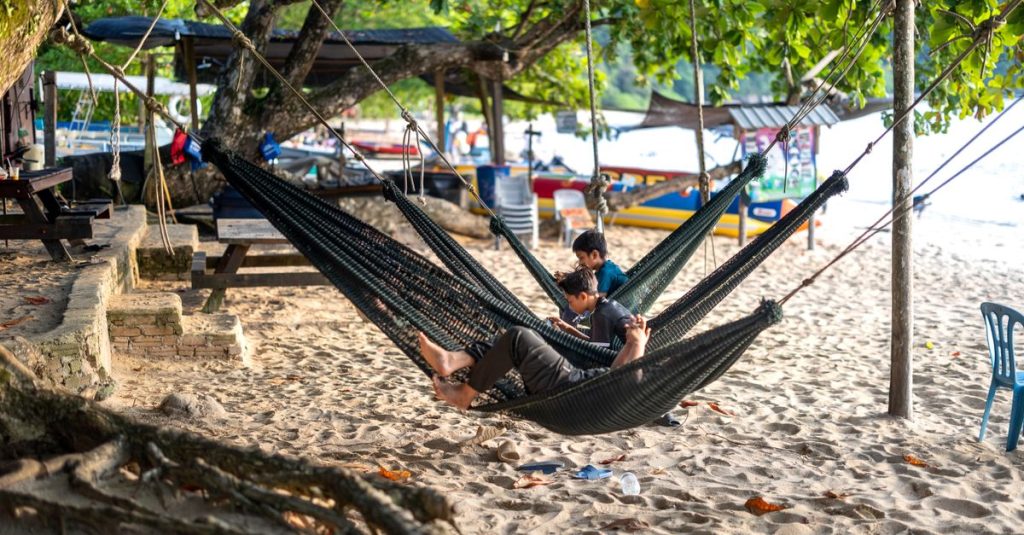
Pangkor Island: Beaches, Access and Things to Do
Discover Pangkor Island, from its beaches and fishing villages to ferry access, activities and practical tips for planning your stay.
Published on
The bus is generally the best option for keeping costs down between Kuala Lumpur and Singapore; flying prioritises speed, while the train suits travellers who would rather avoid a long road journey. However, the ranking changes when you compare the complete journey: getting to the terminal, waiting, crossing the border and transferring to your accommodation. An attractive air fare can lose its advantage once luggage and airport transfers are added. Conversely, a coach that drops you close to your destination may remain worthwhile despite taking longer.
The decisive factor is therefore your departure and arrival addresses, not just the mode of transport. From central Kuala Lumpur, compare departures that are accessible from your neighbourhood. In Singapore, distinguish between arriving at Changi, Woodlands or an urban stop: these locations involve different connections and varying levels of effort with suitcases. Fares, timetables and entry requirements change; check them with carriers and official authorities before booking.
In brief
Compare a journey between your actual addresses, rather than between terminals alone. This is the most reliable way to distinguish between the options. An arrival advertised as being in Singapore does not necessarily mean being dropped off in the neighbourhood where you are staying.
| Transport | Main advantage | Point to watch | Suitable for |
|---|---|---|---|
| Bus | Often good value and a choice of drop-off points | Traffic and waiting at the border | Travellers who are flexible about their arrival time |
| Train | Rail journey avoiding congestion on the sections travelled by train | Connections and availability of the cross-border service | Travellers who prefer rail and accept changes |
| Plane | Short flight time | Access to airports, checks and supplements | Travellers in a hurry or already close to an airport |
For a coach, add the ticket, the journey to the departure point and the trip from the final stop. A departure from Berjaya Times Square may be convenient if you are staying in Bukit Bintang; it is less attractive from a distant neighbourhood. Check that this stop is actually offered for your departure.
For rail, include the various bookings and urban transport after Woodlands. For air travel, add any checked luggage, seat options and airport transfers. The headline price is comparable only when the included services are identical.
Also check the billing currency. An amount displayed in euros on a platform may differ from the final charge because of payment fees and the exchange rate applied. Ask your bank about its terms and check the rate with the institution carrying out the exchange.
Flexibility also deserves a place in the calculation. A cheaper, non-changeable ticket can become expensive if your stay in Kuala Lumpur changes. Read the exchange, cancellation and refund conditions directly with the seller before paying.
Advertised durations do not always cover the same elements. Some concern only the main journey; others include transfers but not the wait before boarding. A particularly short flight estimate should therefore not be interpreted as a guarantee from your hotel.
The road journey depends in particular on traffic conditions and congestion at border controls. Rail avoids traffic jams on its own tracks, without removing waiting times caused by connections. Air travel remains subject to check-in, security and immigration procedures.
Your tolerance for changes matters as much as speed. Carrying a suitcase between several platforms and then taking the metro is a different constraint from spending a long time seated. With bulky luggage, examine the necessary handling rather than looking only at the advertised duration.
A late departure requires particular attention to the arrival. The urban services available may differ from those offered during the day, and your accommodation may have a specific check-in procedure. Ask the operators concerned and the accommodation provider for confirmation.
To place this connection within a wider itinerary, consult the guide to intercity transport in Malaysia. It helps you consider the journey as one stage of your itinerary rather than as an isolated booking.
The best option is the one that combines an acceptable total cost with an arrival time compatible with your plans. If you prioritise savings and a relatively simple booking, start by looking at coaches.
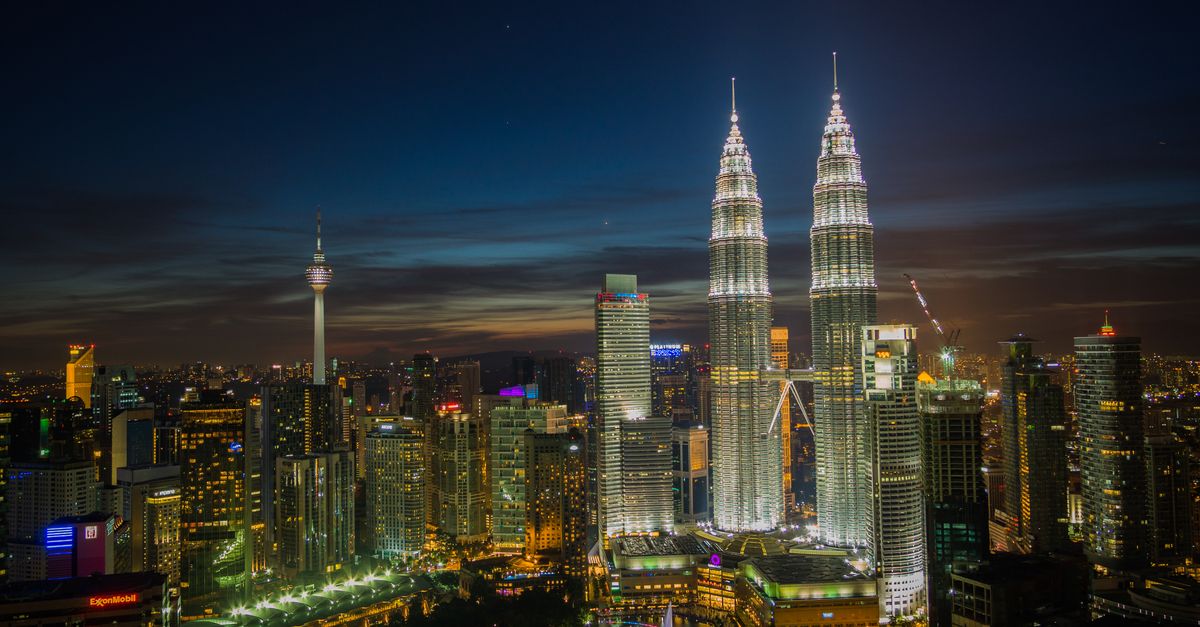
A direct bus is often the most accessible compromise for travelling between Kuala Lumpur and Singapore. It avoids having to build a rail itinerary with connections and may offer a convenient urban drop-off. However, “direct” does not mean that you will remain seated all the way to your destination: international checks interrupt the journey.
In Kuala Lumpur, Terminal Bersepadu Selatan, generally known as TBS, is an important departure point for intercity connections. Operators also offer boarding in other areas, particularly around Berjaya Times Square. The exact offer depends on the company and the service booked.
Do not rely solely on the neighbourhood name. A commercial meeting point, a ticket counter and a boarding platform may be in different places. Note the full address and read the arrival instructions supplied with your booking.
In Singapore, drop-offs may be offered in areas such as Bugis or Boon Lay, depending on the operator. These destinations are not interchangeable when travelling to a hotel. Check the final section on the local network before selecting your ticket.
A stop close to an underground station is not automatically the most convenient. Look at the number of changes required, the route with luggage and the access arrangements for your accommodation. To prepare for your departure, our guide to Kuala Lumpur neighbourhoods and attractions can also help you position your final day in the city.
Photographs of a coach are not enough to judge the quality of the service. Look at recent reviews concerning punctuality, clarity of instructions and assistance at the border. Focus on recurring comments rather than a single account.
Check with the company what conditions apply to suitcases, bulky items and booking changes. The advertised facilities may vary depending on the vehicle assigned to the departure. If a power socket or a particular type of seat is essential, request explicit confirmation.
Keep your documents, necessary medication and valuables in a bag that is easy to take with you. A light layer may be useful in an air-conditioned vehicle. For breaks and the possibility of eating on board, follow the operator’s instructions rather than assuming that all companies work in the same way.
The land crossing involves the procedures for leaving Malaysia and entering Singapore. The arrangements for getting off, collecting luggage and re-boarding depend on the checkpoint used and the instructions given on site. Listen to the staff’s instructions before leaving the vehicle.
Note the company, registration number and designated meeting point. Several vehicles may look alike in a busy control area. Also ask how to contact assistance if a formality keeps you longer than expected.
Do not assume that all coaches use the same border checkpoint. The route may vary according to the service and operating conditions. Similarly, a commercial arrival time cannot guarantee how long administrative checks will take.
Periods with many departures and commuter traffic can lengthen the wait. Avoid scheduling a non-refundable activity immediately after your theoretical arrival. The saving is mainly worthwhile if your plans allow some flexibility.
A rail journey to Singapore must be planned as a series of services, not as a simple direct ticket from Kuala Lumpur. Johor Bahru is the crossing point to examine when travelling to Woodlands. The suitability of this option depends on the services actually open for booking and on their connections.
Check with KTMB which services are available between KL Sentral and JB Sentral for your date. The electrified network to the south has changed; older itineraries that systematically describe a change at Gemas should not be followed without checking. The current offer should guide your booking.
Check whether the proposed service runs directly to Johor Bahru or whether the result includes a connection. Also look at the exact stations, as a search for a city may conceal differences between terminals. Timetables, seat categories and fare conditions must be confirmed with KTMB.
Rail has one clear advantage: the sections travelled by train do not depend on motorway congestion. This does not guarantee that there will be no delays. Allow a reasonable interval before the next connection and avoid an itinerary that relies on arriving exactly on time.
For comfort, examine the storage options and the conditions for carrying luggage. A reserved seat does not necessarily mean that a large suitcase will have space immediately beside you. Keep the items you will need during the journey accessible.
The cross-border rail service between JB Sentral and Woodlands requires a separate booking to be checked with KTMB. Do not assume that buying the journey from Kuala Lumpur automatically includes this crossing. Check what is actually shown on each confirmation.
The availability of this section may determine your entire itinerary. Before paying for a first non-changeable ticket, make sure that the next part can be booked at a compatible time. A short rail crossing may become unattractive if it involves a long wait at the station.
The formalities follow the process specific to the service used. Confirm the presentation requirements, requested documents and boarding access limits with the operator and the relevant authorities. Do not apply to the train the instructions given for coaches.
Also check what happens if a delay causes you to miss separately purchased tickets. A missed connection does not necessarily entitle you to a free transfer to another service. The applicable protection depends on the contractual conditions of each booking.
Woodlands Train Checkpoint is not in Singapore’s tourist centre. You will need to arrange an additional journey to your arrival neighbourhood. Distinguish carefully between the rail terminal, the road checkpoint and underground stations with similar names.
Depending on your destination, you may consider public transport with a connection or a taxi. Check current routes with Singaporean operators rather than automatically transferring information intended for road travellers. The exact point where you leave the terminal matters.
A stop in Johor Bahru can make the organisation less stressful, provided you deliberately include it in your stay. Our page about Johor Bahru and its links with Singapore provides context about this border city. The train becomes convincing when all the stages fit together correctly, not merely when the main journey appears comfortable.
Flying is preferable when your priority is to reduce the time spent on the main journey. Its real advantage nevertheless depends on your position in Kuala Lumpur and your destination in Singapore. For a journey between city centres, transfers and waiting take up a significant part of the day.
Start by reading the airport codes and terminals shown on the selected offer. A “Kuala Lumpur–Singapore” search does not remove the need for this check. The carrier and departure airport determine the access options and the procedures to follow.
To reach KLIA from the centre, the airport train, coaches and chauffeur-driven cars meet different needs. The KLIA Ekspres avoids congestion on the rail section. You still need to reach its departure station and walk to the check-in area.
Check timetables and fares with Express Rail Link for rail services and with the relevant operators for other options. A taxi may simplify the journey with suitcases, without guaranteeing a road journey time. Allow enough time according to the airline’s presentation requirements.
The comparison of ride-hailing services and taxis in Malaysia explains the differences between app-based bookings and traditional taxis. In particular, check the vehicle capacity and pick-up arrangements at your address.
A fare without checked luggage is not the same service as a package that includes it. Compare allowances, permitted dimensions and any additional charges directly with the carrier. Conditions may vary according to the fare category, even on the same flight.
Also look at the change options. If your plans remain uncertain, a slightly more expensive offer that accommodates changes may be preferable. Conversely, paying for unnecessary options reduces the value of an initially economical ticket.
The flight duration includes neither security checks nor the wait before departure. On arrival, add entry procedures and, where applicable, baggage collection. Only this total allows you to compare air travel fairly with a coach.
For more detail on booking criteria, consult our guide to flights to Malaysia. It complements this comparison by discussing ticket choices and airport organisation, without replacing the carrier’s contractual conditions.
From Changi, the underground, public buses and taxis offer different approaches to the final section. The choice depends on the terminal, time and final address. Check the services available with Changi Airport and local operators.
Public transport can limit spending, but may involve changes. With bulky luggage, examine the routes rather than considering only the fare. In a group, compare the total cost of individual tickets with that of a vehicle suitable for the number of passengers.
A late arrival makes this preparation particularly useful. Do not assume that an urban connection will still be running after you actually leave the terminal. Flying remains attractive when ground access is straightforward and the cost of options is controlled.
A transport ticket does not guarantee admission to Singapore or a possible return to Malaysia. Requirements depend in particular on your nationality, travel document and purpose of stay. Check your situation with Singapore’s Immigration & Checkpoints Authority and the Malaysian Immigration Department.
Check the current requirements concerning your passport, any arrival declarations and supporting documents that may be requested. Digital procedures and access conditions for automated facilities can change. Follow official instructions rather than an account of an earlier border crossing.
For French travellers, our guide to Malaysian formalities and visas helps prepare checks concerning the Malaysian stay. It does not replace Singapore’s requirements, which come under a different administration. A return journey therefore requires each entry to be checked separately.
Customs checks are separate from immigration formalities. Check with Singapore Customs the rules concerning goods carried and any declarations that may be required. For medicines, also consult the Health Sciences Authority when your treatment requires a specific check.
Keep your bookings and accommodation details in a format accessible without an internet connection. Keep the document used for booking at hand when the carrier requests an identity match. This preparation makes the process easier without prejudging the authorities’ decision.
Start with the least flexible element. For a rail combination, this may be the availability of the cross-border service; for a flight, your constraint may be the arrival time. Then check that the other sections genuinely connect to it.
Before confirming, reread the names, date, direction of travel and exact locations. Kuala Lumpur to Singapore and the return journey do not necessarily have the same commercial conditions. A saved search may also display a different offer from the one finally selected.
Identify who is responsible for after-sales service. If you use an intermediary, change requests may need to go through that intermediary rather than the carrier. Keep your booking references and contact methods usable during the journey.
For separate tickets, check the conditions for assistance if a connection is missed. Do not assume that a delay on the first section will be covered by the next one. This matters particularly when you are continuing immediately to another destination.
Avoid scheduling an essential activity immediately after the theoretical arrival time. A business meeting, show or non-refundable booking deserves a specific margin. If the matter is important, arriving the day before may be more sensible than choosing the journey advertised as the fastest.
Tell your accommodation if a late arrival is possible and ask about access arrangements. Also check your mobile connection or prepare the necessary information offline. Finding an address and contacting a driver becomes more difficult when everything depends on an unavailable connection.
Finally, review the practical information shortly before departure: terminal, boarding location, any service change and entry requirements. A well-prepared booking remains useful only if its operational details are still valid on the day of travel.
The bus is often the first choice for a limited budget. Nevertheless, compare the total cost, including travel to the departure point and from the arrival point. Check fares and services with the companies for your date.
The flight time is short, but the total saving depends on transfers, checks and waiting. Compare the journey from your address in Kuala Lumpur to your destination in Singapore, not just the terminal schedules.
Check with KTMB for the service to JB Sentral, followed by the cross-border service to Woodlands. Check connections, availability and boarding conditions before paying. Then plan the transfer to your Singapore neighbourhood.
Yes. A short stay does not remove the need to check the conditions applicable to your nationality and travel document. Consult Singapore’s Immigration & Checkpoints Authority and, if you are returning to Malaysia, the Malaysian Immigration Department.
Discover Pangkor Island, from its beaches and fishing villages to ferry access, activities and practical tips for planning your stay.

Discover Sepilok in Borneo and observe orangutans in the rainforest, while learning about rehabilitation and wildlife conservation.

Explore the Kinabatangan River in Borneo with boat safaris, proboscis monkeys, orangutans, pygmy elephants and rainforest wildlife.

Discover Malaysia itineraries for 10 days, 2 or 3 weeks, with essential stops and practical advice for organising your trip.

Discover roti canai, Malaysia’s flaky, crisp breakfast flatbread, served with curry or dhal and enjoyed at mamak restaurants or home.

Discover Sipadan, Borneo’s legendary island: diving permits, the best season and practical advice for planning your underwater adventure.
Discover Malaysia’s population, ethnic diversity and main religions, and understand the differences between citizens, residents and communities.

Experience the Malaysia MotoGP Grand Prix at Sepang: practical advice on tickets, access, accommodation and making the most of race day.
Scroll to see more articles →