
Pangkor Island: Beaches, Access and Things to Do
Discover Pangkor Island, from its beaches and fishing villages to ferry access, activities and practical tips for planning your stay.
Published on
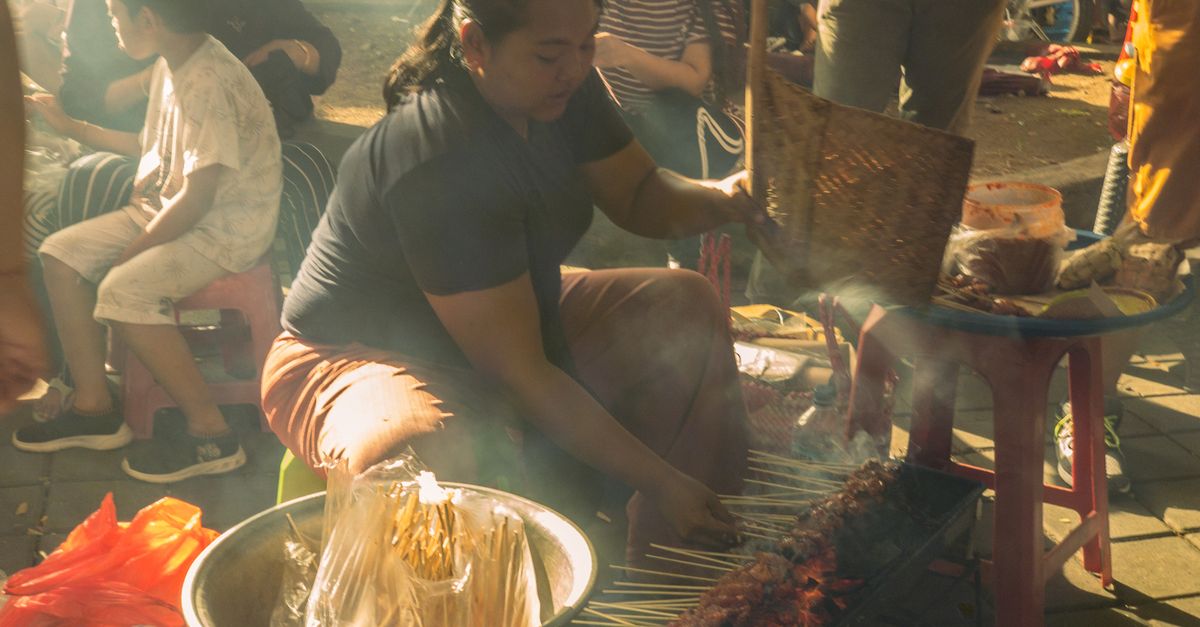
Satay is marinated meat grilled on skewers, usually served with peanut sauce. To try it in Malaysia, head to Kajang, renowned for this speciality, Kuala Lumpur’s food districts and night markets where skewers are cooked to order. Chicken is an accessible introduction, while beef offers a different texture and flavour.
This street-food classic is recognisable by its small pieces of meat, spiced aroma and smoky notes from cooking over coals. However, no two plates are necessarily alike: the marinade, cut, balance of the sauce and accompaniments vary between vendors. When choosing a good place, pay particular attention to the cooking and how the stall is organised rather than relying solely on its popularity.
In brief
Satay, also written as “sate”, is generally associated with Indonesian culinary traditions, particularly those of Java. It spread to neighbouring countries, where recipes evolved: its presence in Malaysia therefore does not mean that one single preparation is common to the whole region.
In its Malaysian version, this grilled meat often combines an aromatic marinade, a touch of sweetness and charcoal cooking. The sauce adds another dimension, but it should not be the only element providing flavour.
It is also worth distinguishing the dish from the commercial expression “satay sauce”. A peanut preparation sold under this name does not necessarily reproduce the condiments served in local restaurants, whose texture and seasoning may be quite different.
The format is well suited to group meals: diners choose their skewers from a shared dish and add garnishes according to their preferences. Satay can be found both in casual eateries and on some festive tables.
This conviviality is part of Malaysian culture, where meals play an important role. It does not, however, remove the diversity of eating practices: not every establishment serves the same meats or meets the same religious requirements.
Chicken and beef are common choices in Malay stalls. Other versions exist, but pork should not be presented as a usual option in halal establishments, nor tofu as an option available everywhere.
To place this Malaysian skewer among the country’s other specialities, also see our guide to Malaysian cuisine and its must-try dishes. Its particularity lies in the balance between marinade, charcoal and condiment, rather than in the mere presence of peanuts.
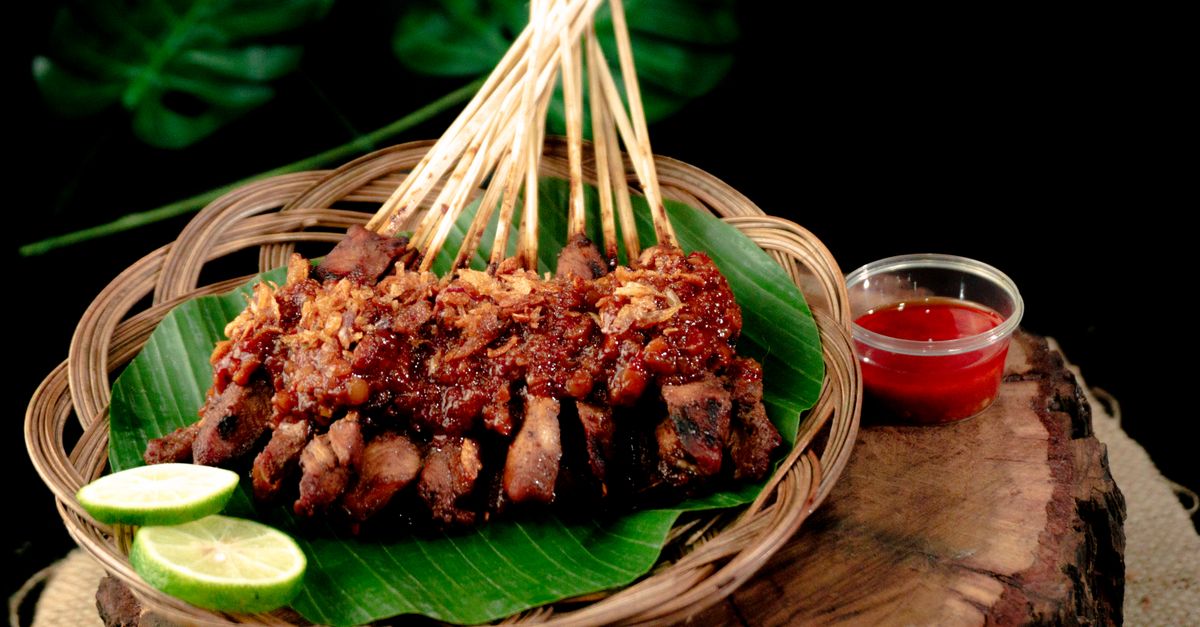
Kajang is a leading destination for discovering satay. This town in Selangor, near Kuala Lumpur, is particularly associated with the speciality, to the extent that its name appears on signs elsewhere in the country.
Once there, choose an establishment focused on grilled food. Ask which meats and accompaniments are available: a sign mentioning Kajang does not guarantee the same recipe as neighbouring establishments.
The trip is best suited to travellers who want to make culinary discovery a central part of their plans. To organise the journey, our guide to transport in Malaysia compares the options; check timetables with the official operator.
In Kuala Lumpur, Jalan Alor is a convenient area for looking for grilled food during a food-focused walk. The selection varies from stall to stall: look at what is actually being prepared in front of you rather than choosing solely from a menu photograph.
Kampung Baru offers another setting in which to explore Malay food. Look for a stall explicitly offering satay and check its selection for the day, as the presence of many restaurants does not mean that each one prepares this speciality.
Add this tasting stop to your itinerary with our guide to discovering Kuala Lumpur and its neighbourhoods. Staying close to your route is often wiser than crossing the city for a place whose availability has not been confirmed.
In Penang, areas where several vendors are grouped together allow you to look for a specialist stall while trying other dishes. Night markets are another possibility, but their selection depends on the neighbourhood and the day.
Ask your accommodation which market is nearby, then confirm its schedule with the municipality or official organiser. Opening times and participating vendors may change.
| Place to prioritise | Why it is interesting | What to check |
|---|---|---|
| Kajang | Discover a town strongly associated with the speciality | Meats and garnishes available |
| Kuala Lumpur | Include grilled food in a culinary walk | Cooking to order |
| Penang | Put together a meal from several stalls | Whether a specialist vendor is present |
| Night markets | Explore a neighbourhood selection | Schedule and preparation conditions |
A good skewer should be fragrant even before it is dipped in sauce. Garlic, shallot, turmeric, coriander or lemongrass may be used in the marinade, depending on the recipe; no blend is a universal rule.
The colour comes from the spices, any sugar and the time over the coals. A few grilled marks are not the same as a broadly charred surface, which mainly adds bitterness and may conceal dry meat.
Watch the cook’s technique: evenly sized pieces and careful turning encourage even cooking. A fire that is too fierce can colour the outside quickly without necessarily cooking the inside properly.
The stall’s turnover is a useful indication, but not a guarantee of food safety. Also check that raw meat is kept separate from ready-to-eat food, that utensils are clean and that ingredients are protected.
On Malaysian menus, “ayam” means chicken and “daging”, in this context, generally refers to beef. Ask which meat is used if the description is unclear or you have a dietary restriction.
Also ask whether chilli is mixed into the condiment or served separately. A sauce that appears mild may still be hot, while a highly aromatic marinade is not necessarily spicy.
If you want halal food, do not infer an establishment’s status from its name or the apparent absence of pork. Our guide to eating halal in Malaysia explains what to check; for certification, verify its validity with JAKIM or the competent religious authority.
Finally, check the displayed price and ask what is charged separately before ordering. Cooking, ingredients and serving conditions matter more than a promise of an “authentic” recipe.
Peanut sauce provides richness, depth and sweetness that complement the smoky notes of the grilled meat. Depending on the preparation, it may contain chilli, aromatics, sugar or an acidic ingredient such as tamarind.
Its texture is not necessarily smooth: ground peanuts may retain some crunch. A slightly thick consistency allows it to coat the pieces without turning the plate into soup.
First taste one bite without the condiment, then add it gradually. This helps you distinguish the quality of the marinade from that of the accompaniment, particularly when comparing several vendors.
Cucumber adds freshness and crunch, while raw onion contrasts with the sweet, grilled character of the meat. These simple garnishes therefore have a flavour role, not merely a decorative one.
Compressed rice, served in pieces, can complete the plate. You may encounter the terms “ketupat” or “nasi impit”, which refer to distinct preparations: they should not automatically be confused with sticky rice.
At home, mint, pickled onions or salad can make pleasant adaptations. They are not, however, compulsory elements of classic Malaysian service.
If you have a peanut allergy, removing the sauce is not enough to guarantee a safe meal. Traces may be present on brushes, utensils or preparation surfaces.
Ask about the complete ingredients and the possibility of cross-contamination. The possible presence of soya, wheat or other allergens also depends on the ingredients used; if the vendor cannot explain their practices, choose another preparation.
Boneless chicken thigh works well for grilling because it generally stays juicier than breast. Cut evenly sized pieces so that the smallest do not dry out while the others finish cooking.
Make a base with garlic, shallot, turmeric and coriander, then adjust the salt and sweetness. Soy sauce can be used in some adaptations, but it is not essential to every Malaysian recipe.
Coconut milk and curry paste are not universal ingredients either. To keep the flavour direction clear, a balanced marinade is preferable to an accumulation of aromatics borrowed from different regional versions.
Leave the meat to marinate in the refrigerator in a covered container. Set aside a portion of clean marinade before adding the raw chicken if you want to brush the skewers with it later.
Thread the pieces without packing them too tightly. On a barbecue, keep a cooler area available so you can move the skewers away from the flames if the sugar starts to burn.
Turn them regularly and check the internal temperature with a food thermometer, following the recommendations of the relevant food-safety authority. The colour of the surface alone cannot determine whether the chicken is safe.
For the condiment, grind roasted peanuts and gradually add the chosen liquid and aromatics. Unsweetened peanut butter can be used in a pinch, but it produces a different texture and flavour profile.
Without a barbecue, a griddle pan or oven can be used to make a homemade version, although it will not exactly reproduce the aroma of charcoal. Prepare the garnishes before cooking so that the skewers can be served as soon as they are ready.
Refrigerate leftovers promptly in closed containers, keeping the meat, sauce and raw vegetables separate. For storage times and reheating conditions, follow the official recommendations of ANSES rather than relying solely on smell.
Kajang is particularly associated with this speciality. In Kuala Lumpur itself, look for grilled-food stalls on Jalan Alor or in Kampung Baru, checking the selection and opening times directly with the establishment.
No. The marinade can be highly aromatic without being very hot. The heat also depends on the sauce: ask whether the chilli is mixed in or served separately.
Tofu or tempeh adaptations exist, but they are not available everywhere. Also check the sauce ingredients and whether a shared grill is used for meat.
No. This depends on the meat, ingredients and the establishment’s practices. If certification is required for you, verify its validity with the relevant authority.
Discover Pangkor Island, from its beaches and fishing villages to ferry access, activities and practical tips for planning your stay.

Discover Sepilok in Borneo and observe orangutans in the rainforest, while learning about rehabilitation and wildlife conservation.

Explore the Kinabatangan River in Borneo with boat safaris, proboscis monkeys, orangutans, pygmy elephants and rainforest wildlife.

Discover Malaysia itineraries for 10 days, 2 or 3 weeks, with essential stops and practical advice for organising your trip.
Discover roti canai, Malaysia’s flaky, crisp breakfast flatbread, served with curry or dhal and enjoyed at mamak restaurants or home.

Discover Sipadan, Borneo’s legendary island: diving permits, the best season and practical advice for planning your underwater adventure.

Discover Malaysia’s population, ethnic diversity and main religions, and understand the differences between citizens, residents and communities.

Experience the Malaysia MotoGP Grand Prix at Sepang: practical advice on tickets, access, accommodation and making the most of race day.
Scroll to see more articles →