
Pangkor Island: Beaches, Access and Things to Do
Discover Pangkor Island, from its beaches and fishing villages to ferry access, activities and practical tips for planning your stay.
Published on
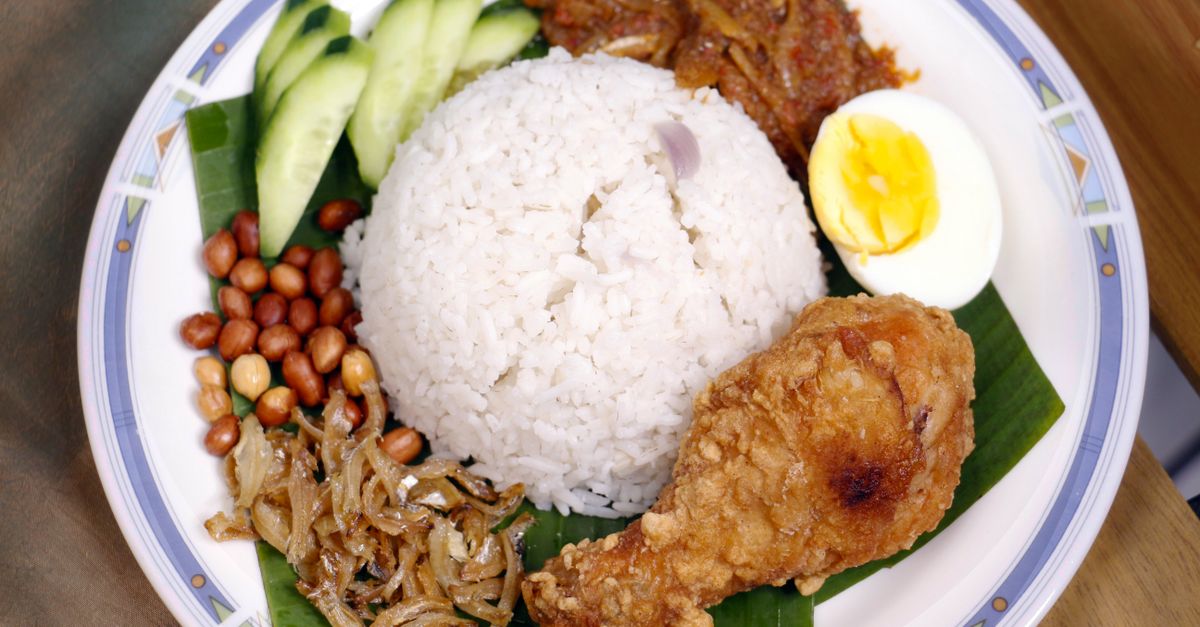
Nasi lemak is a Malaysian dish made with rice cooked in coconut milk, usually flavoured with pandan and served with sambal, fried anchovies, peanuts, cucumber and a hard-boiled egg. Often regarded as Malaysia’s national dish, it is recognised as much for this combination of flavours as for the contrast between the soft rice, crunchy toppings and fresh vegetables.
Commonly eaten for breakfast, it is also enjoyed at other times of day, either in a simple version or accompanied by fried chicken, rendang or seafood. Whether you are discovering it in Malaysia or preparing it at home, the best starting point is the classic plate: it helps you understand the role of each ingredient before exploring the variations.
In brief
Nasi lemak belongs to the Malay culinary tradition, a major component of Malaysian cuisine. This distinction is useful: “Malay” refers here to a community and its heritage, whereas “Malaysian” refers more broadly to the country and its different food cultures.
Its name is generally translated as “rich rice”, although this expression can be misleading. It mainly refers to the richness provided by coconut, not to rice that should be oily or covered in a thick sauce.
This description reflects its place in eating habits and in the way the country is represented. It should not be confused with official certification or administrative status: the dish is above all a widely shared culinary symbol, recognisable through its base and accompaniments.
Its popularity is partly due to its flexibility. A serving of fragrant rice, spicy condiment and dry toppings can make a simple meal, while adding meat or fish turns the same base into a more substantial plate.
Accounts of its origins often associate it with rural food that was nourishing and practical to carry. However, its exact emergence and the stages of its spread do not make it possible to assign a certain date to its invention; it is better to remember its roots in Malay tradition than to describe a single point of origin.
For a French visitor, the combination of fried fish, chilli and rice at breakfast may come as a surprise. It mainly shows that the boundaries between breakfast and a main meal are not universal: in Malaysia, a morning meal can be savoury, spicy and filling.
Wrapping the dish in a banana leaf is a common presentation, particularly for takeaway portions. Do not confuse this wrapping with the pandan leaf, which is used to flavour the cooking and is usually removed before eating.
In restaurants, serving the dish on a plate leaves more room for additional toppings. These formats do not correspond to different levels of authenticity: a simple parcel and a plate with chicken may both reflect local practices while catering to different appetites.
Dishes bearing this name are also found in Singapore, Brunei and Indonesia. This circulation reflects the region’s culinary exchanges; it does not mean that all versions have the same ingredients or occupy the same place in national eating habits.
To understand this diversity, it is more useful to look at the ingredients than to search for one official, unchanging recipe. The flavourings used in the rice, the sweetness of the sauce and the choice of proteins vary according to cooks, establishments and family preferences.
This speciality therefore offers a practical introduction to Malaysian culture, without representing all its diversity on its own. To compare different versions, start by tasting the plain rice: its texture and fragrance already reveal much of the preparation involved.
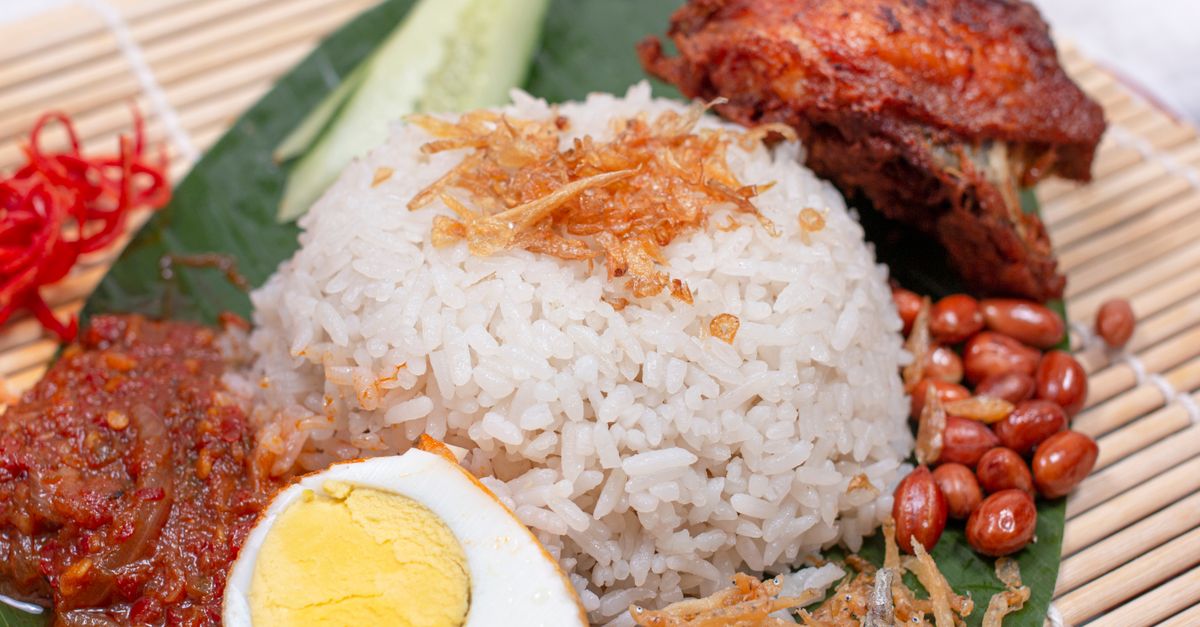
The coconut rice in nasi lemak is savoury, not a creamy dessert. The desired result is rice cooked through, soft and fragrant, with grains that remain separate enough to hold a sauce without turning into porridge.
Long-grain white rice is suitable; jasmine rice is one possible choice. Basmati also appears in some adaptations, but its fragrance and texture produce a different result: changing varieties mainly requires adjusting the hydration rather than adding more spices.
Use unsweetened coconut milk intended for cooking and check its ingredients. Products can have different concentrations: a very thick preparation does not behave like a diluted drink, even if all the packaging highlights coconut.
The presence of additives alone is not enough to determine a product’s quality. For cooking, the useful criteria are its ingredients, concentration and taste; stir it before measuring if the fat and liquid parts have separated.
Pandan gives the rice its characteristic sweet, vegetal note. Its leaves can be found in Asian grocers, sometimes frozen; they can be tied in a knot to make them easier to handle and remove after cooking.
Ginger or lemongrass can complement the fragrance, depending on the recipe. They do not exactly replace it, however: without pandan, it is better to accept that you are making a different preparation than to present basil, bay leaf or lemon zest as equivalents.
Rinse the rice to remove some of the surface starch, then drain it carefully. This helps produce less sticky grains, but it will not correct an excess of liquid: the water remaining after rinsing also affects the cooking.
The proportions depend on the variety, the saucepan or rice cooker and the coconut milk used. Follow the instructions on the packet and appliance, counting the coconut liquid as part of the total hydration rather than adding it to an already sufficient quantity of water.
In a saucepan, combine the rinsed rice, water, coconut milk, aromatic leaves and salt, then cook gently with the lid on. Excessive heat can make the bottom stick before everything is ready; constant stirring can also damage the grains.
In a rice cooker, follow the manufacturer’s instructions for preparations containing coconut milk. The settings intended for cooking with water are not necessarily suitable for every mixture, and some appliances require particular precautions.
After cooking, leave the rice covered to rest, remove the aromatics and gently fluff it. If it is mushy, reduce the hydration next time; if it is dry or still firm, check whether there was too little liquid, too much evaporation or excessive heat.
Adding more fat does not automatically solve these problems. Success depends first on the balance between absorption and evaporation: the fragrance should accompany a good texture, not conceal poorly cooked rice.
Sambal provides the dish’s spicy character, but it should not be reduced to a simple burning sensation. In this plate, it connects the sweetness of coconut with the salty toppings through a cooked preparation whose flavours can be hot, sweet and slightly tangy.
There are many recipes for this condiment across South-East Asia. The sambal served with nasi lemak is often based on a paste of chillies and shallots, with varying additional ingredients; a red sauce sold under this name will not necessarily taste the same.
Dried chillies must be prepared and rehydrated before being blended with shallots and, depending on the recipe, garlic. Their heat varies considerably: colour alone cannot predict how spicy the result will be.
Fry the paste in oil, stirring to prevent it sticking. The aim is to cook the aromatics and soften their raw flavour; look for a rounder aroma and even texture rather than systematic browning, which may indicate that the preparation is burning.
Add water if the mixture becomes too dry before it is fully cooked. Conversely, a very liquid preparation needs gentle reduction: turning up the heat abruptly is more likely to make the bottom stick while leaving the rest insufficiently cooked.
Shrimp paste can add salty depth, but it is not used in every version. When included, it contributes to the overall seasoning: add salt gradually and taste before adding more, especially if dried fish is also incorporated.
A little sweetness can round out the sauce, while an acidic ingredient, such as tamarind in some recipes, gives it more depth. Neither should overwhelm the aromatics: adjust in small amounts, then taste with rice.
Why not judge the condiment on its own? Because a preparation that tastes very intense by the spoonful can become balanced when combined with a mild base; conversely, a sauce that is already very sweet may dominate the whole dish alongside the coconut fragrance.
For a milder version, choose less hot chillies or reduce their quantity from the outset. Adding sugar does not remove the substance responsible for the heat, and adding too much water eventually dilutes the flavours without creating a satisfying balance.
Peanut butter is not an essential base for the traditional condiment served with this dish. Adding it produces a thicker sauce with a different flavour: it is an adaptation, distinct from the whole peanuts served beside the rice.
Similarly, substantially replacing chillies with tomato changes the flavour profile. This may suit a personal preference, but it should not be presented as perfectly equivalent; it is better to keep a small portion of sauce separate for each person.
For a first attempt, serve the sambal separately rather than pouring it over the whole plate. This allows you to adjust each mouthful and appreciate the fragrance of the rice without letting the chilli immediately dominate.
The accompaniments are not merely decorative: each one changes the mouthful. Anchovies provide a marine flavour and crunch, peanuts a firm, roasted texture, while the hard-boiled egg and cucumber add softer and fresher sensations.
This complementarity explains why a simple plate can be satisfying without additional meat. Adding chicken or rendang responds to a desire for variety or a larger appetite; it does not automatically make the preparation more faithful to tradition.
The small dried fish known as ikan bilis are not interchangeable with the preserved fillets in oil commonly sold in France. Their drying and size allow them to be fried to a characteristic texture, so check the nature of the product before cooking.
If preparation involves rinsing them, dry them carefully before putting them in the oil. Residual moisture encourages splattering and makes frying more difficult; also work in small batches to avoid overcrowding the pan.
Remove them when golden and crisp, then drain them. Keep them separate from moist ingredients until serving: prolonged contact with sauce or vegetables makes them lose the very texture that makes them appealing.
Peanuts can be roasted or fried, depending on the method chosen. Watch their colour and taste before adding salt: the other components are already strongly seasoned, and an accumulation of salty products can unbalance the meal.
The egg can be served in quarters or halves, while the fresh vegetable is cut into slices. Pat it dry after washing to limit excess water on the plate; its role is to add freshness, not to make the dry toppings soggy.
| Version | Accompaniment | What to check |
|---|---|---|
| Classic | Fried dried fish, peanuts, egg and raw vegetables | Presence of fish, egg and peanuts |
| Chicken | Fried, sometimes spicy chicken | Seasoning and marinade ingredients |
| Rendang | Meat simmered in an aromatic preparation | Type of meat and richness of the sauce |
| Seafood | Prawns or other seafood preparations | Allergens in the topping and condiment |
| Adapted vegetarian | Tofu and vegetables, without dried fish | Absence of shrimp paste in the sauce |
A meat-free plate is not necessarily vegetarian. Removing visible fish is not enough if the condiment contains shrimp paste; for a plant-based adaptation, examine every preparation, including ready-made products.
Fried tofu and mushrooms can provide texture or a strong flavour, but they do not exactly reproduce the marine taste of the classic ingredients. Present them as alternatives and work on their seasoning rather than seeking an indistinguishable substitute.
In the event of an allergy, also ask whether utensils and frying oil are shared. Removing an ingredient after serving does not guarantee that there has been no contact, particularly with peanuts, fish or shellfish.
Finally, the variety of components does not make the meal systematically light: coconut milk, fried foods and sauces affect its richness. The actual ingredients and portion matter more than the label “traditional”, especially when several substantial toppings are added to the base.
When eating out, first identify what the portion includes before choosing extras. A small parcel and a plate topped with chicken are not the same meal; the name alone does not tell you either the quantity or all the ingredients present.
In Kuala Lumpur, discovering nasi lemak can be part of a broader exploration of local specialities. The Kuala Lumpur guide can help you plan travel around your visits, without assuming that a restaurant serves the same preparation at every time of day.
Ask whether the sauce is already mixed into the rice or can be served separately. This is more useful than simply asking for a “mild” dish, since the interpretation varies from one cook to another and does not always change a preparation that has already been made.
To discover the flavours, taste each element first, then combine them gradually. A mouthful with the condiment and fish will be more intense than one with egg and raw vegetables; there is no need to mix the whole plate immediately.
Regarding religious requirements, the appearance of the dish cannot confirm its halal status. Check the establishment’s information and, when certification is claimed, verify its validity with the relevant official certifying body.
The guide to eating halal in Malaysia explains the distinctions to know when choosing a restaurant. This is separate from checking allergens: a preparation that complies with a religious diet may still contain ingredients to which you are allergic.
Work by component rather than starting every cooking process at once. Prepare the aromatics and sauce, then organise the rice, and finish with the crispy elements and fresh cuts close to serving time.
This organisation reduces unnecessary waiting and helps keep the textures separate. It also allows you to customise each plate without changing the whole recipe: everyone can choose how much condiment to use or leave out a topping according to their preferences.
Place the base in the centre and the accompaniments around it, with the chilli served separately and within reach. Using cutlery is perfectly acceptable; eating with your hands is a cultural and personal practice, not an obligation for enjoying this speciality.
Cooked rice requires particular care: do not leave it at room temperature for a long time. Cool leftover portions quickly in suitable containers, then refrigerate them while keeping the different components separate.
Store delicate toppings according to their own requirements and avoid mixing raw vegetables with ingredients that are still hot. Fried fish and peanuts lose their crunch when exposed to moisture, so storing them separately is also a matter of taste.
For storage times and temperatures, follow the latest recommendations from the relevant health authority, particularly ANSES in France. When reheating, take out only the portion required and heat it evenly: poorly stored rice does not become safe simply because it is reheated.
No. The heat mainly depends on the sambal and the toppings chosen. Ask for the condiment separately so you can discover the spiciness gradually without masking the rice’s fragrance.
Yes, but its fragrance will be different. Coconut milk retains its central role; ginger or lemongrass can provide another aromatic note without reproducing pandan’s flavour.
The classic version contains fish and the sauce may contain shrimp paste. A vegetarian adaptation requires replacing the animal-based toppings and checking the condiment’s complete ingredients.
Oil-packed fillets do not provide the crispness of the small dried fish traditionally used. To recreate this texture, look for ikan bilis at an Asian grocer and follow the preparation instructions.
Discover Pangkor Island, from its beaches and fishing villages to ferry access, activities and practical tips for planning your stay.

Discover Sepilok in Borneo and observe orangutans in the rainforest, while learning about rehabilitation and wildlife conservation.

Explore the Kinabatangan River in Borneo with boat safaris, proboscis monkeys, orangutans, pygmy elephants and rainforest wildlife.

Discover Malaysia itineraries for 10 days, 2 or 3 weeks, with essential stops and practical advice for organising your trip.
Discover roti canai, Malaysia’s flaky, crisp breakfast flatbread, served with curry or dhal and enjoyed at mamak restaurants or home.

Discover Sipadan, Borneo’s legendary island: diving permits, the best season and practical advice for planning your underwater adventure.

Discover Malaysia’s population, ethnic diversity and main religions, and understand the differences between citizens, residents and communities.

Experience the Malaysia MotoGP Grand Prix at Sepang: practical advice on tickets, access, accommodation and making the most of race day.
Scroll to see more articles →