
Malaysia in April: Weather and Where to Go
Discover Malaysia’s weather in April and the best destinations for beaches, nature and culture, from the east coast to Borneo.
Published on
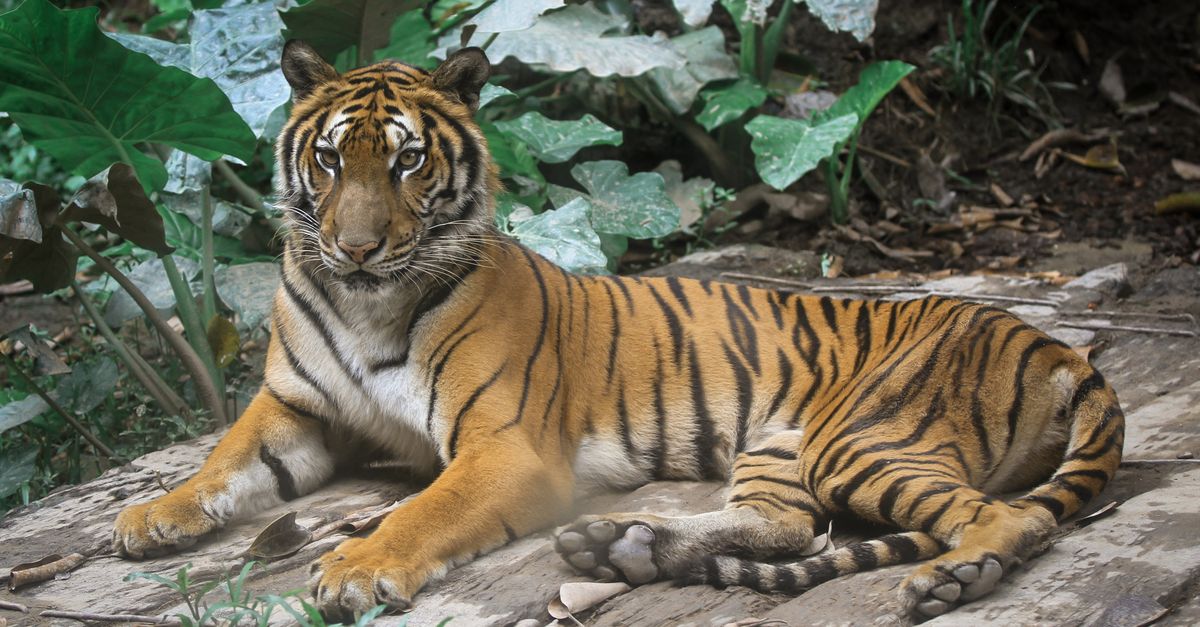
The Malayan tiger lives in the wild in the forests of the Malay Peninsula, not on the island of Borneo. How many remain? Planète Sauvage refers to fewer than 250 individuals in the wild, but this undated figure cannot establish an up-to-date population for 2026. The situation remains critical: protecting this big cat means preserving its habitat, prey and the forest passages that connect its territories.
In brief
The Malayan tiger, commonly referred to by the scientific name Panthera tigris jacksoni, is part of the fauna of the Malay Peninsula. To understand its distribution, this mainland part of the country must be distinguished from the states of Sabah and Sarawak, which are located on Borneo: their forests are not part of its wild range.
Descriptions of its distribution particularly mention the central and southern peninsula. However, this should not be taken to mean that it is continuously present in all the woodland in these regions: suitable territories are separated by roads, plantations, towns and agricultural areas.
Tropical forest provides the predator with cover for moving discreetly, resting places and opportunities to approach prey. Dense vegetation is essential for a hunter that relies on surprise rather than a prolonged chase.
Yet a green landscape is not automatically a good habitat. A tree plantation, for example, does not necessarily offer the plant diversity, shelter or food resources of a natural forest; its wooded appearance may conceal considerable ecological simplification.
Habitat quality also depends on its tranquillity and accessibility for animals. An area rich in prey can become dangerous if it is crossed by roads or regularly visited by people setting snares.
The large forest complexes associated with Taman Negara, Belum-Temengor and Endau-Rompin play an important role in conservation geography. This does not mean that every trail in these ranges crosses a territory currently occupied by a tiger, or that visitors can know where individuals are located.
A corridor connects otherwise isolated natural areas. For a territorial animal, this continuity can allow it to leave its birth area, find a mate or reach an area where food is more accessible.
Conversely, a forest block cut off from its neighbours may retain apparently intact vegetation while becoming insufficient in the long term. If exchanges between groups disappear, opportunities for reproduction and genetic renewal decline.
Protection must therefore extend beyond the administrative boundaries of parks. Linking forests, riverbanks and the areas between two protected zones may have disproportionate ecological importance compared with their visibility to tourists.
To understand these differences in landscapes and status, the guide to biodiversity and parks in Malaysia places protected areas in context. A reserve is not merely somewhere to go for a walk: it forms part of a wider ecological network.
This approach to the landscape also avoids a frequent confusion between historical presence and current occupation. An area once used by tigers may have lost its animals, while a little-visited area may remain important without being promoted to tourists.
The real challenge is to preserve living forests that are sufficiently large and connected. Their area alone cannot tell us how many big cats remain there.
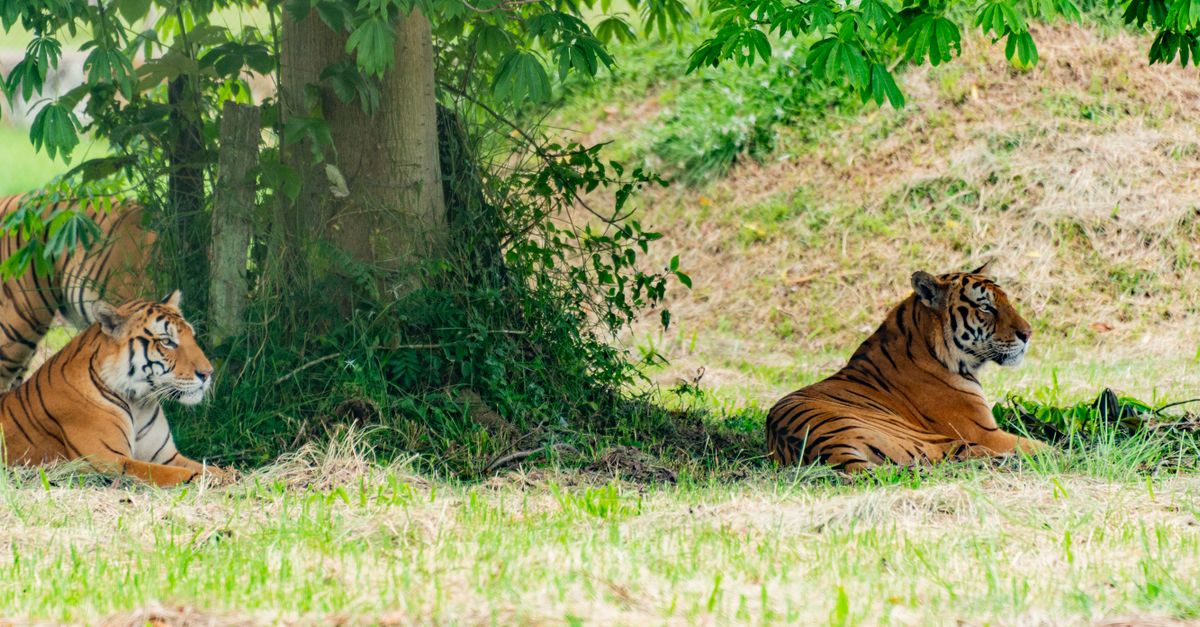
The current wild population remains uncertain. The figure of fewer than 250 animals given by Planète Sauvage conveys the seriousness of the situation, but the absence of a date means it cannot be presented as the result of a recent census.
It is particularly important not to turn this wording into a precise count. “Fewer than” expresses an upper limit in a given estimate; it does not say how many individuals were directly identified or when the observations took place.
An estimate may concern all wild animals, adults only or just individuals capable of reproducing. These categories are not interchangeable: the presence of cubs does not directly indicate the number of available breeding adults.
Geographical scope matters just as much. A survey carried out in one reserve does not automatically represent the national situation, even if the site is an important refuge for the animal.
Finally, tigers living in zoological institutions must be distinguished from free-ranging individuals. Adding these groups together would give a misleading picture of the population in its natural environment.
| Indicator | What it describes | How to interpret it |
|---|---|---|
| Estimated wild population | Animals living freely in a given territory | Check the survey period and geographical scope |
| Mature individuals | Animals considered capable of reproducing | Do not confuse them with the total population |
| Photographic detections | Passages recorded by monitoring cameras | The same animal may appear several times |
| Captive population | Animals kept in zoological facilities | Does not measure survival in Malaysian forests |
Camera traps record animals passing without requiring a constant human presence. Coat patterns can help specialists distinguish individuals and recognise an animal that has already been photographed.
However, counting photographs is not enough. One big cat may regularly pass in front of a camera, while another may use an unmonitored path; results must therefore account for the probability of detection and the design of the monitoring system.
Tracks, droppings and field observations provide additional information. They must be interpreted cautiously: a footprint alone cannot reveal its author’s age, sex or certain identity.
Nor does the absence of an image immediately prove a local disappearance. It may reflect insufficient monitoring, a temporary movement or camera placement that poorly covers the routes used.
For the latest published national estimate, the appropriate contact is PERHILITAN, the department responsible for wildlife and national parks in Peninsular Malaysia. Check with this organisation the date of the survey and the categories of animals concerned.
The trend must also be interpreted using comparable methods. Better field coverage may produce more detections without, on its own, demonstrating a genuine increase in the number of animals.
A useful figure combines a population, a period, a territory and a method. Without these details, apparent precision may conceal considerable biological uncertainty.
The Malayan tiger is a mainly solitary predator. Unlike lions, it does not normally live in a stable social group in which several adults share their activities over time.
This solitary life does not mean that it never interacts with others. Reproduction, raising young and encounters at territorial boundaries are important moments, while scents and markings allow communication without direct contact.
Each individual uses an area whose characteristics depend particularly on food, vegetation cover and the presence of other tigers. Males’ ranges may overlap those of several females, and it is not meaningful to apply one rigid average to every situation.
Females need areas where they can both hunt and raise their cubs away from disturbance. The loss of a quiet refuge can therefore affect reproduction even when the landscape still contains prey.
Young tigers must then find a place to establish themselves. This dispersal explains why forest links are essential: a territory suitable for a mother does not guarantee a future for the offspring that leave it.
Scent marking and claw marks help the tiger use this space. They inform other animals of its presence, but visitors should not interpret them as a sign that an encounter is imminent.
Its diet includes mammals such as sambar deer, muntjacs and wild boar. The availability of these prey directly determines how capable the habitat is of supporting a large carnivore.
The big cat mainly hunts by stalking and ambush. Vegetation cover allows it to reduce the distance before attacking, which explains the importance of undergrowth and areas where prey move or feed.
Its behaviour is opportunistic: a vulnerable animal may represent a less risky opportunity. However, it would be inaccurate to conclude that it only catches sick or weakened animals, since hunting also depends on the circumstances of the encounter.
The disappearance of herbivores can make a forest less suitable without any spectacular change in its vegetation. This is why combating the illegal hunting of prey is an integral part of protecting the predator.
This large cat can swim and may enter water to move around or cool down. This does not mean that it regularly visits rivers accessible to tourists, or that riverbanks are reliable observation points.
Its activity varies according to local conditions, food availability and human disturbance. Presenting a fixed time as the best moment to see one would create a false impression of predictability.
Behaviour observed in a zoo must also be placed in context. A pool, feeding and an enclosed space influence movements; they do not reproduce the constraints of a wild territory.
The name Panthera tigris jacksoni remains widely used, although tiger subspecies classifications have been revised by scientists. These discussions do not alter the need to protect the animals of the peninsula and their biological characteristics.
Protecting this hunter means protecting everything it needs to live: refuges, prey and opportunities to move. These needs explain why human pressures accumulate so quickly.
The Malayan tiger is classified as critically endangered in the IUCN assessment devoted to this subspecies. This category describes an especially high risk of extinction in the wild; it is not, by itself, a count of the remaining animals.
The common expression “endangered species” therefore summarises a situation that requires more than symbolic protection. The threats affect individuals, their food and the areas needed for reproduction at the same time.
Poaching is a direct threat, particularly when it supplies the illegal trade in animal parts. In an already very small group, the loss of a breeding adult can have consequences far beyond the disappearance of one individual.
Snares are especially problematic because they can capture animals indiscriminately. A device set for another species may injure or kill a large carnivore using the same path.
The death of a female with dependent cubs can also jeopardise the survival of her litter. This shows why the biological consequences of a snare are not always limited to the animal found at the scene.
Removing illegal devices is essential, but it does not replace action against the networks that set them. Monitoring, investigations and enforcement must work together to prevent the same risks from constantly returning.
Deforestation reduces the available area, while fragmentation separates the remaining zones. A road or cleared strip can make movement more difficult without immediately eliminating the whole forest block.
These openings can also make it easier for people to enter areas that were previously difficult to reach. Infrastructure therefore has indirect effects when it increases opportunities to enter the forest, hunt or set snares.
Why preserve a narrow wooded passage when a large reserve exists nearby? Because that passage may be the functional link between territories, while the reserve alone does not guarantee the exchanges needed to maintain genetic diversity.
Structures intended to help wildlife cross must therefore be accompanied by protection of the surrounding areas. A crossing loses much of its value if its approaches are later occupied, cleared or heavily disturbed.
Excessive hunting of ungulates reduces available food resources. A forest can retain its large trees while losing some of the animals that support its food chain.
When natural habitats deteriorate, interfaces with human activities become more sensitive. Accessible domestic animals or waste attracting other species can complicate coexistence, without making incidents inevitable.
Prevention relies on measures suited to the area and a rapid response from the relevant services. Crowds, improvised chases and attempts to approach the animal must be avoided, as they increase risks for both residents and the tiger.
These pressures reinforce one another: an isolated area becomes more vulnerable with every loss, while a habitat poor in prey offers fewer opportunities for recovery. Addressing only one cause therefore leaves the other mechanisms of decline in place.
The cat’s survival depends on simultaneously protecting animals, their food and forest continuity. This combination should guide field action.
Conservation must first allow tigers to survive and reproduce in their environment. The most directly useful measures combine forest patrols, snare removal, prey protection and the preservation of corridors.
Scientific monitoring helps guide these interventions. Identifying areas used by tigers, crossing zones and local pressures makes it possible to adapt protection efforts rather than distribute resources without considering biological needs.
Field officers and communities familiar with the forest ranges play an important role in detecting illegal activities. Their involvement should take place within a safe professional framework, with suitable resources and lasting cooperation with the authorities.
Protection must also take people living on the forest edge into account. Practical responses to incidents and clear information encourage stronger coexistence than a message focused solely on the animal’s iconic value.
Zoological institutions may take part in coordinated breeding programmes, including the European EEP. Their role concerns the management of captive bloodlines, veterinary expertise and public awareness, depending on each institution’s commitments.
A birth in captivity does not, however, equal a successful reintroduction. Returning an animal to the wild requires a secure habitat, sufficient prey, suitable preparation and health guarantees; it cannot be considered the automatic destination of captive-born animals.
A wild encounter remains exceptional and should not be the main promise of a trip. Dense vegetation, the predator’s discretion and its movements make direct observation very unlikely during an ordinary visit.
The guide to wildlife watching in Taman Negara helps visitors discover the park without reducing it to a search for a big cat. Birds, insects, plants and mammal tracks already provide access to considerable ecological richness.
To organise activities, also check the options for visiting Taman Negara. Access conditions, trail closures and arrangements for accompaniment should be checked with the park administration before departure.
A responsible guide explains signs without guaranteeing a sighting or using bait to attract a predator. Finding tracks can be informative, but it is not a reason to leave an authorised route to follow the animal.
Stay on open trails, follow local instructions and never feed wildlife. Apparently harmless behaviour can alter animals’ habits or bring them closer to areas frequented by people.
If you notice a snare or an injured animal, do not attempt to intervene yourself. Move away and pass useful information to park officers or PERHILITAN, without publishing a sensitive location on social media.
Your choice of operators also matters: favour those who explain their practices, supervise movements and respect restrictions. The guide to eco-friendly travel in Malaysia adds further advice for planning a trip that respects natural habitats.
A successful visit leaves animals free not to appear. Supporting their protection is more valuable than obtaining a photograph at the cost of disturbing them.
No. Its wild range is in the Malay Peninsula. The forests of Sabah and Sarawak, on Borneo, are not part of its current natural distribution.
No. The figures are estimates based on field monitoring. A population figure should specify its date, geographical scope and whether it concerns all individuals or only mature animals. The latest national estimate should be checked with PERHILITAN.
A sighting is exceptional and cannot be guaranteed. Visitors must follow authorised routes and never seek an encounter by following tracks away from open trails.
Not automatically. Coordinated breeding programmes may have a conservation role, but reintroduction requires a secure environment, specific preparation, and health and ecological assessments.
Discover Malaysia’s weather in April and the best destinations for beaches, nature and culture, from the east coast to Borneo.

Discover Malaysia’s October weather and the best destinations for beaches, nature, culture and food, with practical advice for planning your trip.

Discover Thaipusam dates in Malaysia, how the celebrations unfold and where to attend, including Batu Caves and Penang’s temples.
Compare Batu Ferringhi and Penang’s beaches by atmosphere, activities and facilities to choose the right beach for your stay and travel plans.

Plan your Langkawi to Koh Lipe ferry crossing with advice on terminals, season, immigration formalities, tickets and practical travel arrangements.

Explore Malaysia by train with this guide to ETS and the Jungle Train, including routes, booking advice, connections and practical ticket tips.

Discover how Touch ’n Go cards and eWallet work for transport, tolls, parking and QR payments in Malaysia, including tips for visitors.

Discover Malaysia’s December weather and the best destinations for beaches, sunshine and tropical scenery, from Langkawi to Penang and Borneo.
Scroll to see more articles →