
Pulau Ketam: The Fishing Island Near Kuala Lumpur
Discover Pulau Ketam, the fishing island near Kuala Lumpur, with stilt houses, seafood, mangroves and a distinctive coastal village.
Published on
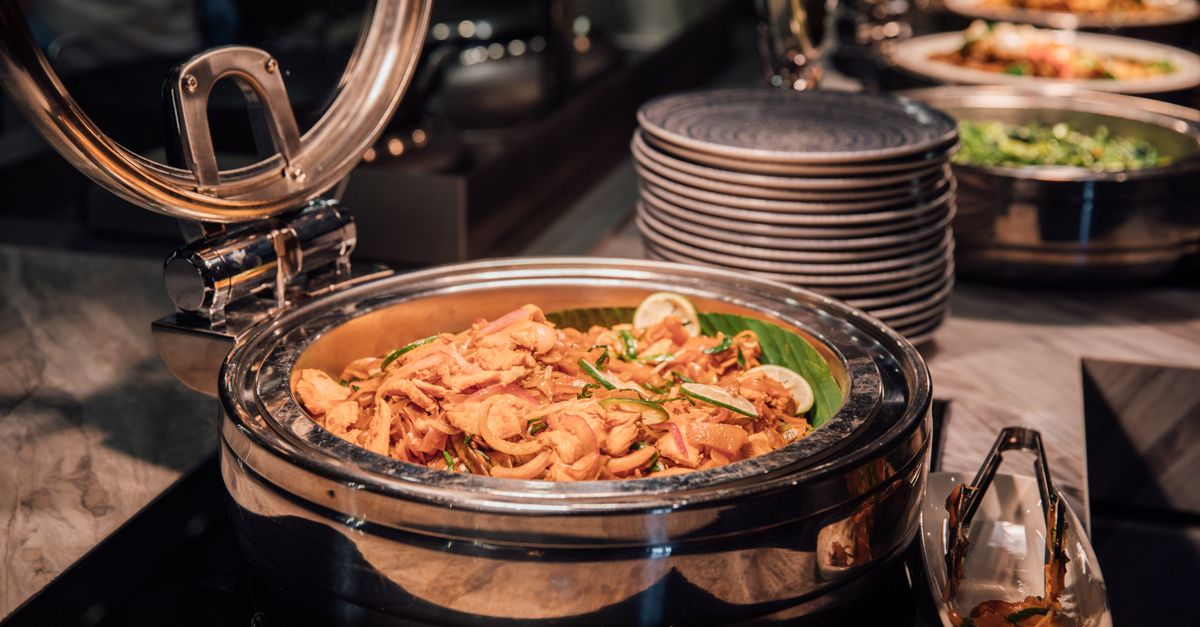
Char kway teow is one of Penang’s signature dishes: flat rice noodles quickly stir-fried in a wok with a flavoursome sauce and toppings that vary from one stall to another. On the plate, prawns, egg, bean sprouts and chives provide contrasting textures, while the heat of the flame gives the noodles their characteristic toasted aroma. This street-food speciality reflects part of the island’s culinary identity, where the traditions of several communities come together in everyday cooking.
In Penang, char kway teow is generally cooked to order. The recipe is not completely uniform: the proportions of soy sauce, level of chilli and choice of toppings depend on the cook. Understanding what goes into the dish makes it easier to order, spot variations and appreciate what distinguishes it from other stir-fried noodles in Asian cuisine.

The name refers to a dish of stir-fried rice noodles, not a soup. The broad, supple noodles quickly absorb the seasoning while retaining a pleasant texture when seared without being stirred too vigorously. In Penang, cooking to order is part of the experience: the ingredients go into the wok over high heat and are served as soon as the noodles have taken on their colour and aroma.
The most familiar combination includes prawns, egg, bean sprouts and chives. Some versions also contain clams or other toppings; no list is exactly the same everywhere. The bean sprouts retain some crunch, while the egg binds certain ingredients together and makes the dish softer. Soy sauce seasons the noodles, but the quantity varies: some plates are darker and more intense, while others are lighter.
You should also distinguish between the ingredients you can see and those used during cooking. In some preparations, an animal-based fat may contribute to the flavour and texture; other cooks use a different type of fat. Recipes change from one establishment to another, so anyone who is vegetarian, allergic to shellfish or avoiding a particular ingredient should ask before ordering. The dish’s traditional character does not guarantee the same ingredients at every stall.
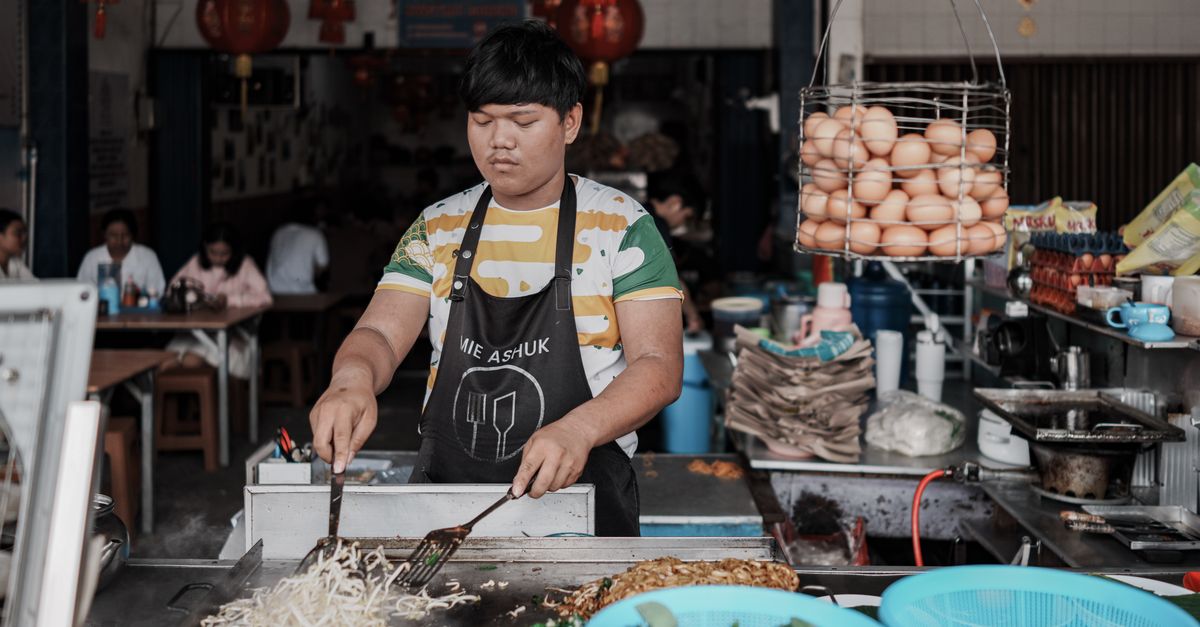
Wok cooking is decisive: its shape makes rapid tossing easier and allows the food to sear on a very hot surface. The cook adds the ingredients in a carefully controlled order so that the noodles do not remain in contact with the heat for too long. Prolonged cooking can make them soft or sticky; high-heat cooking helps them retain their texture and develop toasted aromas.
The aroma sometimes described as smoky comes from searing and caramelising the seasonings, rather than from a smoked ingredient being added systematically. At food stalls, the intensity depends on the strength of the flame, the quantity being cooked and the cook’s technique. This is why two portions based on similar recipes can taste noticeably different. The famous “wok hei”, often associated with stir-fried noodles, refers to this aromatic imprint created by wok cooking.
Soy sauce contributes colour and savoury depth, but the result is not defined by it alone. The sauces and condiments used may vary, as may the presence of chilli. If you prefer a mild dish, ask when ordering; if you enjoy stronger flavours, you can ask how the stall seasons its preparation. The best balance is one in which the sauce coats the noodles without masking the prawns and vegetables.
To get online as soon as you land, a Malaysia eSIM can be installed before you leave, with no need to look for a local SIM card.
Penang is renowned for the diversity of its street food, and char kway teow is one of its most recognisable dishes. Stalls offer meals cooked to order, often in an atmosphere where the preparation is visible. The dish is particularly well suited to this style of service: the ingredients are assembled quickly, and the noodles are at their best immediately after leaving the wok. For more ideas, see our guide to things to do in Penang.
This speciality also reflects the richness of Malaysian cuisine, shaped by culinary exchanges between communities and by local habits. It is not a fixed recipe with one definitive version: preferences regarding toppings, sauce and chilli give each cook room to vary the dish. For a visitor, comparing two preparations can be more instructive than looking for a formula presented as the only authentic one.
Char kway teow is often eaten as a complete dish rather than as a simple side. To explore other local flavours, also see our guide to Malaysian cuisine. And if you would like to combine culinary discoveries with a seaside stay, the information on Batu Ferringhi’s beaches can help you plan another stop during your visit to Penang.
To get the most from the dish, watch it being prepared and choose a portion served immediately after cooking. The noodles should remain supple without becoming one uniform mass; the bean sprouts add a fresh note and the toppings should be evenly distributed across the plate. Char kway teow is generally quite rich in flavour and can stand alone, especially when generously seasoned.
Dietary restrictions require particular care. Prawns are common and additional seafood may be present; sauces and cooking fats are not always detailed on the menu. If you have an allergy, ask explicitly which ingredients are used and whether the wok or utensils are shared. For a vegetarian diet, do not assume that the absence of visible meat is enough: stock, sauce or cooking fat may also matter.
| Element | Role in the dish | What to check |
|---|---|---|
| Rice noodles | Supple base that absorbs the seasoning | Their texture depends on cooking to order |
| Prawns | Provide a marine flavour and firm texture | Must be mentioned in case of an allergy |
| Soy sauce | Seasons and colours the noodles | Its intensity differs from one stall to another |
| Chilli | Strengthens the heat of some versions | Ask for a mildly spicy or non-spicy preparation |
| Egg and vegetables | Add softness and crunch | The ingredients vary from one cook to another |
Its reputation comes as much from its flavour as from the way it is prepared. The wok, high heat and immediate service give the dish a visual and sensory dimension: the sound of cooking, the rapid movements and the aromas rising from the pan are all part of the experience. In this street-food cuisine, technical skill is visible in the plate itself, through the texture of the noodles and the balance of the toppings.
Penang therefore provides a particularly vivid setting in which to discover stir-fried noodles: the dish belongs to a living culinary tradition, where recipes are passed on and adapted. There is no need to search for a supposedly perfect version. It is better to pay attention to freshness, seasoning and cooking, then choose the one that suits your tastes.
A successful char kway teow does not depend on a long list of ingredients, but on how they work together and on precise cooking. This combination of apparent simplicity and know-how is what makes it an essential reference point in Penang’s street food.
It is a dish of flat rice noodles stir-fried in a wok, generally seasoned and served with toppings such as prawns, egg, bean sprouts and chives.
No. The level of chilli varies according to the recipe and the stall. Ask for a mildly spicy or non-spicy version when ordering.
Some stalls may adapt their preparation, but sauces, cooking fat or shared utensils can be an issue. You should check the ingredients directly with the cook.
The proportions of sauce, choice of toppings, strength of the flame and cooking technique vary. These differences affect the colour, texture and toasted aroma of the noodles.
To book tours and activities in Penang ahead, see the options on Klook.
Discover Pulau Ketam, the fishing island near Kuala Lumpur, with stilt houses, seafood, mangroves and a distinctive coastal village.

See fireflies along the Selangor River and silvered leaf monkeys at Bukit Melawati in Kuala Selangor, with practical wildlife tips.

Compare the ETS train and bus from Kuala Lumpur to Ipoh, including journey times, transport options and practical tips for choosing.

Explore Danum Valley, Borneo’s ancient rainforest, with its remarkable biodiversity, orangutans, guided walks, access details and practical advice.

Discover Fraser’s Hill, a peaceful mountain retreat near Kuala Lumpur, with tropical forest, cool weather, hiking trails and birdwatching.

Discover what to do in Kota Bharu and how to reach the Perhentian Islands, with cultural visits, transport options and practical travel tips.

Discover S-MM2H, Sarawak’s long-stay programme: eligibility, benefits, application steps and checks before living in Malaysia.
Discover Thean Hou Temple in Kuala Lumpur, with practical advice on visiting, access, transport, opening hours and respectful behaviour.
Scroll to see more articles →