Tioman Island: Things to Do, Beaches, Diving & Access
Tioman Island: which village should you choose between Tekek, ABC, Salang and Juara?
Choosing the right village determines a large part of your stay on Tioman Island. Accommodation is spread across several bays, but getting around does not work as it would on an island crossed by a continuous coastal road: reaching another beach may require a boat trip or an inland transfer.
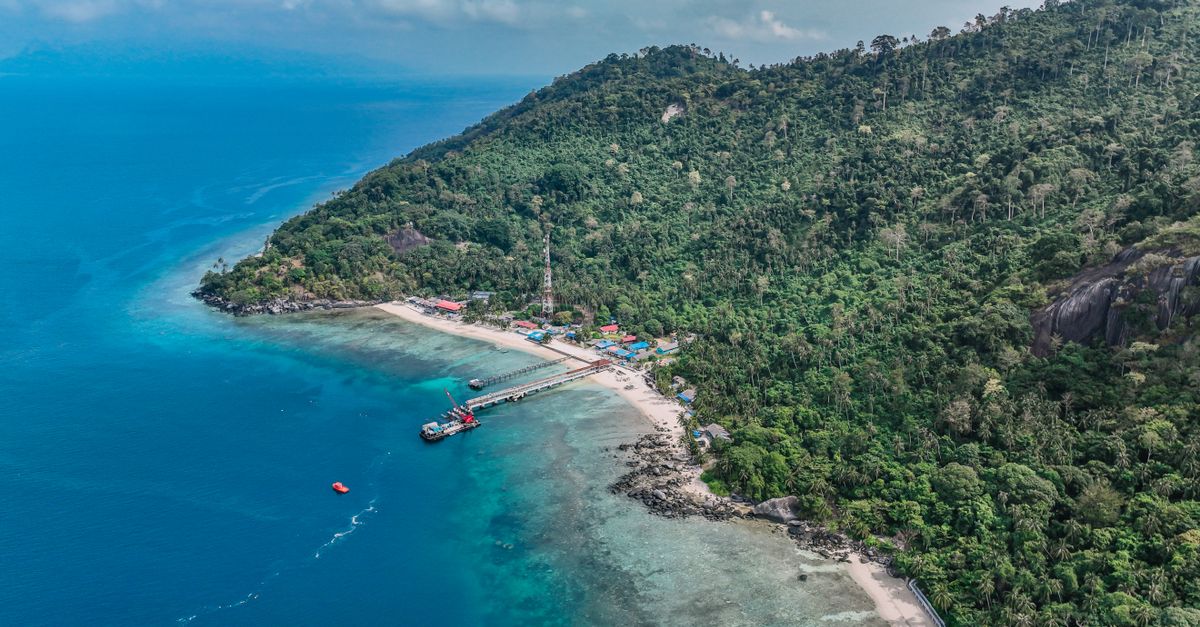
Pulau Tioman belongs to Pahang state, off the east coast of the Malaysian peninsula. Its mountainous terrain and forest explain this arrangement of small coastal communities, each with its own jetty, habits and tourist offering.
Tekek and Air Batang: Tioman’s practical bases
Tekek is the main service centre, with shops, restaurants, accommodation and transfer options to the east coast. It is a practical choice if you prioritise logistics, particularly for a first trip or a stay combining several activities.
Contrary to a common misconception, there are indeed paved roads on the island, particularly in this area and on the road to Juara. However, they do not connect all the villages: booking accommodation in Tekek does not mean you can reach every bay by car.
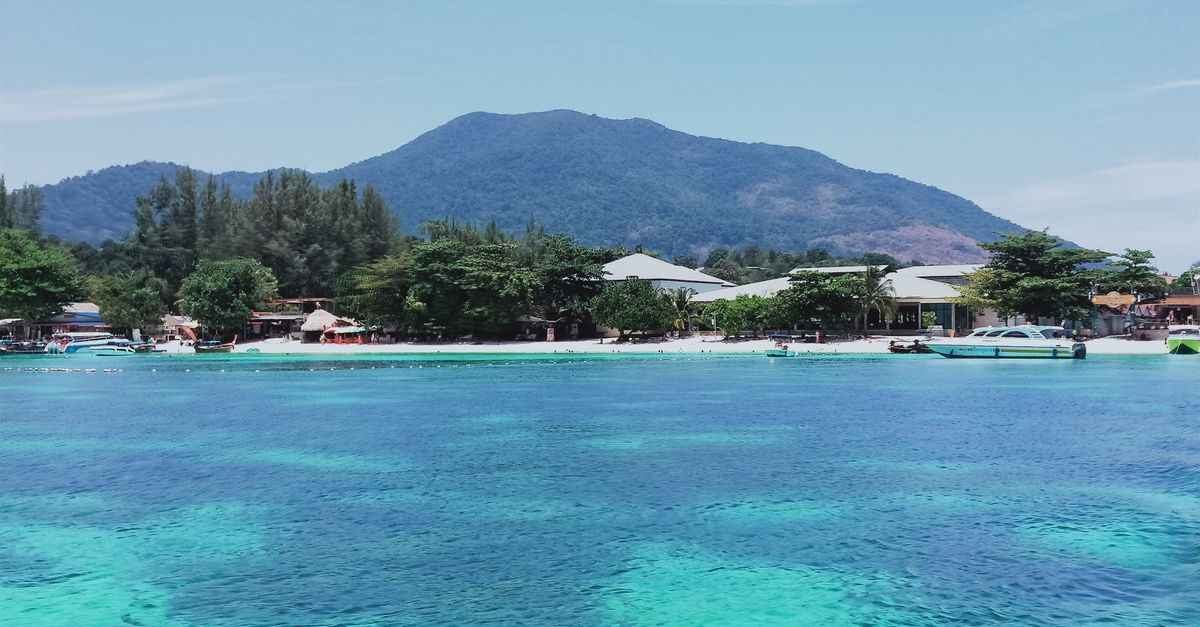
Air Batang, generally known as ABC, attracts travellers looking for a laid-back atmosphere, simple chalets and dive centres within walking distance. Its stretches of beach alternate with rocky or coral areas: swimming conditions depend on the exact location and the tide.
A pedestrian path allows you to travel between the Tekek and ABC areas, but check the route from your accommodation, especially if you have luggage. A property advertised as “near the village” may be at the far end of a bay, which can significantly affect your comfort on arrival.
Salang and Juara: choosing between sea trips and a long beach
In the north-west, Salang is particularly suitable for water-sports enthusiasts. Several operators organise trips to nearby sites, while restaurants and accommodation are concentrated around a relatively compact village.
The atmosphere varies depending on holidays and the groups staying there: do not mistake a small size for guaranteed peace and quiet. For a peaceful night’s sleep, ask for a room away from communal areas and enquire about the immediate surroundings rather than relying solely on the hotel category.
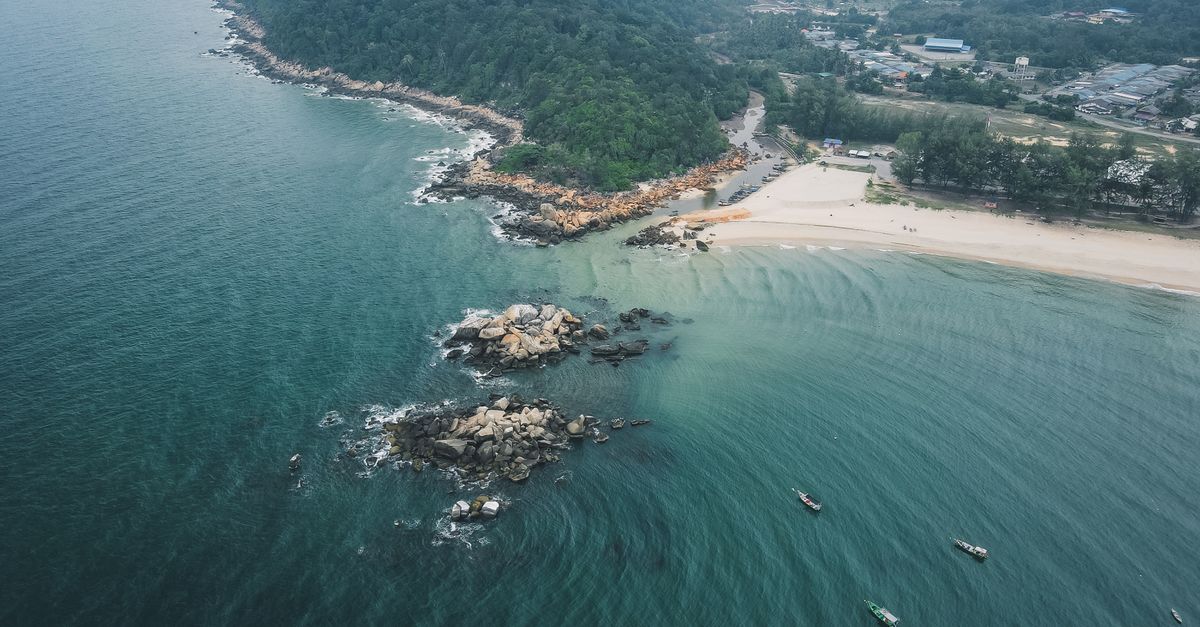
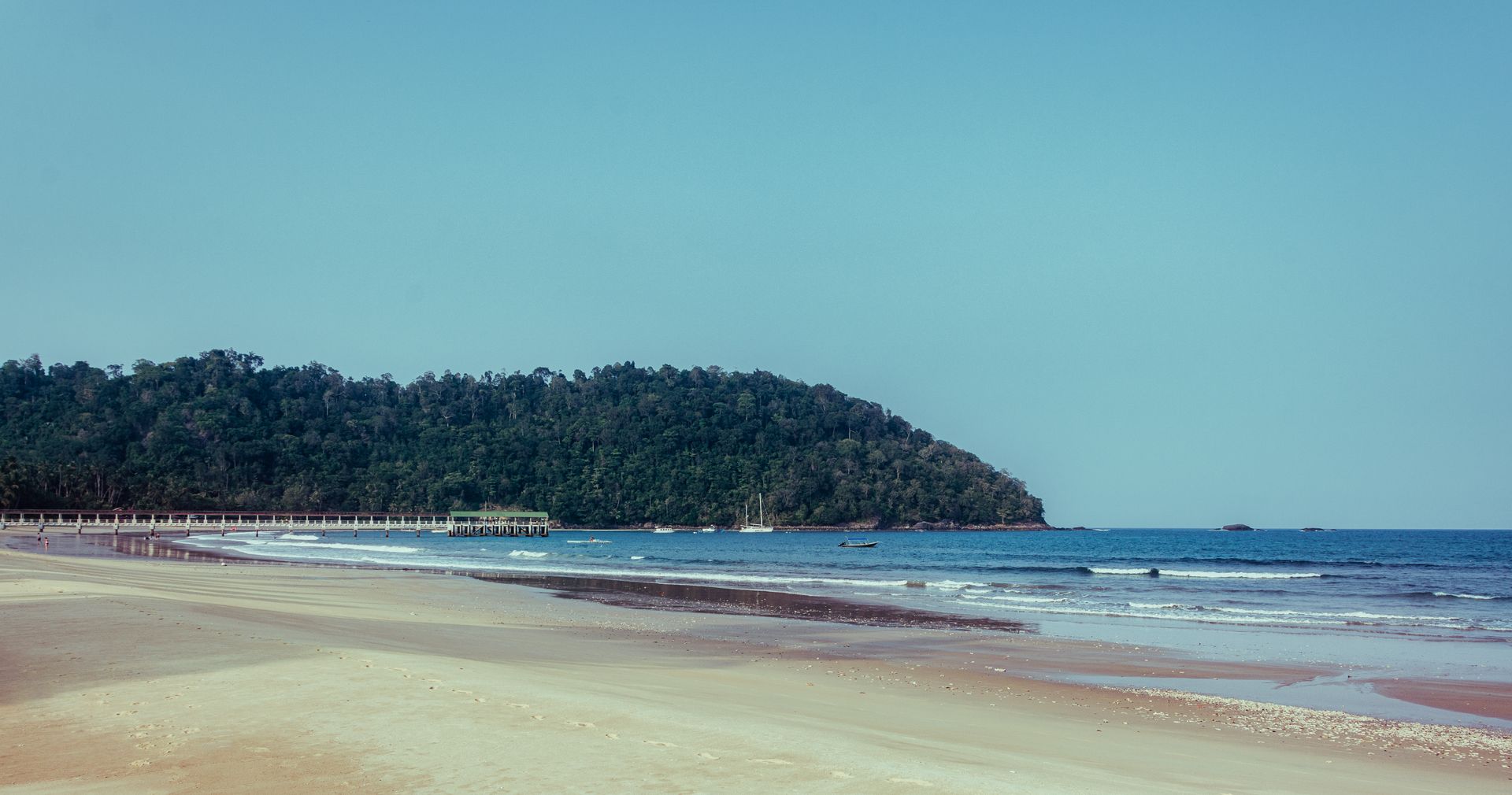
On the east coast, Juara offers a long beach facing the sunrise, rather than sunsets over the sea. It appeals to families and travellers who prefer to stay in one bay, walk on the sand and alternate between swimming and breaks in the shade.
The sea can nevertheless be rougher there depending on the season. Our page about Juara Beach and its specific features helps distinguish the postcard image from the conditions to consider before booking.
Village
Main advantage
What to check
Tekek
Services and road access to Juara
Location of the accommodation in relation to the beach
ABC
Relaxed atmosphere and simple accommodation
Swimming at low tide and walking distance
Salang
Dive centres and boat trips
Activity levels and access from the jetty
Juara
Large bay and beach holiday
Transfer from Tekek and sea conditions
Let’s take the example of a French-speaking couple who want to discover the reefs, walk in the forest and relax: ABC is a coherent base if boat trips are the main focus, while Juara is better suited to a desire for everyday beach time. Changing accommodation at every stage would mainly mean losing time on transfers.
To complete your research, the Routard guide to Tioman offers another perspective on the destination. Choose your holiday pace first, then the village that makes it possible.
Tioman beaches, snorkelling and diving: how can you enjoy the reefs?
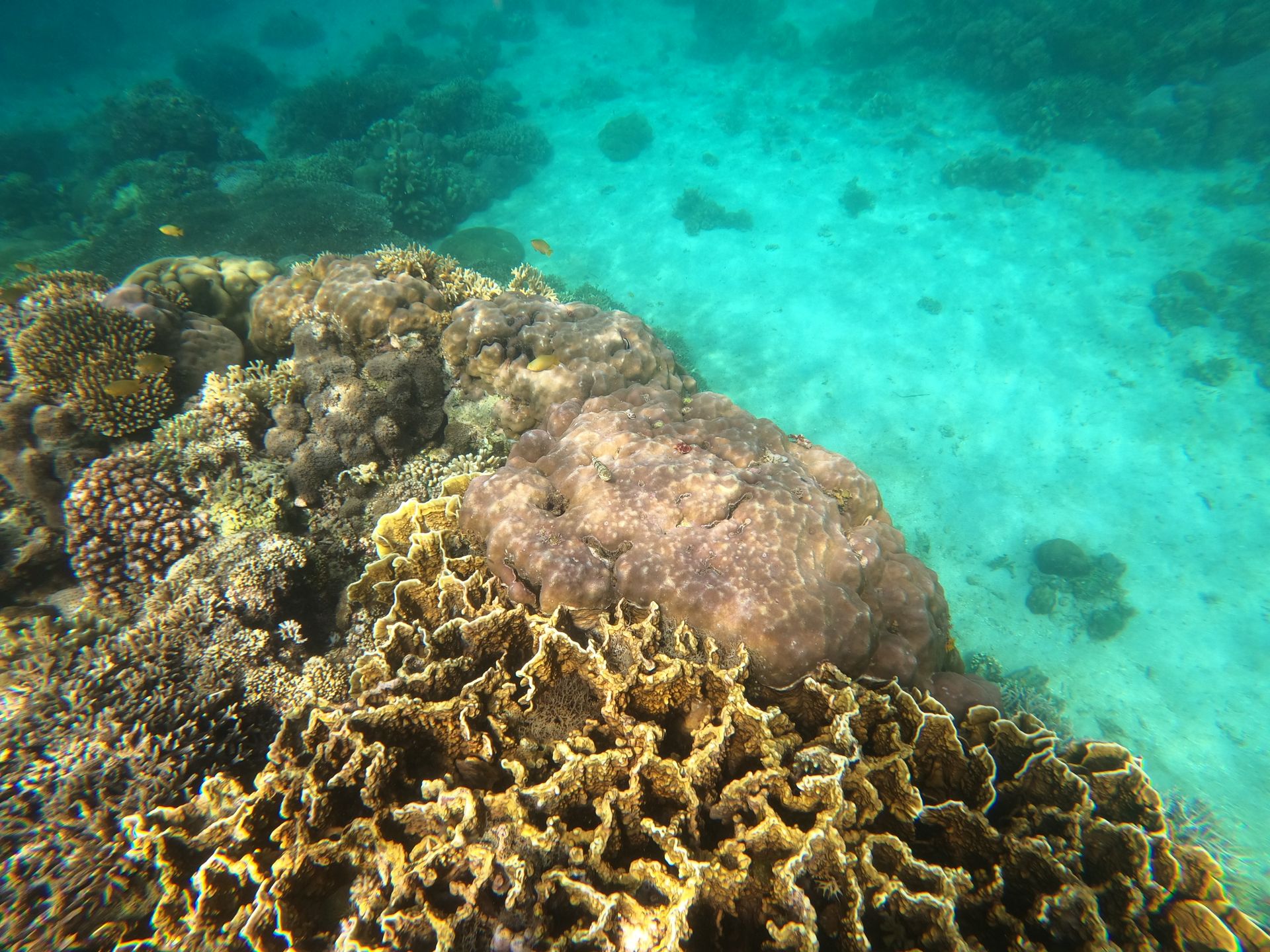
Tioman’s marine life is one of its great attractions in Malaysia, but not all beaches offer access to the same underwater landscapes. A bay that is pleasant for swimming may have a mainly sandy seabed, while a rocky area may shelter more fish without offering such comfortable access to the water.
Before swimming, observe the boats, the movement of the water and any local instructions. With children or inexperienced swimmers, choose a sheltered area recommended by your accommodation rather than a reef selected solely from a photograph.
Snorkelling in Tioman: Renggis and Coral Island
Snorkelling trips visit the areas around Renggis and Tulai, often marketed as Coral Island. Their appeal lies in reaching several different environments, but the itinerary depends on the weather, sea conditions and departure point.
Ask exactly what the service includes: suitable equipment, flotation assistance, in-water supervision and arrangements for breaks. A life jacket is particularly useful if you are not a confident swimmer, but it does not replace supervision or following the guide’s instructions.
A successful trip is not measured by the number of advertised stops. For our travelling couple, a small group with an attentive guide is preferable to a succession of quick swims in areas where nobody explains the currents or the boundaries not to cross.
Parrotfish, clownfish and other reef species may be seen depending on the habitats. Encounters with turtles, rays or reef sharks are wild encounters and are never guaranteed.
Diving in Tioman: choosing a centre and suitable sites
Renggis, Chebeh and Tiger Reef are among the names regularly offered by operators. They are not interchangeable, however: depth, exposure and current determine the level required, and some routes are better suited to already experienced divers.
For a first dive, choose a centre that explains how it works, checks your medical fitness and provides a gradual introduction in a suitable environment. For a dive trip, share your certification, recent experience and any concerns before confirming your booking.
Also check the condition of the equipment, the availability of emergency oxygen and the procedure in the event of an accident. Standard travel insurance does not necessarily cover all underwater activities; its terms must match your activity and the permitted depth.
Tioman Marine Park: good practices in the water
The protected waters surrounding the island require particular care around the reefs. Their protected status does not mean that every area is untouched: visitor numbers, periods of heat and human activities can affect the corals, whose condition varies from one location to another.
Never stand on the corals, even to adjust your mask.
Keep your distance from turtles and do not block their way back to the surface.
Do not feed the fish or collect marine organisms.
Avoid kicking up the bottom with your fins and secure your equipment.
Take all your rubbish with you, including waste from boat picnics.
Conservation fees and their pricing categories should be checked with the Department of Fisheries Malaysia, which oversees marine parks. A good operator adapts the trip to your level as well as to the conditions on the day.
Hiking in Tioman: the Tekek–Juara crossing and Asah Waterfall
The forest adds another dimension to your stay, away from the jetties and beaches. However, the terrain, humidity and showers make walks more demanding than distances on a map might suggest: a short route can become tiring on slippery ground.
Do not assume that all tourist trails are continuously maintained or signposted. Your accommodation provider and the village guides are the first people to ask about the recent condition of a route, particularly after heavy rain.
Tekek–Juara on foot: distinguishing forest trails from roads
The crossing between the two coasts is one of the island’s best-known hikes. Depending on the route chosen and its condition, it combines forest sections with links to the road that crosses the mountainous interior.
Ask for the exact starting point and the route that is currently passable rather than following an old description downloaded before your trip. The road is steep and shared with vehicles: it is not automatically a comfortable option for walking the entire distance.
Set off early, bring enough drinking water for the effort involved and take protection from the rain. Grippy shoes, a charged phone, an offline map and mosquito repellent are more useful than improvised beach equipment.
For our travellers, the simplest option is to walk there and return with a transfer booked in advance. This avoids having to repeat the crossing at the end of the day, when fatigue increases and the light fades beneath the trees.
Tell someone about your route and your expected return time. If you are travelling alone, lack tropical experience or receive conflicting information about the trail, local assistance provides practical safety rather than just a nature commentary.
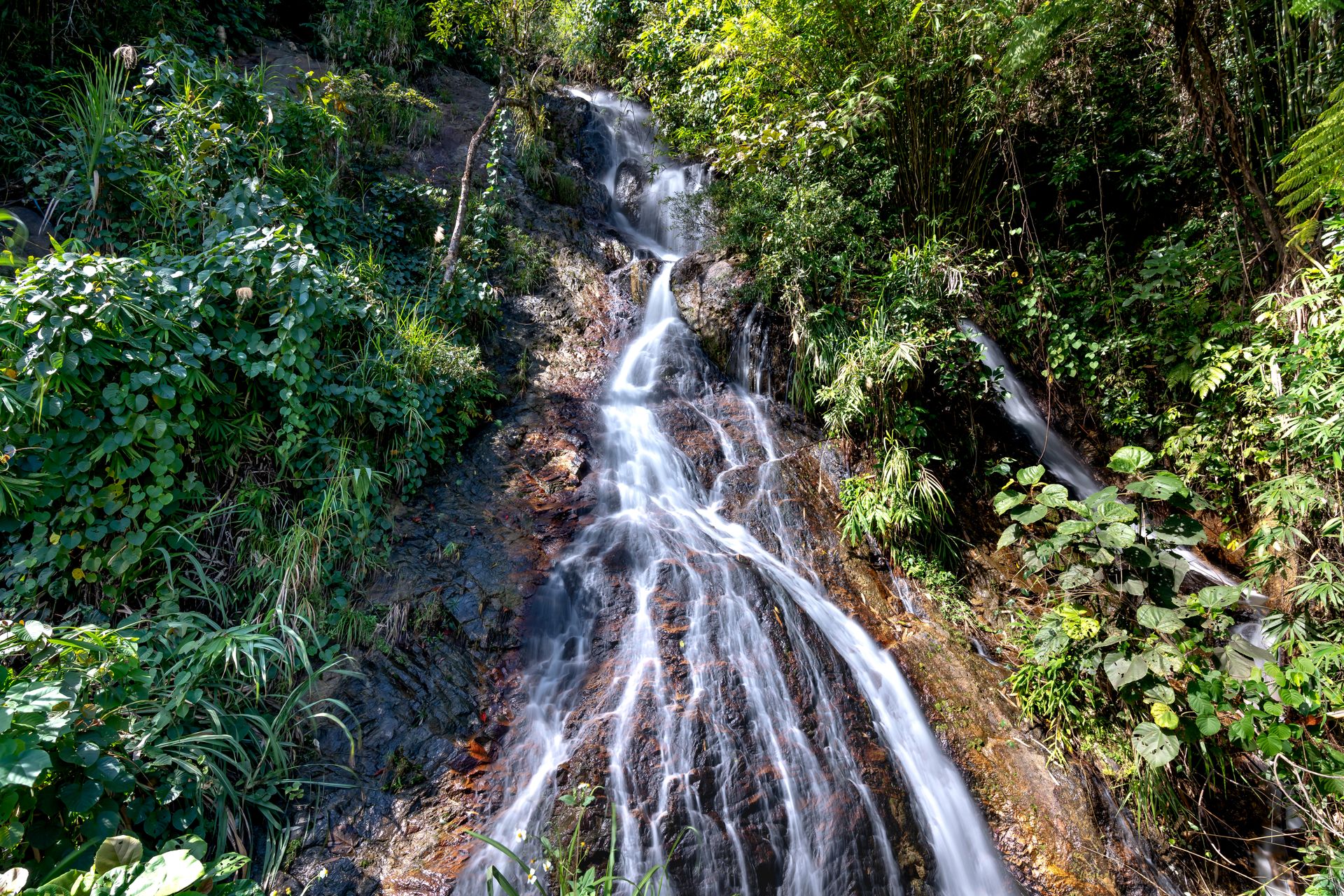
Asah Waterfall: arranging access from the south
Asah Waterfall is in the south of Pulau Tioman, near the Mukut area. From the northern and central villages, visiting it generally requires specific arrangements, often involving a boat transfer followed by a walk from the landing point.
There is therefore no standard duration for this excursion: the journey depends on your departure bay, the sea and the path used. Our page on access to Asah Waterfall helps you prepare the questions to ask the provider.
Before paying, ask for details of the drop-off point, the boat’s waiting time, the accompanying guide and the cancellation terms. A price advertised for a “waterfall trip” alone does not tell you whether you will have a guide or whether the transport will be shared.
The wet rocks can be extremely slippery. Do not swim after heavy rainfall or if the flow becomes strong, and do not dive into a pool whose depth or obstacles you do not know.
Tioman jungle: observing without disturbing
You may encounter macaques, monitor lizards and various birds, but an encounter should not turn into a feeding session. Keep food out of sight, do not approach young animals and always leave them a possible escape route.
More ambitious climbs, particularly towards Gunung Kajang, require a different level of preparation from a walk between villages. They call for a serious assessment of the terrain, your fitness and the supervision required; do not add them spontaneously between two swims.
A shaded half-day may seem ideal when the sky clouds over, but a storm does not make the forest safer than the sea. In a tropical environment, the right route is one you can alter or abandon without putting your return at risk.
Tip: set up a Malaysia eSIM before departure so your data works on arrival.
How to get to Tioman Island: ferries from Mersing and Tanjung Gemok
The usual route is by road to the coast, followed by a ferry. The two departure points to consider are Mersing, in Johor, and Tanjung Gemok, in Pahang; choose according to the crossings available on your dates, not just the distance from your departure city.
From Kuala Lumpur, travellers generally reach the region by intercity bus, car or private transfer. From Singapore, you must also factor in crossing the border, which can take considerably longer at weekends and during holidays.
Mersing Tioman ferry: book the right port and stop
Searching for “Mersing Tioman ferry” brings up many options, but your booking must specify the mainland port, date and island jetty. Not all services necessarily call at the same villages or in the same order.
At Mersing, tidal constraints can affect the schedule. From Tanjung Gemok too, departures remain subject to operating conditions and the weather: no boarding should be considered guaranteed regardless of sea conditions.
Check availability and instructions on the official Bluewater website, then verify the information shown on your confirmation. For a trip in 2026, a screenshot of an old timetable or a fare copied from a blog is not enough to organise a connection.
The actual duration depends on the route and stops. So avoid planning your arrival around a single estimate, especially if your accommodation is at the other end of the bay or requires a vehicle afterwards.
From Kuala Lumpur or Singapore to the ferry terminal
If you take a coach, check where it arrives and how much of the journey remains to the jetty. Our guide to intercity transport in Malaysia allows you to compare overland options and their constraints.
Do not plan your journey around an assumed regular flight to Mersing or Tanjung Gemok. For most visitors, flying means reaching a major regional gateway before continuing by road; any specific air link must be confirmed directly with its operator.
By car, find out about authorised parking, how well it is monitored and how you can retrieve your vehicle. By bus, spending a night on the mainland may be more sensible than making a very tight early-morning arrival before the ferry departure.
For example, our travelling couple might choose to sleep near the port if the available connection requires an early departure. This extra cost mainly buys a buffer against road delays and avoids starting the holiday with a dash to the ticket counter.
Arriving and getting around Tioman
Give your accommodation the boat name, confirmed time slot and arrival jetty. For Juara, the usual arrangement is to arrive at Tekek and then take a road transfer; do not assume that your ferry ticket will take you directly to the east coast.
Water taxis provide additional connections between some bays, but their availability depends on the sea and demand. Mukut cannot simply be reached by extending the road from Juara: the lack of a continuous road network means you must check each journey separately.
Keep documents, medicines and electronic devices in a bag protected from splashes. Travel with luggage that you can handle on a jetty and carry cash for small expenses on arrival.
Finally, allow some extra time before an international flight on your return and check what your insurance covers in the event of travel disruption. The best connection is not the shortest one, but the one that can withstand a change of plan.
When to visit Tioman, what budget to allow and where to stay?
The generally most favourable period runs from March to October, with no guarantee of permanently blue skies. Tropical rain remains possible, while underwater visibility, swell and visitor numbers change from week to week and depending on each bay’s exposure.
The north-east monsoon particularly affects the region from November to February. It can bring rough seas, disrupted crossings and the seasonal closure of some establishments; the island does not become uniformly inaccessible, but a classic beach holiday then requires more precautions.
Tioman’s seasons: adapt your plans to the weather
Check forecasts from MetMalaysia, the Malaysian meteorological service, particularly warnings of strong winds and rough seas. A general weather app showing sunshine or a cloud is no substitute for a marine forecast when deciding whether to take an excursion.
Juara may attract surfers when the waves form, but this does not make the monsoon an ideal period for beginner swimmers. School holidays and public holidays also affect availability: if your dates are fixed, secure your accommodation and transport together.
Plan flexible days rather than a schedule in which every activity has only one possible time slot. Our two travellers will therefore benefit from scheduling their boat trip when conditions are favourable and keeping walks near their accommodation as alternative options.
Trip budget: compare the full cost
The budget depends mainly on the level of comfort you want, meals included, transfers and the number of water-based outings. An inexpensive room in a remote bay may work out more expensive than better-located accommodation if you have to arrange several private journeys.
Ask for a detailed quote in ringgit for your dates, separating transport, equipment, meals, taxes and any conservation fees. Prices and timetables change: the applicable amounts must be confirmed with the providers and official organisations.
To keep costs down, stay in one base, eat at small village restaurants and choose shared outings suited to your level. Conversely, isolated accommodation may suit a comfortable stay if you are prepared for less flexible meals and transport.
Accommodation in Tioman: useful checks
Before booking, ask whether the room has a fan or air conditioning, whether hot water is available and how arrival at the jetty is handled. Also check the connection quality if you need to work: a “Wi-Fi” label does not guarantee a stable connection in every room.
Recent reviews are particularly useful for assessing maintenance, noise and staff responsiveness. Look at comments that match your profile: a place popular with a group of independent divers may not meet the expectations of a family with young children.
Bring drinking water and ask where you can refill your bottle; do not assume that tap water is intended for drinking. Also bring your usual medication and keep a reserve of cash, without relying entirely on electronic payments or withdrawing money locally.
Tioman duty-free zone: what it really changes
Duty-free status does not mean that everything is cheaper, nor that purchases can be taken to the mainland without conditions. Some products benefit from a special regime, but meals, activities and overnight stays retain their own pricing structure.
Allowances, restrictions and any stay requirements should be checked with the Malaysian customs authorities. Keep your receipts and distinguish between the rules for leaving the island and those that apply when returning to your country of residence.
In the villages, suitable clothing away from the beach and a respectful attitude near places of worship make interactions easier. A well-prepared stay depends less on promotions than on suitable accommodation, well-managed transfers and some leeway in case of bad weather.
Practical questions for planning your stay on Tioman Island
What are the reviews of Tioman Island?
The destination is popular for its forest landscapes, small-scale villages and underwater activities. Concerns mainly relate to transfers between bays, the varying standard of accommodation and weather disruptions. It is better suited to nature lovers than to travellers seeking a lively nightlife or easy travel everywhere.
When should you visit Tioman Island?
March to October is generally the most favourable period for a stay combining beach time and trips out to sea. The north-east monsoon, from November to February, can disrupt crossings and reduce the range of tourist services. Check MetMalaysia’s marine bulletins and whether establishments are open for your dates.
What can you do on Tioman?
You can go snorkelling, try diving, relax at Juara, explore Tekek, ABC and Salang, walk between the two coasts or arrange an excursion to Asah Waterfall. In Juara, also ask the Juara Turtle Project about the educational visits on offer: turtle sightings depend on conservation programmes, with no guaranteed encounter.
How do you get to Tioman Island?
Travel by road to Mersing or Tanjung Gemok, then take a ferry whose timetable and stops have been confirmed for your date. Choose the landing point corresponding to your accommodation. For Juara, generally allow for a road transfer from Tekek and leave some leeway before any important return connection.
Tioman’s must-see attractions
1. Asah Waterfall
Nestled in the heart of the jungle, Asah Waterfall is one of Tioman’s most beautiful. A hike of around 45 minutes through lush vegetation leads to this refreshing haven, where you can swim in natural pools of crystal-clear water. Access is free, but bring walking shoes and a local guide to avoid getting lost.
Located on Tioman’s east coast, Juara Beach is a long stretch of white sand lined with coconut palms, ideal for relaxing, surfing or watching sea turtles. Less busy than the beaches on the west coast, it offers a peaceful atmosphere and breathtaking sunsets. It can be reached by 4×4 from Tekek or by boat from Mersing.
Tioman is a renowned diving destination, with coral reefs home to turtles, reef sharks, clownfish and rays. Sites such as Renggis Island, Chebeh Island and Tiger Reef are accessible to beginners and experienced divers alike. Snorkelling is also exceptional, particularly around Coral Island. Several diving centres offer excursions and PADI courses.
Tioman’s main village, Tekek is where the ferries arrive and the heart of local life. You will find stalls, seafood restaurants, diving shops and a small mosque. Tekek Beach, although less spectacular than those on the east coast, is a good starting point for exploring the island. Do not miss the night market during the season, where you can sample Malaysian specialities.
Tioman’s jungle conceals hiking trails leading to spectacular viewpoints, such as Gunung Kajang, the island’s highest peak (1,038 m). Hikes range in difficulty from an easy walk to a demanding ascent. You will often encounter monkeys, monitor lizards and luxuriant vegetation. Bring water and mosquito repellent, and take a guide for longer treks.
Tioman’s west coast is home to some of the island’s most beautiful beaches, including Salang, Air Batang (ABC Beach) and Mukut. These secluded coves, bordered by palm trees and granite rocks, are perfect for relaxing, swimming or snorkelling. Salang is also a good place to enjoy fresh seafood at one of the small beachfront restaurants.