
What to do in Malaysia?
Discover the must-see highlights of mainland and island Malaysia: Kuala Lumpur, Penang, Langkawi, Borneo, Cameron Highlands and much more. Itineraries, tips and inspiration for an unforgettable trip.
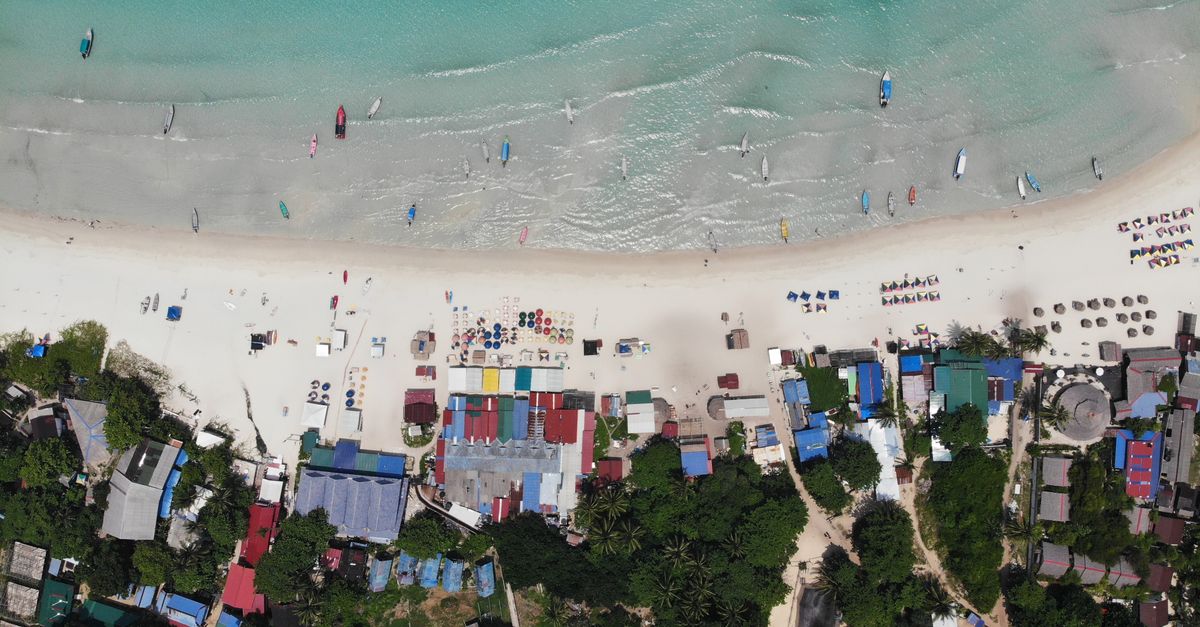
Choosing your beach matters almost as much as choosing your island. On the Perhentian Islands, getting around largely depends on water taxis and footpaths: an isolated accommodation may be perfect for switching off, but less convenient if you want to try a different restaurant every evening. Before booking, therefore, check the exact location, access and included services, not just the room photographs.
Perhentian Kecil, the smaller of the two main islands, is particularly well suited to travellers who want to meet people, enjoy plenty of trips out to sea and have several restaurants nearby. Long Beach offers a varied choice, from simple accommodation to more comfortable establishments, with an atmosphere that can continue into the evening.

However, this atmosphere is not the same everywhere. A room near a music venue, a bungalow set back from the beach and accommodation in another bay will not offer the same experience: check recent reviews for noise, then ask exactly where your accommodation is located.
Coral Bay offers another appealing base, especially if you enjoy late afternoons facing west. It remains busy and is served by boats: its generally more relaxed atmosphere does not mean it is a deserted beach.
Perhentian Besar often attracts families, couples and visitors who want to organise their days around their accommodation, its beach and a nearby diving centre. Establishments are spread across several areas, including Teluk Dalam and the coast facing Kecil.
It would nevertheless be misleading to describe it as exclusively luxurious. You will also find relatively simple chalets there, while some hotels on Kecil offer a higher level of comfort: electricity, hot water, air conditioning and service quality depend above all on the establishment.
Let us take the fictional example of a couple, Camille and Julien, travelling with a child. Their best choice will not necessarily be the most expensive resort, but the one that confirms a suitable family room, accessible dining options and a swimming area compatible with the conditions at the time.
| Your priority | Base to consider | Point to check |
|---|---|---|
| Meeting people and evenings out | Long Beach, on Kecil | Noise around the room |
| Sunset and nearby restaurants | Coral Bay, on Kecil | Location and boat traffic |
| A relatively peaceful family stay | A well-equipped bay on Besar | Beach access and dining |
| Switching off in a cove | Isolated accommodation on either island | Cost and availability of transfers |
With a tight budget, look for a dormitory or a simple room with a fan, mainly on Kecil. Check the bathroom facilities, whether mosquito nets are provided and how the electricity supply works: a low rate loses its appeal if you have to add daily boat trips to eat or reach your activities.
For a mid-range budget, compare chalets with private bathrooms and small resorts. On Besar, establishments such as The Barat or Tuna Bay can provide useful points of comparison, without assuming their price category on your dates.
If comfort is your priority, look in particular at the options offered by Bubu or Mimpi on Kecil, and by the Perhentian Island Resort on Besar. Check their official websites to find out which facilities are actually available, their cancellation terms and what the packages include: no commercial label replaces this verification.
The Routard guide to the archipelago can complement your geographical research. Choose a base suited to your actual plans: it will determine your comfort just as much as your budget.

Long Beach Perhentian, on Kecil’s eastern shore, appeals with its stretch of sand and choice of restaurants and water-sports centres. It is a pleasant beach for alternating between swimming and breaks in the shade, provided you take account of the waves, channels used by boats and local guidance.
Beware of a common misunderstanding: it does not face the sunset over the sea. For this late-afternoon light, choose Coral Bay on the western side instead; our page on Long Beach and its surroundings will help you locate the two areas.
An inland path connects these two bases, but its condition and lighting should not be assumed to be consistent. Wear shoes that stay securely on your feet and take a torch if you are returning after dark, rather than relying solely on your phone.
The name Turtle Beach requires extra caution: maps and excursion operators use similar names for several beaches or observation areas. Always ask for the exact location, landing conditions and any restrictions linked to turtle breeding; a nesting beach is not automatically open for walking.
Excursions generally include several stops, sometimes marketed under names such as Shark Point, Turtle Point or Coral Garden. These names guarantee neither the presence of animals nor perfect visibility or conditions accessible to everyone: the itinerary should be able to change with the sea.
Before paying, explain how comfortable you are in the water. A beginner who tires quickly needs different support from an experienced swimmer; ask how the guide monitors the group, where the flotation devices are kept and what happens if someone wants to get back on board.
Camille, who swims competently but is apprehensive about the open sea, might choose a supervised trip with gradual entries into the water rather than a packed itinerary with numerous stops. The guide to diving and snorkelling in the Perhentian Islands helps distinguish between these different approaches.
For an introductory dive, choose a centre that clearly explains the supervision, medical questionnaire and preliminary exercises. If you are already certified, state your level, recent experience and expectations: a wreck or a site exposed to currents is not automatically suitable for every diver.
Green turtles, reef fish and sometimes blacktip reef sharks are among the possible encounters, but no sighting should be promised. Also read the advice on watching turtles without disturbing them, particularly to leave them a clear route to the surface.
In this protected area, never stand on the coral, take shells or fragments, or leave rubbish behind. Choose UV-protective clothing; a cream marketed as “reef-friendly” is not, by itself, a guarantee that it is harmless.
The rules and conservation contributions should be checked with the Department of Fisheries Malaysia. The quality of a trip is measured as much by the supervision and respect for wildlife as by the number of sites visited.
The usual route to the Perhentian Islands is via Kuala Besut, on the Terengganu coast. Do not confuse this jetty with Kuala Terengganu, another coastal town: an imprecise transport booking could leave you far from the planned departure point.
From Kuala Lumpur, a domestic flight to Kota Bharu, in the neighbouring state of Kelantan, is a common option. Check the departure airport, included baggage and timetables directly with the airline; a budget ticket becomes less attractive if your diving equipment incurs a substantial extra charge.
On arrival, continue with a road transfer booked through your accommodation, a transport provider or a service available at the airport. The time required depends on traffic and the pick-up point: ask for an up-to-date estimate rather than organising a connection down to the minute.
Flying to Kuala Terengganu is another option, with a generally longer overland journey to the jetty. Compare the total cost and arrival time, not just the price displayed by the airline.
The term “ferry” appears in many offers, but tourist services are generally operated by fast passenger boats. The crossing time varies depending on the sea, the boat and the drop-off stops: timetables and estimates should be confirmed with the operator you choose.
Give the exact name of your hotel and its beach before buying. Some services call at several areas, while others require specific arrangements to reach the shore; ask about steps, jetties and luggage handling if you are travelling with a pushchair or have reduced mobility.
Also ask whether the ticket includes the return journey, how to book it and which amounts remain payable separately. Conservation fees and any local charges should not be assumed to be included in a commercial offer.
Théo Courant’s practical information on access to the Perhentian Islands may help you understand the journey. To confirm a specific departure in 2026, however, the reference point remains written confirmation from the transport operator and your accommodation.
A late flight arrival often makes an overnight stay on the mainland advisable. This avoids relying on an uncertain final departure or an improvised private crossing, which could be expensive and unsuitable for the sea conditions.
For the return journey, allow plenty of time before your flight. If you have an important international connection, staying on the mainland the night before reduces the consequences of a cancelled boat service; also check what your insurance covers when bad weather stops transport.
Place your passport, phone, medicines and electronic devices in a waterproof bag. Keep your essentials within reach, as suitcases may be grouped together on board, and wear your life jacket in accordance with the crew’s instructions.
Between the beaches and the two islands, water taxis complement the trails. Agree the total price, number of passengers, pick-up location and preferred time before setting off: do not assume there is a continuous service or that a boat will be available after dark.
There is no tourist road network allowing you to travel everywhere by car. Good organisation therefore starts with a chain of confirmed journeys, allowing extra time for the sea rather than relying on a succession of tight connections.

To get online as soon as you land, a Malaysia eSIM can be installed before you leave, with no need to look for a local SIM card.
The tourist season generally runs from March to October, with activity often well established in spring and summer. However, this period offers no guarantee of permanently blue skies: tropical showers, wind and changes in visibility remain possible during an otherwise generally favourable period.
June to August is often popular with European travellers, while Malaysian school holidays and public holidays can also increase demand. Check the calendar for your dates rather than assuming that a stay outside French school holidays will automatically be quiet.
To choose, distinguish your priorities. A diving enthusiast will be interested in local conditions and how the centres operate; a family will prioritise reliable logistics, fully operational accommodation and some flexibility in activities.
At the beginning and end of the season, confirm that the restaurant, excursions and transport services are operating. A hotel accepting bookings does not mean that its entire bay is already running at full capacity.
The north-east monsoon particularly affects this coast between November and February. A large proportion of accommodation providers and tourist operators suspend their activities during this period, while boat services may be reduced, interrupted or cancelled depending on conditions.
This does not necessarily mean a uniform administrative closure of every island throughout the period. The archipelago remains, in particular, a place where people live, but this continuity should not be confused with a beach destination that is normally accessible to visitors.
A room offered online is therefore not sufficient proof that the trip is feasible. Obtain confirmation of boat crossings, meals, available activities and the procedure to follow if you cannot reach the property.
Before setting off, check the forecasts and warnings from MetMalaysia, the national meteorological service. A marine warning should take priority over your plans: postponing or changing destination is better than going ahead with a crossing under pressure.
Three to five days is a length of stay worth considering, depending on your pace and your interest in water-based activities. This guideline is intended to help you plan a trip, not impose a programme: if you arrive late and leave early, you will have fewer days actually available.
On the first day, focus on settling in and getting your bearings on the beach. Identify the swimming areas, restaurants and water-sports centre, then choose a simple walk; scheduling an expensive outing immediately after several journeys increases the risk of missing it.
Then set aside a day for snorkelling or diving, allowing the operator to adjust the itinerary to the conditions. Camille and Julien could, for example, keep the following morning free: if the sea requires a postponement, they will not have to give up their main activity.
Another day can be used to explore the neighbouring bay or the other island. Agree on the return time before getting off the boat, take water and protect yourself from the sun; a poorly equipped cove requires more self-sufficiency than a beach lined with restaurants.
If you have more time, slow down rather than multiplying transfers. For divers, planning the final day must also comply with the recommendations applicable before a flight, to be confirmed with the centre according to the dives completed.
Kayaking and forest walks remain local options, not activities to improvise without information about the wind, currents or condition of the paths. The best itinerary keeps one flexible day: here, your plans should adapt to the conditions, not the other way around.
To prepare your Perhentian Malaysia budget, add any air travel, the road transfer, boat crossings, accommodation, meals and activities. Include any applicable conservation contributions, travel between beaches and a reserve for an unexpected night on the mainland.
No single amount accurately represents every situation. The season, number of travellers, level of comfort and included services can significantly change the total; request quotes in ringgit and use the current exchange rate for your conversion.
A package including meals can be worthwhile in an isolated bay, but less suitable if you want to eat elsewhere. Compare the total for the entire stay, checking whether drinks, equipment, transfers and taxes are included, rather than putting together prices that cover different services.
On a budget, choose simple accommodation close to restaurants and focus your paid activities on one well-chosen outing. Bringing your own mask can reduce repeated hire costs, but only if it fits your face properly: uncomfortable equipment can quickly ruin a session.
With a mid-range budget, a well-located air-conditioned room and a few shared excursions often offer a practical compromise. If you are looking for greater comfort, examine the family rooms, quality of the bedding, meals and transfer arrangements before paying for a simple sea view.
Do not count on withdrawing cash locally. Take enough cash with you before boarding, then confirm the payment methods accepted by your accommodation directly; card acceptance may depend on the connection and incur fees stated by the merchant.
For meals, nasi goreng, mee goreng and grilled fish often feature on menus. Prices also reflect island supply costs: ask for the total amount before ordering anything sold by weight and clearly state your allergies, particularly to shellfish and peanuts.
Bring your usual medication, a small first-aid kit, insect repellent and suitable sun protection. Drink safe water from reliable packaging or a refill system whose quality has been confirmed; tap water should not be considered safe to drink.
Check that your insurance covers the activities you plan to do and any potential medical evacuation. For diving, pay particular attention to exclusions and the conditions linked to your qualification; specialised medical care may not be available to the same extent as in a major city.
In the village and in areas where local residents live, wear covering clothing and ask permission before photographing anyone. The coast of Kelantan and Terengganu has a predominantly Muslim Malay culture: the customs of a tourist beach do not apply everywhere in the same way.
Finally, do not assume that camping is allowed on an isolated beach. Check with the relevant manager and choose a designated campsite; useful savings can reduce incidental expenses, never compromise safety or respect for the surroundings.
March to October is generally the best period, but confirm opening dates at the beginning and end of the season. Spring and summer usually coincide with a well-established tourist season, but showers and disruptions at sea are still possible. Check MetMalaysia before your crossing and book your accommodation well in advance during school holidays and public holidays.
The usual route combines a flight to Kota Bharu, a road transfer to Kuala Besut, then a fast boat to the beach where your accommodation is located. Confirm the times directly with the transport operator and specify your exact destination. If you arrive late or before an important flight, plan to spend a night on the mainland to safeguard your connection.
Perhentian Kecil is well suited to travellers looking for socialising, several restaurants and a lively atmosphere, particularly around Long Beach. Perhentian Besar appeals more to visitors who want to stay in a relatively peaceful bay. The exact choice of beach and property remains crucial: both islands offer accommodation with varying levels of comfort.
Tourist operations are generally partly suspended during the north-east monsoon, from November to February. Many properties stop operating and crossings may be suspended depending on the weather. There is no single date that applies to all providers: confirm separately that your accommodation is open and that maritime transport is operating.
Boat tickets, snorkelling and diving excursions, accommodation.
Discover the must-see highlights of mainland and island Malaysia: Kuala Lumpur, Penang, Langkawi, Borneo, Cameron Highlands and much more. Itineraries, tips and inspiration for an unforgettable trip.

Travel budget, accommodation, transport, food: everything you need to know to plan your stay in Malaysia without unpleasant surprises. Tips for travelling smart and saving money.