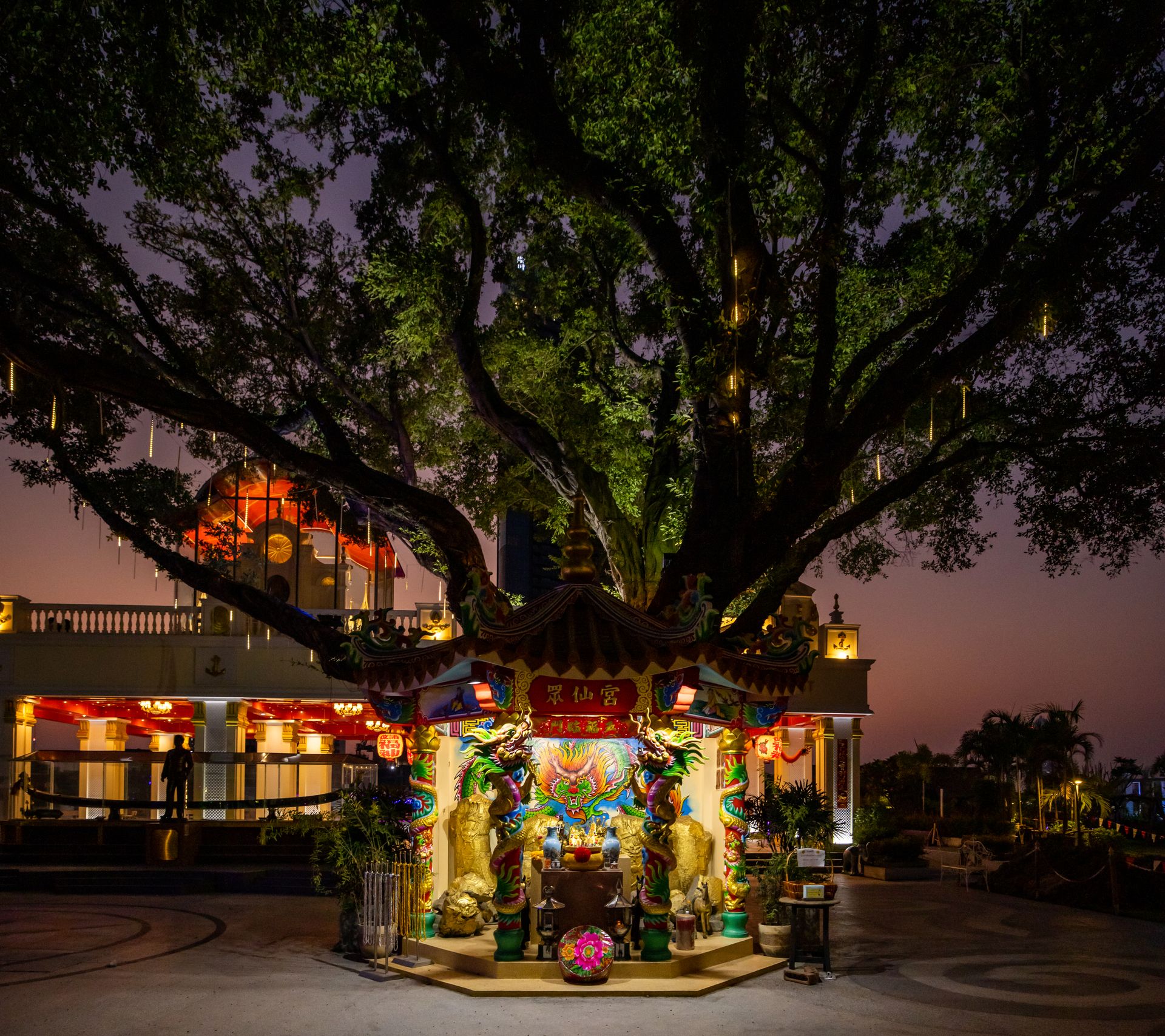
Johor Bahru Old Chinese Temple
Immerse yourself in Sino-Malaysian history by visiting Johor Bahru Old Chinese Temple, an iconic place of worship where age-old traditions meet popular devotion. Founded in the 19th century, this Taoist sanctuary is a living testament to the cultural heritage of Malaysia's Chinese community, offering a peaceful and authentic atmosphere right in the city centre.
Book a tour on Klook →
Why visit Johor Bahru Old Chinese Temple?
Johor Bahru Old Chinese Temple is much more than a simple place of worship: it is a symbol of the resilience and integration of Malaysia's Chinese community. Founded by immigrants from China in the 19th century, this Taoist temple is a peaceful haven where centuries-old rituals continue. Its traditional architecture, red lanterns and richly decorated altars make it a photogenic place steeped in history. Visiting this temple is also a chance to discover the soul of Johor Bahru, a city where modernity and tradition coexist.
Book your tickets & activities in Johor Bahru
Discover the Old Chinese Temple and other attractions in Johor Bahru with guided tours and excursions on Klook. Enjoy flexible cancellations, verified reviews and secure payment in euros for a hassle-free experience.
Partner link — booking through this link supports us, at no extra cost to you.
A little history
Johor Bahru Old Chinese Temple, also known as "Old Chinese Temple" or "Sultan Abu Bakar State Mosque Chinese Temple", was founded in the mid-19th century by Chinese immigrants mainly from the provinces of Guangdong and Fujian. Originally, it served as a gathering place and place of worship for Chinese workers who had settled in the area to help build the city under the direction of Sultan Abu Bakar. The temple is dedicated to five Taoist deities, the most revered of whom is Yuan Tian Shang Di, the God of Heaven.
Over the decades, the temple has become a symbol of interethnic harmony in Malaysia. It survived several conflicts and periods of turmoil, particularly during the Second World War, and has been restored several times to preserve its architectural heritage. Today, it remains an important pilgrimage site for Johor Bahru's Chinese community and a living testament to Sino-Malaysian history.
What can you see there?
Johor Bahru Old Chinese Temple stands out for its traditional Chinese architecture, with curved roofs adorned with dragons and floral motifs. Inside, you will discover several altars dedicated to different deities, each richly decorated with offerings, incense and statues. The walls are covered with calligraphy and murals depicting scenes from Chinese mythology.
The temple's inner courtyard is a peaceful space where visitors can observe worshippers at prayer or take part in rituals. Do not miss the hanging red lanterns, a symbol of luck and prosperity in Chinese culture. The temple also houses a small exhibition room displaying historical objects and photographs tracing its development over the centuries.
Finally, the temple often comes alive during traditional Chinese festivals, such as Chinese New Year or the Lantern Festival, when colourful celebrations and processions take place in the surrounding streets.
How to get there
Johor Bahru Old Chinese Temple is located right in the city centre, close to Johor Bahru Sentral bus and railway station. If you arrive by train or bus from Singapore or other Malaysian cities, you can easily reach the temple on foot in just a few minutes. The journey from the Woodlands checkpoint (Singapore) by car or taxi usually takes less than an hour, depending on traffic.
For those who prefer public transport, several local bus routes serve Johor Bahru city centre. Apps such as Grab (Malaysia's equivalent of Uber) are also very convenient for getting around the city. If you are driving, public car parks are available nearby, but expect to pay a few ringgits for parking.
To get online as soon as you land, a Malaysia eSIM can be installed before you leave, with no need to look for a local SIM card.
Our visiting tips
To make the most of your visit, plan to go in the morning or late afternoon, when the atmosphere is calmer and temperatures are more pleasant. Dress modestly, covering your shoulders and knees, out of respect for this place of worship. Comfortable shoes are also recommended, as the floor can be slippery in places.
Do not hesitate to strike up a conversation with worshippers or temple guardians, who will be happy to share stories about the site's history. If you visit the temple during a traditional festival, be respectful of ongoing rituals and ask permission before taking photographs.
Finally, combine your visit with other nearby attractions, such as the Royal Johor Museum or Sultan Abu Bakar Mosque, for a complete immersion in the history and culture of Johor Bahru.
When to go
Johor Bahru Old Chinese Temple is open all year round, but some periods are more suitable for visiting than others. If you would like to attend traditional celebrations, plan your trip during Chinese New Year (January or February), the Lantern Festival (February or March) or the Qingming Festival (April), when the temple is particularly lively.
To avoid the crowds and the heat, opt for weekday visits outside prayer times. The months from March to October offer a drier climate, ideal for exploring the city and its surroundings. See our guide to the climate in Malaysia to choose the best time for your trip.
Haven't booked your flight yet?
Compare flights to Johor Bahru or Kuala Lumpur — live updates.
Frequently asked questions
Do you have to pay to enter the Johor Bahru Old Chinese Temple?
No, entry to the temple is free. Visitors are nevertheless encouraged to make a donation to help maintain the site.
Can you take photos inside the temple?
Yes, but it is recommended that you ask permission before photographing worshippers or altars, out of respect for religious practices.
Which deities are worshipped at this temple?
The temple is dedicated to five Taoist deities, including Yuan Tian Shang Di (the God of Heaven), Guan Yu (the god of war) and Mazu (the goddess of the sea).
Are guided tours available?
Guided tours can be arranged on request, particularly through platforms such as Klook. Otherwise, the temple caretakers are often available to share anecdotes about the site's history. See activities on Klook.
Is the temple accessible to people with reduced mobility?
The temple is partially accessible, but some areas may be difficult to reach because of the stairs and uneven floors. It is advisable to enquire in advance.
Also worth seeing in Johor Bahru
Sultan Abu Bakar Palace
Discover the history of Johor's royal family in this iconic palace.
Sultan Abu Bakar Mosque
A historic mosque with Victorian influences, a symbol of Islam in Malaysia.
Legoland Malaysia
A family-friendly theme park ideal for a day out with the family.
Danga Bay
A seaside promenade with restaurants and relaxing areas.
Abu Bakar Royal Museum
A fascinating museum where you can discover the history of Johor's royal dynasty.
Things to do in Johor Bahru
Our complete guide to exploring the city and its surroundings.
Haven't booked your flight yet?
Compare flights to Malaysia and find the best fare for reaching Johor Bahru.
See flights to Malaysia