
Renting an apartment in Kuala Lumpur: neighbourhoods, prices, and procedures
Condos, expat neighbourhoods, indicative rents, security deposits, lease agreements, agents, and scams: how to rent long-term in Kuala Lumpur.

Published on
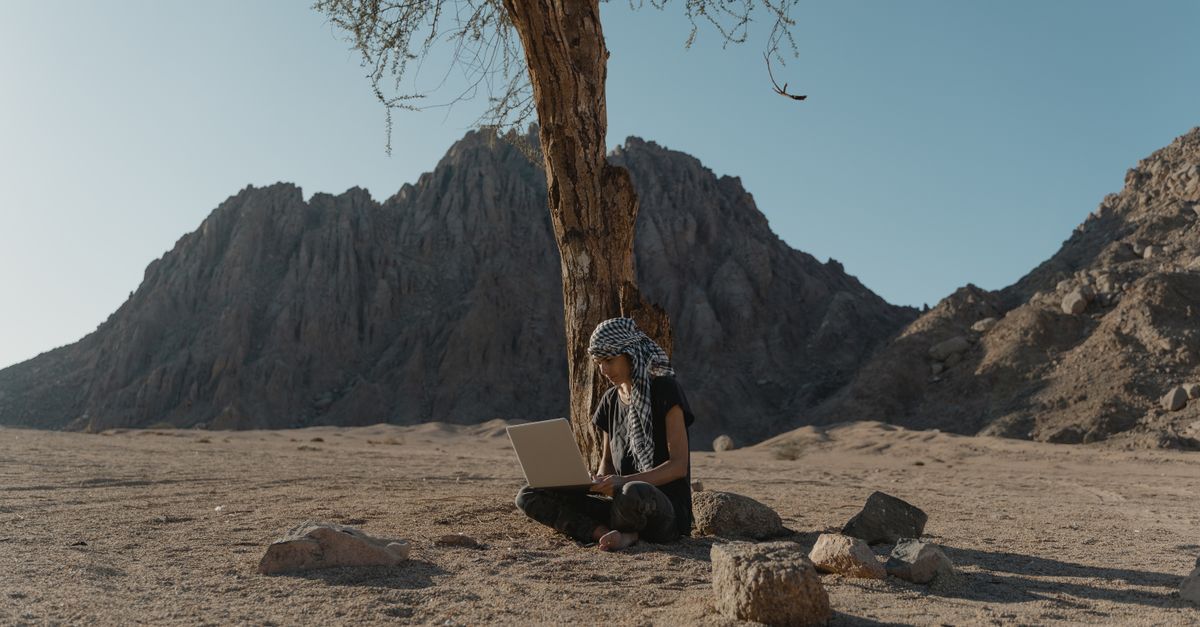
Working remotely from Malaysia in 2026 requires coordinating residency rights, employment contracts, taxes, and social coverage. A laptop and your manager’s approval are not enough: Malaysian authorities assess your activity on their territory, while the French administration evaluates your situation according to its own criteria.
The DE Rantau programme offers a pathway for eligible remote workers, but it does not constitute general tax exemption nor a guarantee of continued French social security coverage. To make these steps concrete, let’s consider two fictional scenarios: Claire, an employee of a Lyon-based company wishing to live in Kuala Lumpur, and Yassine, a freelance developer considering Penang. Their daily lives may resemble each other; their obligations, far less so.
Entry as a visitor, with or without a prior visa depending on your nationality, does not grant general work authorisation. The tourist status is not the right framework for organising a remote professional setup, even if your clients, payment, and bank account remain abroad.
Why does this distinction matter? The location from which you perform your duties may interest immigration authorities, regardless of your employer’s address. Border entry does not equate to validation of your professional setup.
For Claire, renting an apartment for several months and working daily for a company based in Lyon should not be framed as a simple holiday. Before committing to a non-refundable booking, she must verify the correct visa category for her activity with Malaysian Immigration and the relevant programme authority.
Administered by the Malaysia Digital Economy Corporation, the DE Rantau Nomad Pass falls under the Professional Visit Pass. The scheme typically allows a stay of three to twelve months, with renewal options extending up to a total of twenty-four months, subject to approval.
The criteria published by MDEC distinguish between digital or technological professions and non-technological professions eligible under the programme extension. The stated thresholds are an annual income above USD 24,000 for eligible digital profiles and above USD 60,000 for eligible non-technological profiles.
These amounts are expressed in US dollars, not ringgit or euros. For an application submitted in 2026, check the terms directly with DE Rantau via MDEC: your profession’s classification, accepted documentation, and income assessment method must align with the version applicable at the time of application.
A title like ‘consultant’ is not enough to determine the category. Yassine must describe his development services, while a commercial consultant must verify eligibility and the threshold matching his actual role.
The remote worker must justify their connection to a company outside Malaysia. The freelancer presents their contracts or assignments; the possibility of working with Malaysian clients must be reviewed based on their specific professional category, not assumed solely from the programme’s name.
Submitting an application does not authorise you to start working. Fees, processing times, and conditions for dependents must also be confirmed before finalising family plans.
Finally, check your title’s territorial scope: Sabah and Sarawak have specific immigration rules. The right title depends on the actual activity and location, not just the desired duration.

A job authorised for remote work from France is not automatically permitted from Malaysia. Article L1222-9 of the Labour Code governs remote work but does not grant a general right to choose any country of practice. Claire must obtain explicit authorisation covering her destination and dates.

A written agreement can establish a deal, but a detailed addendum is preferable for an organised stay. It specifies the authorised address, duration, working hours, equipment, covered expenses, accident procedures, and early return arrangements.
An employer’s refusal must be assessed under the law, collective agreement, company charter, and the employee’s situation: some cases require justification. To prepare discussions, analyses on the legal framework for remote work abroad and on the implications for a French company provide additional guidance, which should be cross-referenced with official texts.
The permanent contract can be retained without automatic transfer to a local entity. However, choosing French law does not necessarily override mandatory provisions applicable at the usual place of work: a long-term setup warrants a specific legal review.
The term ‘detachment’ is often used too hastily. Simply stating in an addendum that you remain detached is not enough to maintain your French affiliation: the employer must verify legal conditions and complete formalities with the relevant authorities.
You must also distinguish between contract, immigration, and social protection. Claire can retain her Lyon-based employer and hold a DE Rantau without automatically qualifying for social security secondment.
Resources on Form A1 and international remote work primarily cover European coordination. This document is not the tool for regulating activity in Malaysia, a country outside this scheme.
The legal team will also assess the risk of a permanent establishment, local payroll obligations and any necessary registrations. A manager who regularly negotiates and commits the company presents a different risk profile from an employee handling only internal tasks without contractual authority.
For Yassine, lack of an employer does not mean no formalities. He must check whether his French organisation remains suitable for work actually carried out abroad, then review his Malaysian obligations for registration, declaration, and, depending on services, taxation.
A French micro-enterprise does not authorise working in Malaysia. Conversely, the digital nomad visa does not alone create a local business and does not automatically validate compliance with all French social obligations.
His contracts should specify deliverables, currencies, payment deadlines, confidentiality, and dispute resolution terms. VAT is not deductible solely based on the service provider’s country: the nature of the service and the client’s professional or personal status also matter.
Using an intermediary company does not resolve these issues. Our guide on employment contract management from Malaysia and its alternatives helps compare setups without confusing administrative ease with compliance.
Finally, data access must be validated: managed device, multi-factor authentication, secure connection, and any client-imposed restrictions. Your professional status must align with your actual place of work, including invoicing and tools used.
The commonly cited Malaysian rule is 182 days, not a universal threshold of 183 days. A presence of at least 182 days during the reference year is one of the criteria for qualifying as a tax resident under Malaysian domestic law.
This is not the only mechanism. Rules covering linked periods, temporary absences, and presence in other years may also apply; a stay shorter than this threshold does not automatically result in non-resident status.
Consult the individual residency rules with HASiL, the Malaysian tax authority. Keep a presence calendar, tickets, and relevant documentation, especially if your move spans two tax years.
Claire could thus spend several months on-site while maintaining strong ties in France. Counting nights alone won’t suffice: her home base, primary activity, and economic interests must also be determined.
France applies its own criteria for tax residency, including the main home, principal place of residence, main professional activity, and centre of economic interests. If both countries consider you a resident under their national rules, the France-Malaysia tax treaty resolves this conflict using successive criteria.
You must then analyse each income category. Salary earned for work physically performed in Malaysia may be taxable there, even if the employer and payment account are French.
The conventional exception for certain temporary employee assignments involves several cumulative conditions, particularly regarding duration of stay, employer, and the entity covering remuneration. This should not be confused with the national residency threshold: the applicable text also determines the period over which days are counted.
The official directory of French tax treaties allows you to find the agreement with Malaysia and associated documents. General comments found online do not replace this reading, especially for directors or self-employed individuals.
| Question | Key factor | Pitfall to avoid |
|---|---|---|
| Are you a resident in Malaysia? | Internal criteria, including the 182-day rule and other tests | Relying solely on visa duration |
| Are you still a French tax resident? | French criteria, then the treaty in case of conflict | Distinguishing physical departure from tax departure |
| Where is your salary taxable? | Place of work and conventional provisions | Looking only at the credited bank account |
| How to avoid double taxation? | Conventional mechanism applicable to income | Failing to file a return in one of the states |
A payment from abroad is not necessarily foreign-sourced income under Malaysian rules. A service performed from Penang may have a local source: exemption rules for certain foreign income received in Malaysia should not be automatically applied to Yassine’s earnings.
Similarly, DE Rantau does not grant general tax exemption. Activity type, income source, and taxpayer status must be qualified before seeking potential relief.
If you remain a French tax resident, your worldwide income is generally subject to French declaration, subject to conventional mechanisms. Overseas accounts may also need to be declared, particularly using form 3916 or 3916-bis depending on their nature.
In the year of a move abroad, a 2042 tax return and, depending on post-departure income, a 2042-NR return may be required. Inform your tax office of your new address and have salaries, self-employment income, investments, and rentals assessed separately: avoiding double taxation does not mean avoiding declarations.
France and Malaysia do not have a general bilateral social security agreement coordinating the two systems. The tax treaty, which covers taxation, does not replace such an agreement and does not determine where social contributions are due.
Maintaining French social security coverage may be possible under the secondment provisions of French law, provided the conditions are met. This requires employer action and tailored approval; it does not stem from the employee’s nationality or continued payslip.
Without a convention, this French affiliation does not necessarily exempt you from Malaysian obligations. The company must verify those relevant to its operations and the employee’s status, particularly with local authorities like PERKESO and EPF where applicable.
The Centre des liaisons européennes et internationales de sécurité sociale (CLEISS) provides official guidance on moving abroad. The CPAM and URSSAF must be contacted depending on the issue: healthcare reimbursement, maintaining rights, or applicable social legislation.
For Claire, the right move is to request written confirmation before leaving. Seeing contributions on her payslip does not, on its own, clarify how hospitalisation in Kuala Lumpur will be handled.
The French Residents Abroad Fund offers voluntary insurance for eligible expats. Depending on your profile and chosen plans, various protections may apply; terms should be verified with the CFE, not assumed from your previous coverage.
This membership is not the same as mandatory affiliation to the French National Health Insurance. It does not waive any local contributions due and does not guarantee full reimbursement of private hospital bills.
Compare reimbursement bases, potential delays, membership conditions, and coverage terms. A compatible supplementary plan may be needed to cover gaps between benefits and actual healthcare costs.
Yassine must also assess the risk of work stoppage. Reimbursement for a consultation does not replace lost income during downtime: incapacity, invalidity, and family protection require separate cover.
International insurance may cover costs from the first euro or supplement existing coverage. The deciding factor is not just the monthly cost, but the out-of-pocket expense in a real medical scenario.
Ask how surgical procedures, chronic care, or medical evacuation would be handled. Check coverage limits, excesses, exclusions, medical history, waiting periods, outpatient care, mental health, and pregnancy-related conditions if applicable.
The possibility of direct billing with a healthcare provider also matters. Without a payment agreement, a hospital may request a significant deposit or advance payment; an insurance card does not automatically guarantee no upfront costs.
Travel insurance linked to a debit/credit card is not necessarily a solution for living and working several months on-site. Its duration limits, activation conditions and professional exclusions must be checked before relying on it.
Also plan for accident procedures during a working day: contact person, reporting, documentation, and assistance. Pension and insurance matters require separate review, as being insured for healthcare does not cover all social consequences of relocation.
Kuala Lumpur, Penang, and Johor Bahru offer numerous fixed and mobile connectivity options, but quality depends on the exact address. Request a real test from the accommodation: upload speed, stability for video calls, and Wi-Fi quality in your workspace matter more than marketing claims.

Plan for a backup mobile connection and test professional access before signing a long-term lease. A corporate VPN, multi-factor authentication, and up-to-date devices reduce risks; our guide on cybersecurity and scams in Malaysia outlines daily precautions.
The country remains on UTC+8 year-round. Compared to mainland France, the time difference is +6 hours during French daylight saving time and +7 hours during winter time: a 9 AM meeting in Paris starts at 3 PM or 4 PM locally.
For Claire, replicating a full French working day from 9 am to 6 pm means working until midnight or 1 am. It’s better to negotiate a limited overlapping schedule, preserve rest periods, and shift exchanges that can be handled asynchronously.
Kuala Lumpur suits those seeking urban transport, air links, services, and a variety of professional spaces. Central districts like KL Sentral or Bangsar may cater to different needs: verify the actual commute rather than relying on map distances.
Penang, particularly George Town, appeals to those prioritising heritage and a less metropolitan daily life. For Yassine, pleasant accommodation does not exclude noise nuisances: a visit during future working hours will help assess traffic, construction work, and insulation.
Johor Bahru is of particular interest to those with regular contact with Singapore. However, crossing the border requires planning, and a Malaysian title does not grant the right to work in the city-state.
To start your coworking search, explore locations offered by Common Ground and WORQ in Kuala Lumpur, Settlements in Penang, and Infinity8 in the Johor Bahru area. Check the opening hours of your chosen space, phone booth availability, and evening access conditions directly.
The best space is one that works during your meetings with Europe. An economical package loses its appeal if doors close before client calls; request a trial day and also test acoustic privacy.
Opening a local account is not automatic with a DE Rantau. Each institution applies its own checks and may require a passport, residence permit, address, contracts, and proof of the origin of funds; necessary documents must be confirmed before the appointment.
Keep an alternative payment method during settlement. For transfers, compare the actual exchange rate, fixed fees, and any reception commissions, distinguishing between bank accounts and multi-currency payment services.
Your budget must cover housing, insurance, transport, workspace, and administrative steps—not just meals. The guide on the cost of living in Malaysia helps structure these expenses by city and household composition.
A trial stay in flexible accommodation lets you test the neighbourhood, connection, and work rhythm before committing long-term. Your comfort depends primarily on aligning your schedule, address, and essential services.
Tourist status does not constitute general authorisation to work remotely from Malaysia. Billing only French clients does not resolve the migration issue: verify your eligibility for DE Rantau or another suitable visa before starting work.
No. The visa addresses stay and authorised activities, not general tax exemption. Residency, income source, and the applicable tax convention determine obligations; a service performed from Malaysia does not become foreign simply because payment comes from France.
Maintaining the permanent contract can be arranged with the employer, but social affiliation must be examined separately. A secondment compliant with French rules may be possible under conditions, without necessarily removing Malaysian obligations. The A1 form does not resolve this situation.
No. Malaysia has other residency tests, and a non-resident may still be taxable on certain local income. You must distinguish between tax residency, place of work, and any applicable conventional exception for temporary employee assignments.
Malaysian conditions must be verified for each nationality and applicant category. However, the contract, contributions and taxation of the home country require separate analysis: the France-Malaysia convention does not replace the one potentially applicable to your tax residence.
Condos, expat neighbourhoods, indicative rents, security deposits, lease agreements, agents, and scams: how to rent long-term in Kuala Lumpur.

Laundry and dry cleaning services in Malaysia cater to very different needs, even if both aim for the same result: clean,…

Neobanks, requirements, documents, steps: the complete guide to opening a digital bank account in Malaysia in 2026 as an expat.

13th-month bonus and annual bonus calculator in Malaysia: practical guide for…
In Malaysia, getting a haircut, beard trim, or booking a beauty treatment has become very straightforward in major cities, but prices can vary…
In Malaysia, an expat package is never limited to the salary stated in the contract. You must also factor in Malaysia housing costs, school…

Bilingual speech therapy in Malaysia for children with speech disorders highlights a very real situation: supporting a child who…
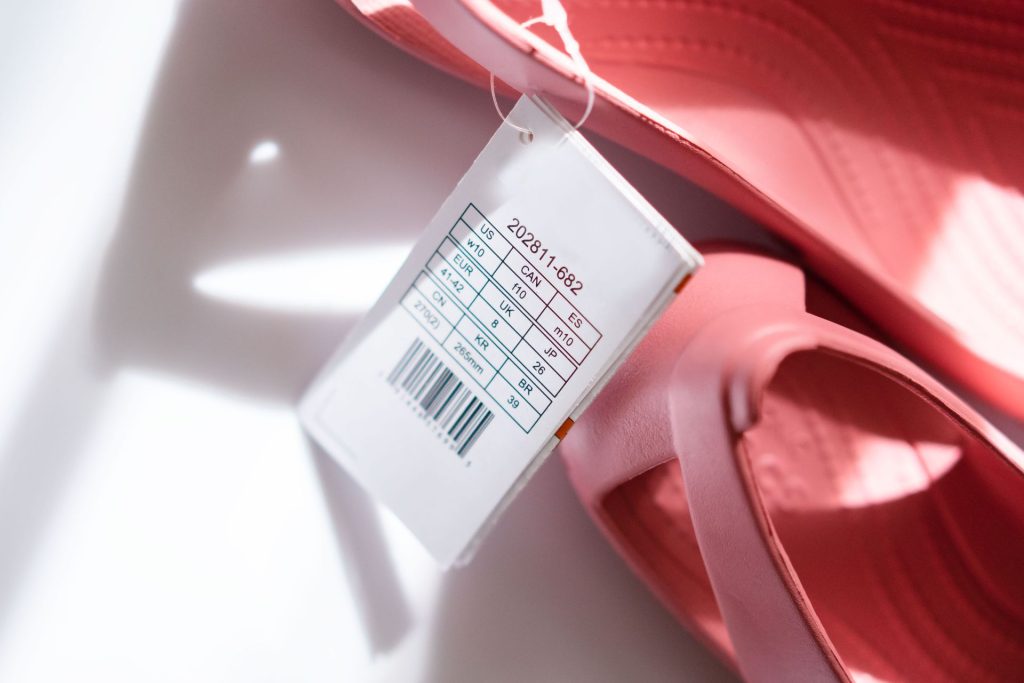
Shopping abroad has become easier, but sizing remains a common issue. Between France and Malaysia, the sizing systems don’t align, which can…
Scroll to see more articles →