Computer network
Connectivity & Technology

Understanding Telephone Networks and Local Standards

In 2026, Malaysia is establishing itself as a major technological hub in Southeast Asia. Mastering the inner workings of local and mobile networks is essential for your settlement and professional success.

The Emergence of Local Networks: A Structural Revolution

A local network, or LAN (Local Area Network), is defined as a set of hardware and software means allowing the interconnection of computer equipment over a limited geographical area (a few hundred meters to a few kilometers). Historically, the rise of LANs is closely linked to the drastic drop in the cost of microcomputers in the 80s and 90s, making computing accessible to every office.

The benefits are manifold: sharing expensive resources (servers, printers), centralizing data, and facilitating collaborative work. However, implementation raises complex challenges:

  • Security and confidentiality: Centralization makes the network vulnerable to intrusions if protocols are not rigorous.
  • Incompatibilities: Mixing different manufacturers requires in-depth knowledge of standardization standards.
  • Maintenance costs: Physical infrastructure requires constant human and technical management.
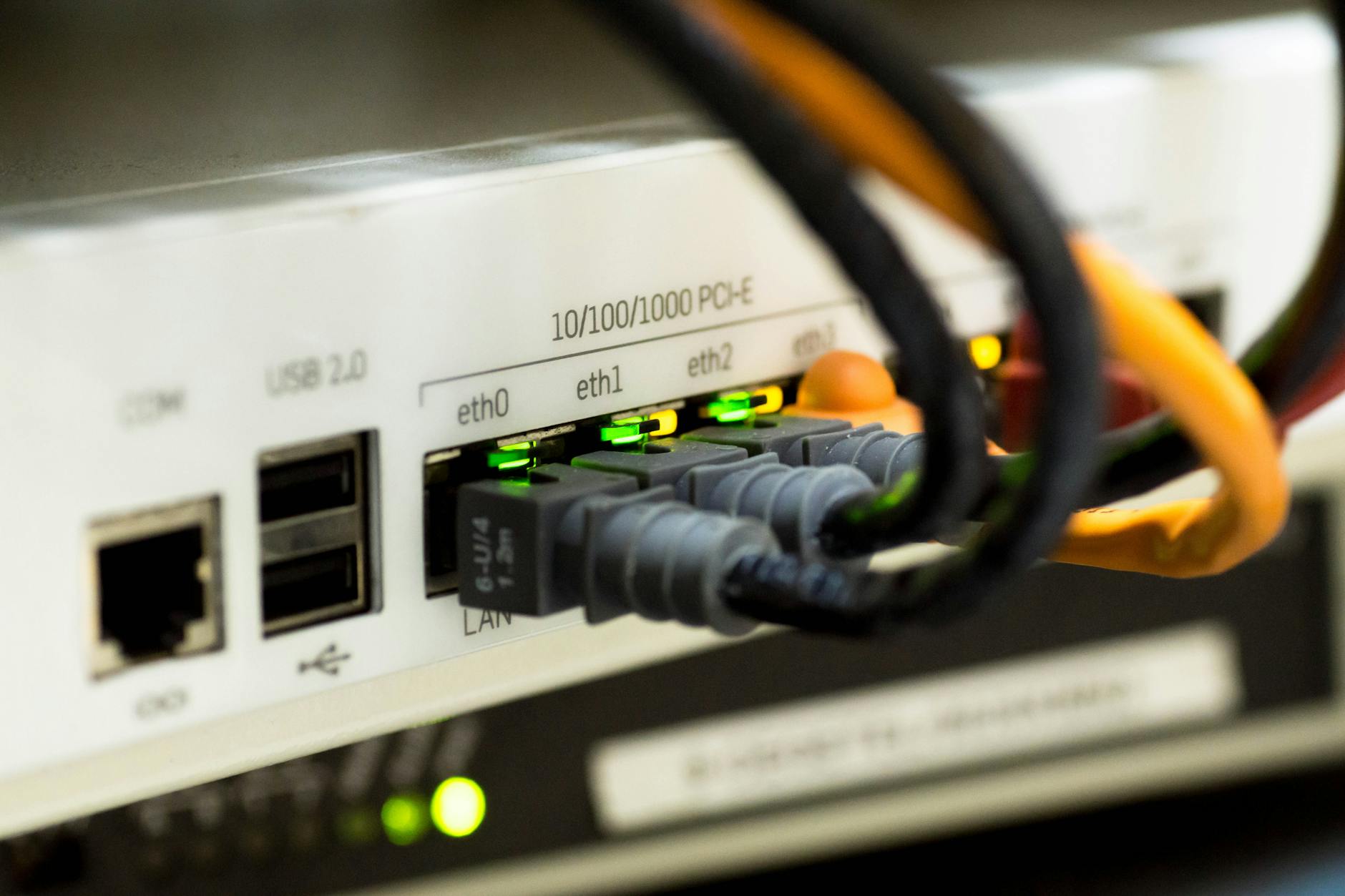
Modern server room

Network Infrastructure in Malaysia - Horizon 2026

The Market and Components of the Local Network

From optical fiber to specific operating systems, every piece of the puzzle matters.

Nodes and Servers

Nodes represent each connected equipment (PC, IP-Phones). Servers, meanwhile, are the heart of the LAN, managing storage, applications, and remote access via protocols like SNMP.

Cabling and Media

Twisted pairs (RJ45), coaxial cables, or optical fiber: the choice of medium dictates the bandwidth. In Malaysia, optical fiber is the standard for any new commercial installation.

Network Software

Network operating systems (NOS) like Windows Server or Linux manage file sharing, print queues, and security services (Firewalls).

Fundamental Characteristics of a LAN

Speed and Error Rate

A local network is distinguished by a high transmission speed (generally from 1 Gbps to 100 Gbps in 2026) and a low bit error rate, unlike wide area networks (WANs) which are more sensitive to atmospheric or physical disturbances.

Access Methods

Managing media sharing is crucial. Either CSMA/CD (Collision Detection) for Ethernet or deterministic methods like Token Passing are used to prevent two machines from "talking" at the same time.

Types of Information Exchanged

Beyond office automation, modern networks manage real-time data. The digitization of voice and video requires advanced compression solutions and QoS (Quality of Service) management to avoid stuttering during Teams or Zoom meetings.

Interconnection & Interoperability

The Importance of IEEE 802 Standards:

The IEEE 802 committee defines the standards that govern the physical and data link layers of the OSI model. Without these standards, a CISCO switch could not communicate with an Intel network card.

802.3 Wired Ethernet
802.11 Wi-Fi & WLAN
802.15 Bluetooth / WPAN
802.6 Metropolitan Networks
Malaysia Connectivity Simulator 2026

Compare download times according to the technology used on-site.

Estimated result
0.00 seconds

Based on the actual speeds observed in Kuala Lumpur and Penang this year.

Topologies: Your Network Architecture

Bus Topology

A single central cable (the bus) connects all nodes. Simple and economical, but if the bus breaks, the whole network collapses.

Example: 10Base2

Star Topology

All nodes are connected to a central hub (Hub or Switch). The current standard. If a cable breaks, only that node is cut off.

Example: Ethernet RJ45

Ring Topology

Each node is connected to two neighbors, forming a circle. Used mainly for token-passing networks, ensuring no conflicts.

Example: Token Ring

Mesh Topology

Nodes are interconnected with each other redundantly. Offers the best reliability (resilience) but at a high cost.

Example: Private 5G Networks

Mobile Networks vs LAN: What are the differences?

Unlike a LAN, which is a private infrastructure, the mobile telephone network is based on base stations and a cellular architecture. Each cell covers a geographical area thanks to relay antennas transmitting on specific frequencies.

Key Components

SIM card for identification, base station (BTS/NodeB), and switching center for call routing.

Speed Evolution

5G offers ultra-low latencies (1ms) and massive speeds, allowing for the progressive replacement of Wi-Fi in certain environments.

In Malaysia, the management of white zones (uncovered areas) is a major challenge in the mountainous regions of Sabah and Sarawak, although Kuala Lumpur benefits from some of the best 5G coverage in Asia.

Malaysia telecom tower

Evaluation Criteria for a Cabling System

Criterion Importance Technical Description
Scalability CRITICAL Ability to add nodes without degrading overall performance.
Media Compatibility HIGH Support for different types of cables (Twisted Pair, Coaxial, Fiber).
Reliability CRITICAL Backup devices and redundancy of physical links (Spanning Tree).
Management & Monitoring MEDIUM Integration of management protocols like SNMP or RMON.

The Guardians of Standards

To ensure that every device can communicate anywhere on the planet, international organizations are on the lookout.

ISO

International Organization for Standardization

ITU-T

International Telecommunication Union

IEEE

Institute of Electrical and Electronics Engineers

IETF

Internet Engineering Task Force

The life cycle of a standard begins with experimentation, followed by adoption by consensus, its official publication, and finally its revision (like the transition from Wi-Fi 5 to Wi-Fi 6 then 7).

Frequently Asked Questions - Networks in Malaysia

What is the average 5G speed in Malaysia in 2026?

Thanks to the Digital Nasional Berhad (DNB) shared national network, the average is around 150-300 Mbps in urban areas like KLCC or Georgetown.

Can European network equipment be used in Malaysia?

Yes, Malaysia strictly follows IEEE 802.3 (Ethernet) and 802.11 (Wi-Fi) standards, ensuring full interoperability.

What is a private 5G network for businesses?

It is a mobile network dedicated to an industrial site, offering maximum security and total traffic priority over public networks.

Where can I find local technical resources?

Consult our guide on technological training to deepen your certified skills.

Is optical fiber available everywhere?

In large urban areas, yes (Time Fiber, Unifi). In rural areas, satellite technologies or fixed 4G/5G take over.

Need help with your settlement?

Discover all our practical guides to manage your subscriptions, choose your equipment, and stay connected as soon as you arrive.